English
  Español


Almost every American woman can recall the first time she ran a razor under her arm. Few could say why she did it, beyond the fact that everyone did. The habit feels as old as soap. Research by the historian Rebecca Herzig puts the figure at roughly 99 percent of American women having tried hair removal at some point, with a large majority doing it routinely. Something practiced that widely tends to be assumed timeless.
It is not. The question of when did women start shaving their armpits has a surprisingly precise answer, and it comes with a month, a magazine and a page of advertising copy. The habit also came with a product line, which is one reason the price of a pink razor still draws attention more than a century later, as our own investigation into why women pay more for the same razor found.
In May 1915, an advertisement in Harper's Bazar told its readers that sleeveless summer dresses had made the removal of underarm hair "necessary." Within a few years the practice had moved from the society pages to the Sears, Roebuck catalog.
This is the paper trail: the ads, the razor, the magazines, and the parts of the record that remain incomplete.
The Belief, as It Circulates Today
The modern assumption runs roughly like this: women have always groomed, smooth underarms are simply cleaner, and the razor merely made an old preference easier. Each part of that sentence contains a grain of history. Hair removal is ancient, practiced in some form since the Neolithic. Wealthy women in Europe and America did remove facial and arm hair in the nineteenth century, often with harsh homemade preparations.
What the record does not show, before the First World War, is any widespread American expectation that a woman remove hair from under her arms. There was little reason for one. Victorian and Edwardian dress covered the arm to the wrist for daytime, and evening wear usually carried at least a short sleeve. A part of the body that no one saw was not yet a part of the body that anyone discussed.
May 1915: The First Appearance
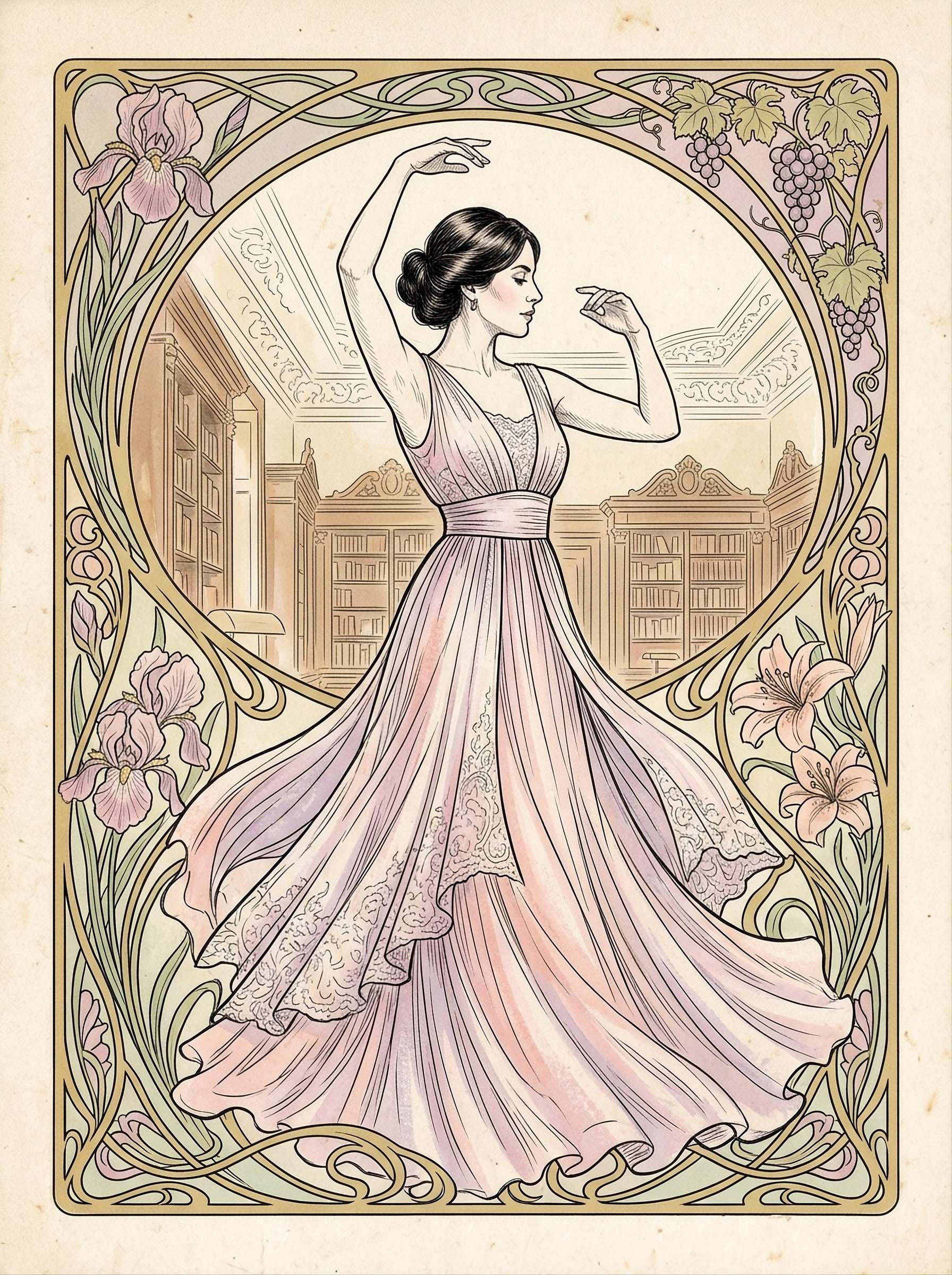
The documentary starting point is the May 1915 issue of Harper's Bazar (the magazine added its second "a" in 1929). The publication served an affluent, fashion-forward readership and had spent the season illustrating the new sheer and sleeveless gowns. That month it carried an advertisement showing a young woman with her arms arched over her head, beneath a single line of copy: "Summer Dress and Modern Dancing combine to make necessary the removal of objectionable hair."
The sentence is worth reading slowly. It does not say underarm hair is unclean. It does not mention health. It names two fashions, a hemline problem of sorts transferred to the arm, and declares a new grooming task to be a consequence of them. The argument is entirely about appearance in public.
Here the trail contains a genuine discrepancy. Several popular accounts credit the May 1915 image to Gillette. The more careful reconstructions, including the documentation gathered for Wikipedia's entry on the subject, attribute the famous image to a depilatory powder sold as X-Bazin, which had been running underarm imagery in general-interest magazines such as Red Book as early as 1908. The Wisconsin Historical Society, which holds a July 1915 issue in its library collection, describes the May advertisement without naming its sponsor. What can be said with confidence is that the campaign ran in Harper's Bazar in 1915, and that more than one company was buying space.
What Was Happening Commercially
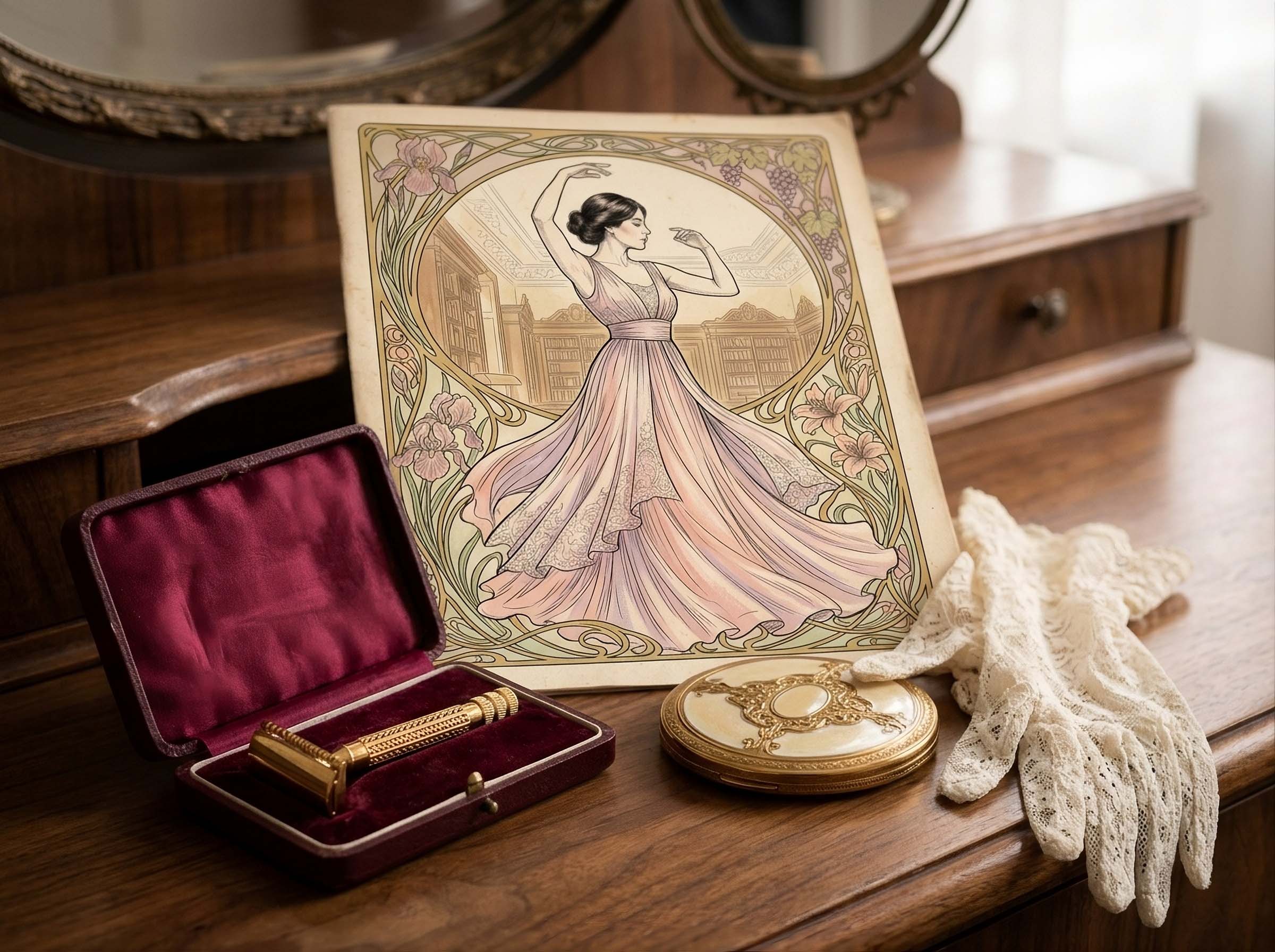
The timing was not accidental, and the commercial context is well documented. King C. Gillette had received his patent for a safety razor with disposable blades in November 1904. Sales in the first full year ran to roughly ninety thousand razor sets, all of them aimed at men. By the following decade the company was looking at a market it had not yet entered.
In 1915, the same year as the Harper's Bazar campaign, Gillette introduced the Milady Décolletée, the first safety razor sold specifically to women. Its name was taken directly from the low-cut neckline. Company advertising from the period, now widely reproduced, described it as solving "an embarrassing personal problem" and presented a smooth, white underarm as a feature of good dressing. Another Gillette advertisement from the same year put it more bluntly: "The underarm must be as smooth as the face."
"The argument is entirely about appearance in public. It does not mention cleanliness at all."
The sociologist Christine Hope, writing in the Journal of American Culture in 1982, surveyed hair-removal advertising in Harper's Bazar and McCall's and gave the period between roughly 1915 and 1919 a name that has stuck: the Great Underarm Campaign. Her most telling finding concerns the ads' format. About 62 percent of those she examined from 1915 to 1919 were instructional, explaining how and why to remove the hair. Companies do not usually write instructions for a habit their customers already have.
Hope also drew attention to what the early ads left out. Arguments about hygiene, which dominate how the practice is explained today, were scarce in the first years of the campaign. Fashion carried the case almost alone.
Early women's razors were small. The Wisconsin Historical Society notes that the compact size of Gillette's women's model, sold through the Sears, Roebuck catalog from 1922, reflected its intended use on the underarm rather than the leg. Leg shaving had not yet entered the sales pitch.
The Intervening Century
The campaign moved down the social ladder in stages that track the spread of sleeveless and sheer fashions. Anti-underarm-hair advertising appeared in the middle-market McCall's by 1917. In 1922 Sears, Roebuck listed women's razors and depilatories, the same year the company began selling dresses with sheer sleeves. When a mail-order catalog stocks a product for farm and small-town households, a fashion has become a norm.
Underarm deodorant followed a parallel course. In 1919 the antiperspirant brand Odorono ran an advertisement in the Ladies' Home Journal, written by the copywriter James Webb Young of the J. Walter Thompson agency, that addressed perspiration odor in a woman's own social life with a frankness readers of the day found startling. Our earlier report on where the silence around women's scent began traces the same advertising generation from a different angle. Taken together, the two campaigns turned the female underarm, within a single decade, into a site of both grooming and worry.
Legs came later, and less forcefully. Hope dated the first Harper's Bazar advertisement focused mainly on leg hair to 1929, coinciding with rising hemlines. Leg-focused ads were for years a minority within the category. By the later decades of her survey, the picture had reversed, with every hair-removal ad she counted in the magazine mentioning legs and more than half concerned with nothing else. Sheer stockings, and the wartime pinup culture of the 1940s, are commonly cited as accelerants, though that link rests more on cultural commentary than on documented sales data.
| Year | Event on the Record | Source Type |
|---|---|---|
| 1871 | Darwin's The Descent of Man links body hair to evolutionary "primitiveness," an idea later historians connect to shifting attitudes | Published text |
| 1904 | King C. Gillette granted a U.S. patent for the safety razor | Patent record |
| 1908 | X-Bazin depilatory ads with a hair-free underarm appear in Red Book | Magazine advertising |
| May 1915 | "Summer Dress and Modern Dancing" ad runs in Harper's Bazar | Magazine advertising |
| 1915 | Gillette introduces the Milady Décolletée, the first razor marketed to women | Company advertising |
| 1917 | Underarm ads reach the middle-market McCall's | Magazine advertising |
| 1919 | Odorono's perspiration ad runs in the Ladies' Home Journal | Magazine advertising |
| 1922 | Women's razors and depilatories listed in the Sears, Roebuck catalog | Mail-order catalog |
| 1929 | First Harper's Bazaar ad focused mainly on leg hair | Magazine advertising |
| 1982 | Christine Hope publishes her survey naming the "Great Underarm Campaign" | Peer-reviewed journal |
Sources: Hope (1982), Journal of American Culture; Herzig (2015), Plucked, NYU Press; Wisconsin Historical Society collections.
The Deeper Roots Historians Point To
Advertising did not work on a blank slate. In Plucked: A History of Hair Removal, published by NYU Press in 2015, Herzig argues that American attitudes had already been shifting. Early in the nineteenth century, deliberate hair removal was regarded by many white Americans as something foreign and even a form of "mutilation." By the turn of the twentieth century, a smooth face and arms were expected of a respectable woman. Herzig traces part of that shift to the reception of Charles Darwin's The Descent of Man (1871), which encouraged readers to see body hair as a sign of the primitive.
Herzig's book also records the damage that accompanied the pursuit of smooth skin in the early decades, from caustic depilatory powders to the use of X-rays for hair removal, a method that remained in commercial use into the 1940s before its harms were widely understood. Those episodes belong to the history of the industry, not to any modern practice, and are reported here only as part of the record.
What the Current Evidence Shows
On the narrow question of origins, the evidence is unusually strong. The history of women shaving underarms in the United States can be dated to within a season, tied to named publications, and connected to the launch of a specific product. The Wisconsin Historical Society's account of the 1915 Harper's Bazar campaign and Hope's peer-reviewed survey agree on the sequence, and later scholarship has built on rather than overturned it.
The evidence also shows that the advertisers' original rationale was fashion. Hygiene arguments came to dominate later. Whether those later arguments reflected a sincere change in thinking or a more durable sales message is a question the advertising archive alone cannot settle.
What Remains Unresolved
Several questions resist a clean answer. The precise sponsor of the most reproduced May 1915 image is still disputed in secondary sources, and a definitive attribution would require examining the original page in a library holding that issue. The degree to which private hair removal existed among ordinary women before 1915, outside the reach of advertising, is largely invisible in the record, since women rarely wrote about such things and catalogs only list what was sold.
Causation is the harder problem. Advertising and fashion moved together, and historians differ on how much weight to give each. A sleeveless gown made the underarm visible; a razor company made its smoothness a matter of etiquette. Hope's own work suggested that broader social anxieties of the era played a part as well, though that interpretation is harder to test against documents than an advertisement's date.
What can be stated plainly is narrower and perhaps more interesting. A grooming habit that most American women now regard as simply part of growing up has a known birth year. Its first public justification fit in a single sentence about summer dresses and dancing. Whether women today keep the habit, set it aside, or never think about it at all, the choice now comes with something the women of 1915 did not have: the original advertisement, and the date it ran.
Questions Readers Ask
Disclaimer: All content on this website—including articles, educational materials, and interactive calculators—is for informational, educational, and entertainment purposes only. The calculations, percentiles, and outputs generated by tools on this site are based on general statistical data and mathematical models; they do not constitute medical data, a clinical assessment, or a diagnosis.
Nothing contained on this website is a substitute for professional medical advice, diagnosis, or treatment. Always seek the guidance of a qualified healthcare professional or urologist with any questions you have regarding physical development, anatomy, or health conditions. Reliance on any information or tools provided by this website is solely at your own risk.