English
  Español



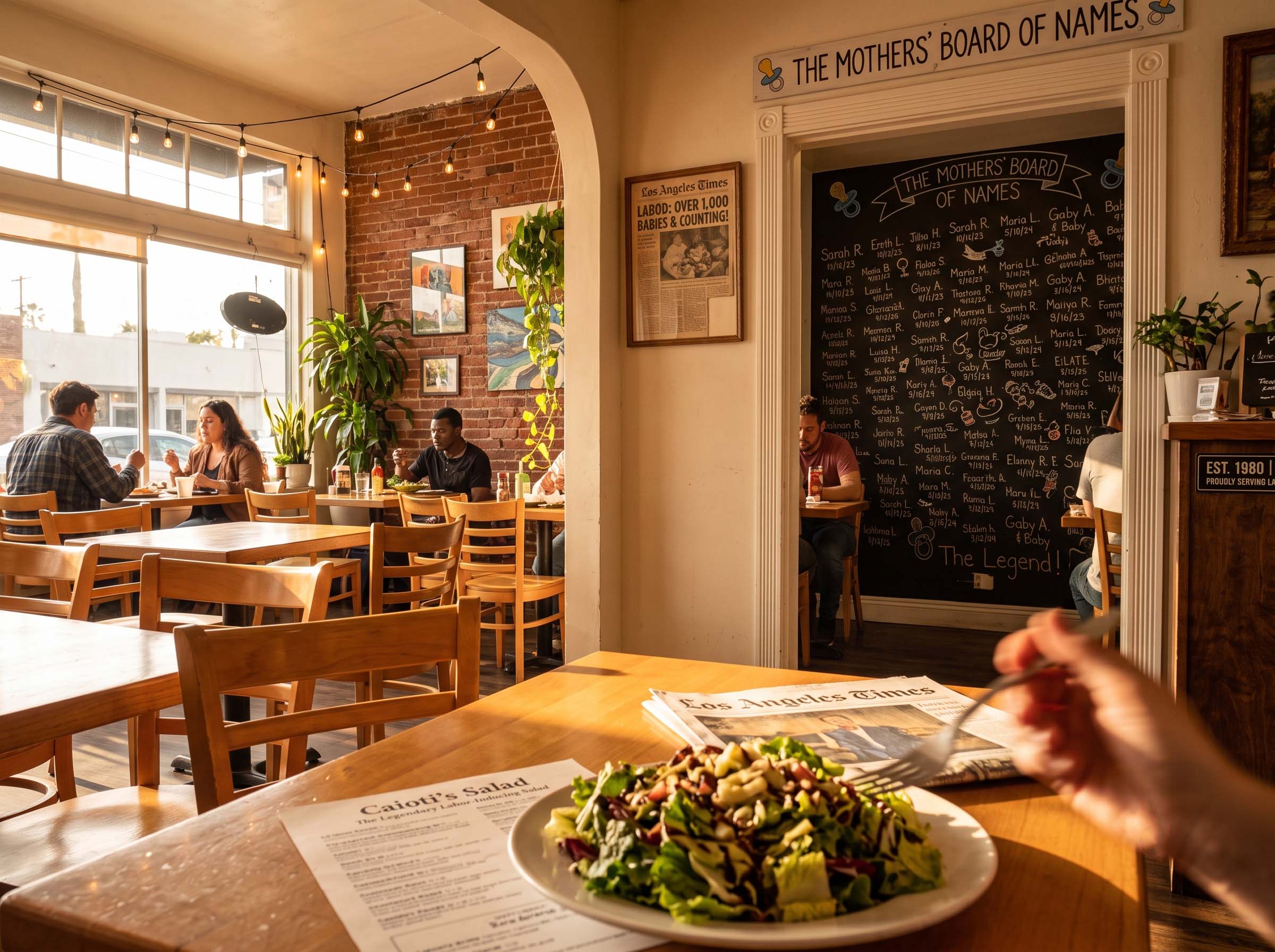
On any given afternoon in Studio City, California, a pregnant woman walks into a modest pizza restaurant, sits down, and orders a salad she does not especially want. She is not there for lunch. She is nine days overdue, or eleven, or fourteen, and she has driven across Los Angeles because a friend, or her sister, or a stranger in an online group told her that this particular salad, from this particular café, would finally bring her baby.
The restaurant is Caioti Pizza Café, and the dish is known so widely that customers stopped bothering with its full name years ago. They call it, simply, “The Salad.” It is one of the most durable modern examples of a very old kind of belief — the old wives' tales about starting labor that women have traded for thousands of years. What makes this one remarkable is that we can watch it being made in real time, and trace, almost to the week, how a single coincidence became a legend that has now lasted three decades.
In Brief
- “The Salad” at Caioti Pizza Café has drawn overdue mothers to one Los Angeles restaurant since the early 1990s.
- The legend began with a single coincidence — one past-due customer who went into labor the day after eating it.
- The café's owners have never claimed the salad works, which has only made the story more believable.
- It is a near-perfect case study in how a modern legend is born, spreads, and refuses to die.
How one lunch became a legend
The story, as the café's owners have told it for years, is almost disappointingly simple. Sometime in the early 1990s, an overdue customer ordered a plain salad of romaine and watercress. The next day, she went into labor. Convinced the meal had started it, she mentioned the restaurant to an expecting friend who was also past her date. That friend tried it. Her baby, too, arrived soon after.
That was all it took. Two women, two coincidences, and a story worth repeating. Word moved the way it always moves among mothers — friend to friend, sister to sister, one waiting room to the next. Within a few years the restaurant was fielding a steady daily trickle of pregnant customers, all asking for the same thing. The late Ed LaDou, the acclaimed pizza chef who built the café's reputation, found himself famous for a salad rather than a pie.
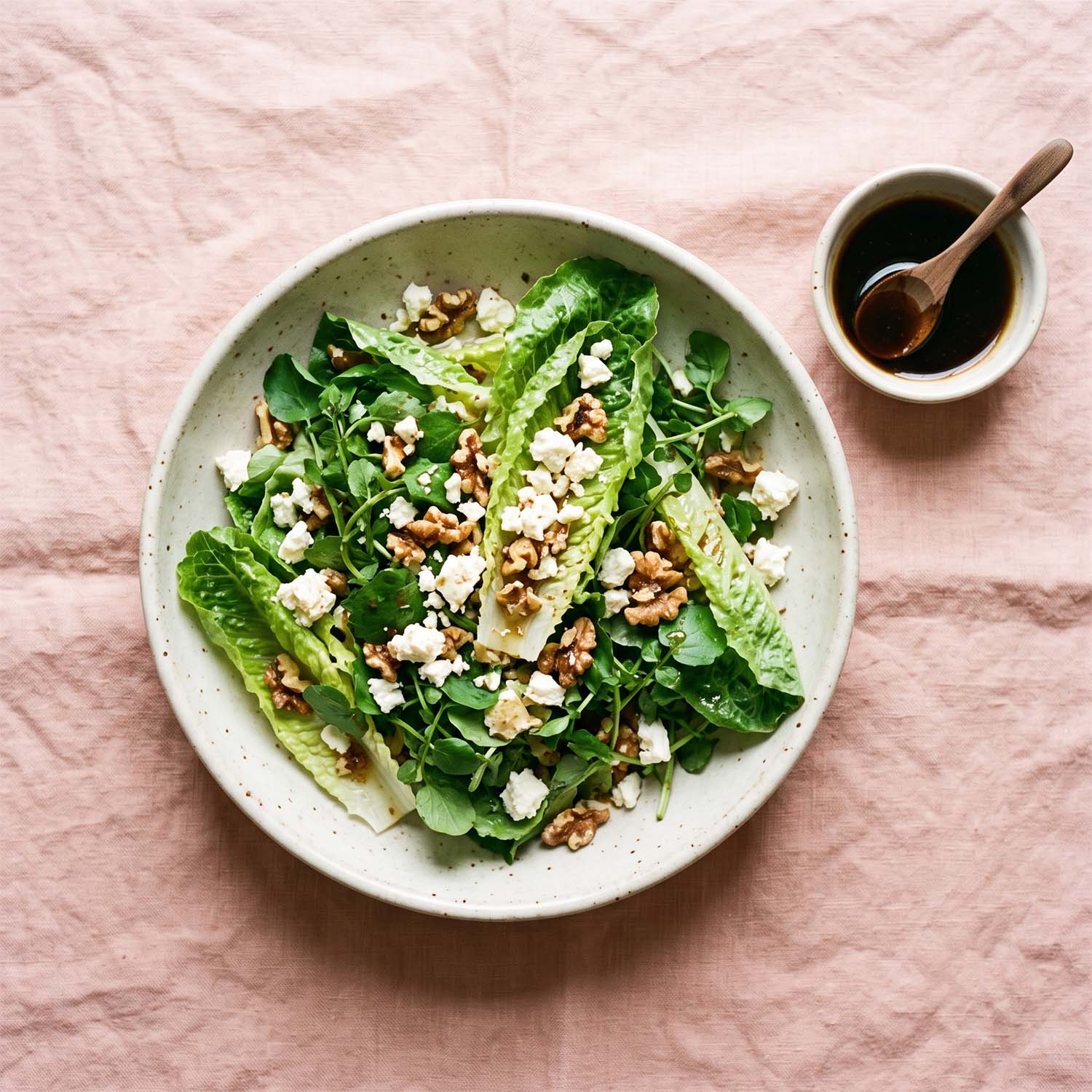
What is in it? Less than you would think. The salad is built on romaine and watercress, with walnuts and a mild crumbled cheese. Most of the mythology, though, gathers around the dressing — a balsamic vinaigrette whose recipe the restaurant guards closely. Some hopeful customers skip the greens entirely and drink the dressing straight. The kitchen has kept the formula a secret for decades, which, whether by design or not, is exactly the kind of detail a good legend needs.
Did You Know?
The restaurant keeps a running tribute to its “salad babies,” and offers keepsake diaries where mothers write about their pregnancies. Some return years later with grown children to show the staff the baby the salad supposedly delivered — proof, if nothing else, of how deeply people want the story to be true.
The anatomy of a modern legend
Folklorists have long noticed that the strongest legends are not the most believable ones — they are the most repeatable ones. The Caioti story travels so well because it asks almost nothing of the person hearing it. There is no doctrine to accept, no ritual to memorize. There is only a restaurant, a salad, and a friend who swears it worked. Belief costs the listener a lunch.
The internet gave the legend a second life. Where the story once moved at the speed of a phone call between friends, it now moves at the speed of a screenshot. Celebrity mothers have posted photos of the salad to millions of followers, and each post sends a fresh wave of pilgrims to Studio City. Duke University experts studying a related piece of birth folklore have observed that these beliefs endure largely because of strong cultural ties — you can read their take on why birth-related folklore persists across generations. The salad is that observation made visible.
Why the salad “works”
Here is the honest part. There is no evidence that a salad — this one or any other — can start labor, and the restaurant itself has always been careful to say so. Ask the owners and they will tell you plainly that they have never claimed the dish does anything at all. They only know that women come, and that women keep coming.
The explanation is hiding in the timing. Every woman who orders The Salad is already at or past her due date, which means her labor was, in nearly every case, arriving soon regardless of what she ate. When contractions begin a day or two later, the salad gets the credit for an appointment her body was already keeping. It is the same quiet trick behind almost every folk remedy on record, and it is precisely why the spicy taco and its cousins have earned the same reputation. Give any harmless ritual to a full-term woman, and labor will eventually seem to answer it.
“The salad gets the credit for an appointment the body was already keeping.”
None of which has ever slowed the pilgrimage, and it would be a mistake to think it should. Dismissing the salad as a delusion misreads what it actually offers. For a woman in the last, longest days of pregnancy — uncomfortable, impatient, and largely out of control of her own timeline — the drive to Studio City is a small act of agency. It is something to do. It is a shared ritual that connects her to every mother who made the same trip, wrote in the same diaries, and waited for the same phone to ring. The salad may not deliver a baby. What it reliably delivers is comfort, company, and a story to tell afterward — and those have value that no study can measure.
Thirty years on, the legend shows no sign of fading. National outlets have covered it for years, and the café still greets its daily visitors with the same gentle honesty — you can see how the story has been documented over the decades. New mothers arrive, order the dish exactly as instructed, and drive home to wait. Some of their babies will be born within days, and those mothers will tell the story to the next woman in line. That is how a legend stays alive: not by being proven, but by being passed on.
A Gentle Note
This piece is a look at how a cultural legend is made, not a course of action. The story is a delightful window into how women share knowledge and comfort — but any decision about pregnancy and birth belongs to a woman and the doctor or midwife who knows her.
Questions Readers Ask About “The Salad”
Disclaimer: All content on this website—including articles, educational materials, and interactive calculators—is for informational, educational, and entertainment purposes only. The calculations, percentiles, and outputs generated by tools on this site are based on general statistical data and mathematical models; they do not constitute medical data, a clinical assessment, or a diagnosis.
Nothing contained on this website is a substitute for professional medical advice, diagnosis, or treatment. Always seek the guidance of a qualified healthcare professional or urologist with any questions you have regarding physical development, anatomy, or health conditions. Reliance on any information or tools provided by this website is solely at your own risk.