English
  Español


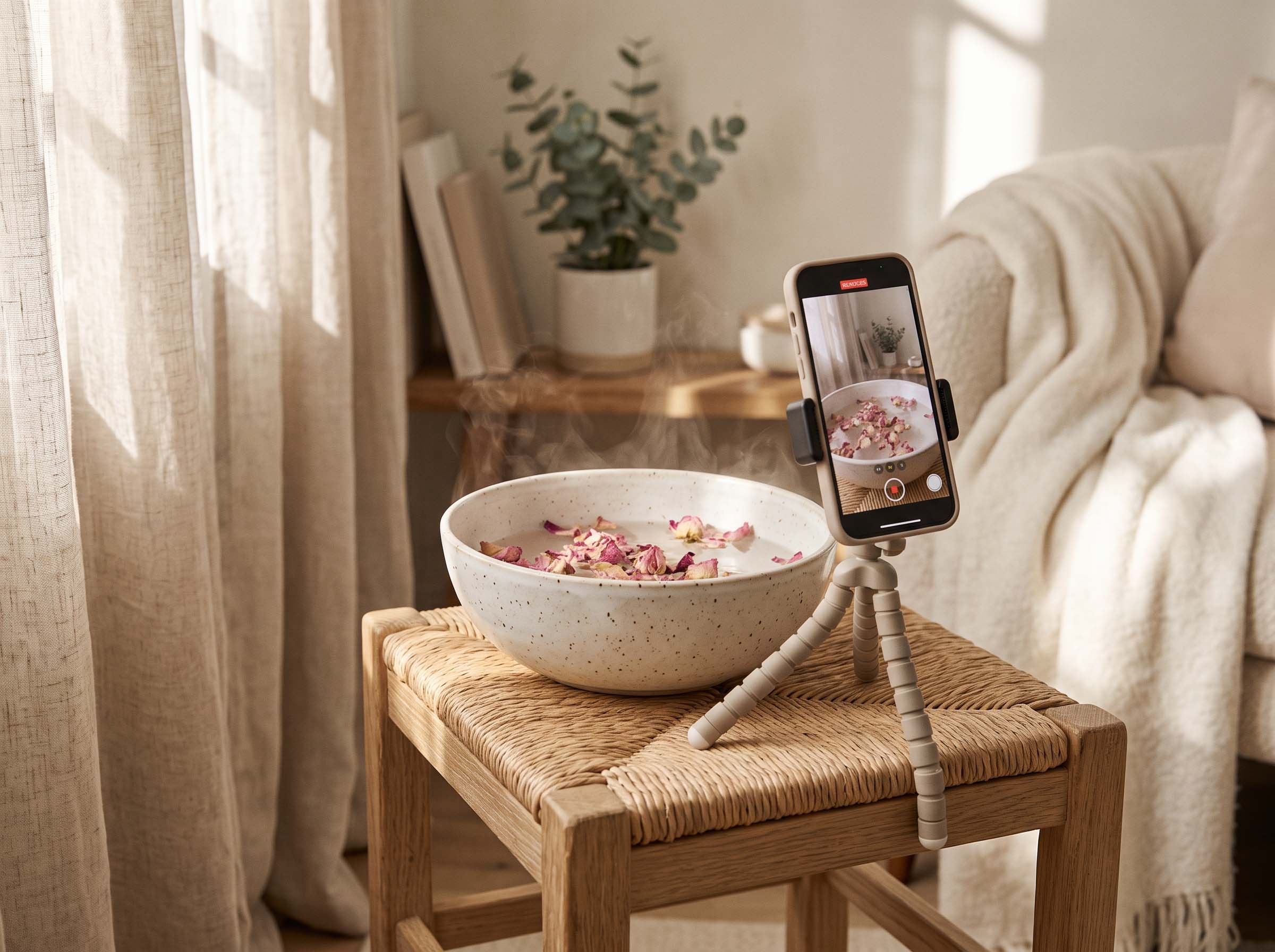
The clip runs about eleven seconds. A wide ceramic bowl sits inside a wooden stool, dried petals turning slowly in the water, a linen sheet draped over a woman's knees. Steam curls upward through a shaft of afternoon light. The caption is a single line, usually a promise. The comment section, almost without exception, opens with some version of the same question: does this actually do anything?
That question has been asked and answered in a hundred explainers, including our own look at the claims made for vaginal steaming. Yet the clip keeps circulating, gathering millions of views in cycles that return roughly every eighteen months. Understanding why says a great deal more about modern media than it does about herbs.
A steam ritual with a long history in several cultures became a global talking point after a celebrity endorsement, then found a second life on short-form video.
Researchers who study wellness media argue the practice travels well online because it is visual, theatrical and easy to film — qualities unrelated to whether a claim holds up.
The more revealing story is not the steam. It is what the trend exposes about how ordinary questions about the female body find their answers.
The Aesthetics of Believability
Short-form video is a visual medium before it is an informational one. A practice that photographs beautifully has an enormous structural advantage over one that does not, regardless of the merits of either. Steam is photogenic. It moves. It catches light. It suggests transformation without having to explain itself, and it arrives pre-loaded with associations most viewers already hold — the sauna, the facial steamer, the pot of hot water and a towel over the head during a winter cold.
Compare that with the visual assets available to accurate physiology. The vaginal canal maintains its own acidic environment through resident bacteria; the process is continuous, invisible, and produces no footage. There is no fifteen-second clip of a microbiome doing its job. An explanation delivered by a woman speaking to a camera in a bathroom competes, frame for frame, against rising steam and petals — and loses.
This is not a new problem dressed in new technology. Print magazines chose the arresting photograph over the dull one for a century. What changed is the speed of the feedback loop. A magazine editor learned whether a cover sold after a month on the newsstand. A creator learns within forty minutes, and adjusts the next video accordingly.
What the Feed Is Actually Measuring
Recommendation systems do not evaluate whether a claim is true. They estimate whether a given viewer will keep watching, and they optimise for that estimate. Watch time, replays, saves, shares and comment volume are the currency. A video that provokes disagreement in the comments performs well precisely because disagreement generates replies, and replies signal that a video is worth showing to more people.
A correction, then, feeds the thing it corrects. Every stitched response, every skeptical duet, every "please do not do this" reply adds to the original clip's measured value. Platforms have introduced labels and demotions for certain health claims, but the underlying arithmetic rewards content that makes people stop scrolling and say something.
| Feature of a post | Why the system favours it | What it says about accuracy |
|---|---|---|
| Strong visual motion (steam, pouring, colour change) | Holds attention through the first three seconds, when most scrolling decisions are made | Nothing |
| A claim that is surprising or contested | Drives comments, replies and stitched responses, all counted as engagement | Nothing |
| Ritual framing and calm pacing | Longer average watch time; viewers replay soothing footage | Nothing |
| Citations, caveats, uncertainty | Slows the video, reduces completion rate, rarely quoted in shares | Often a sign of careful sourcing |
An Old Practice in New Packaging
The idea that this is a fad invented on a phone in 2015 is itself inaccurate. Warm steam applied to the lower body is documented across a wide geography and a long stretch of time. Central Mexican tradition has the ancestral heat of the temazcal, a communal steam structure with ceremonial as well as practical meaning. Greek physicians practised fumigation, seating a woman above a heated vessel of herbs — a technique built on the now-discarded belief that the womb wandered the body and could be coaxed back into position.
What travelled onto social media was not the tradition. It was the tradition's silhouette, extracted from the household that gave it meaning and reattached to a claim about detoxification that none of the original practitioners would have recognised. Researchers who examined ninety online accounts of the practice for a peer-reviewed study in Culture, Health & Sexuality found the surrounding language leaned heavily on a familiar premise: that the female body is naturally in need of correction, and that modern life has made it more so. That premise, more than any herb, is what the marketing sells. The published analysis of Western vaginal steaming discourse is worth reading in full for anyone interested in how wellness copy is constructed.
What travelled onto social media was not the tradition. It was the tradition's silhouette, sold back to us with a claim attached.
The Evidence, and Its Edges
Here the honest answer is a thin one. Controlled research on steam applied to the female genital area is close to non-existent; the published record consists largely of small observational work, descriptive studies of traditional practice, and individual case reports in the clinical literature — including a documented instance of second-degree burns reported in a Canadian obstetrics journal. Reviews by major institutions have consistently noted the absence of evidence supporting the health claims made for the practice. As clinicians at the Cleveland Clinic have described in their assessment of vaginal steaming, steam contacts external tissue and does not reach the structures the marketing language invokes.
Absence of evidence is not the same statement as evidence of absence, and it would be dishonest to pretend otherwise. Very few practices in this category have been studied properly, which is itself a finding worth sitting with. Women's intimate health has historically attracted less research funding than many comparable fields, and the gap that leaves is not neutral ground. It is commercial territory, and it gets filled by whoever fills it first.
The Greek practice of fumigation was recorded in medical texts for centuries, resting on the theory of the wandering womb — the belief that the uterus roamed the body in search of moisture and could be lured back with scent. The theory survived in respectable medicine for roughly two thousand years before anatomy retired it.
The Market That Grew Around the Clip
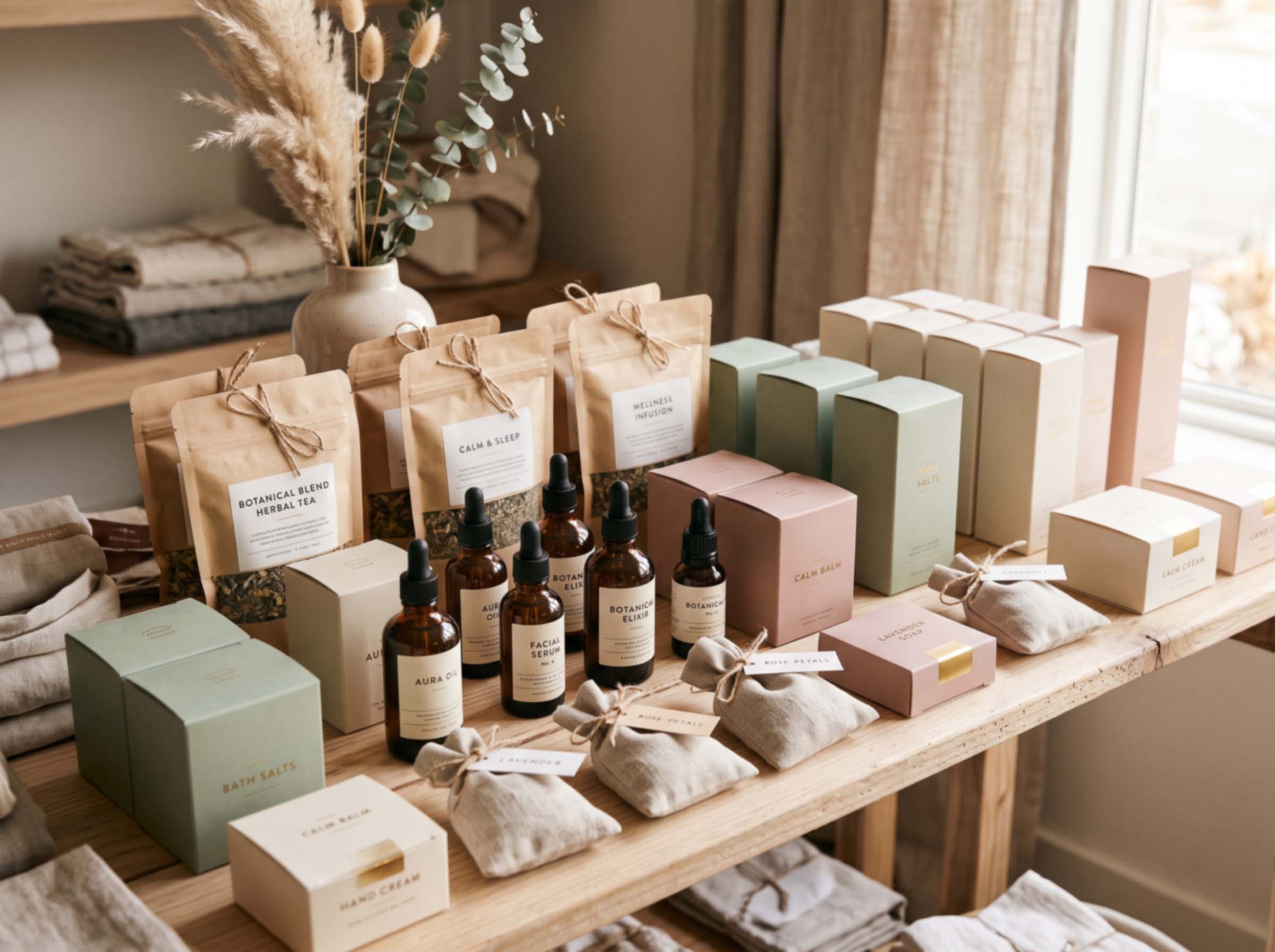
Behind the video sits a supply chain. Herb blends packaged in kraft pouches, steaming stools sold flat-packed, spa sessions offered as an add-on to a facial, affiliate codes in the caption. Wellness has become one of the largest consumer categories in the world, and intimate care is among its fastest-moving corners, partly because embarrassment is an efficient sales mechanism. A woman who feels uncertain about a question she does not want to ask aloud is a woman who buys quietly.
Trend cycles in this category tend to follow a recognisable shape. An unfamiliar practice appears, attached to a celebrity or a striking image. Coverage follows, much of it critical, all of it amplifying. Products arrive to meet the demand the coverage created. Then a quieter phase, in which the practice settles into the permanent inventory of the wellness aisle — no longer news, still on sale.
Four Questions an Editor Asks Before a Clip Goes Anywhere
Who profits if this spreads? A caption with a discount code is an advertisement with production values.
What is the original source? Wellness copy often cites "studies" in the plural without naming one. Named journals, named authors and a date are the minimum.
Is the confidence proportionate? Careful sources hedge. Certainty delivered in a soothing voice over pretty footage is a style choice, not a credential.
Why am I seeing this now? The feed made a choice on someone's behalf. Knowing that a choice was made is most of the literacy.
The Screen Learns a New Vocabulary
Something else has been happening alongside the trend cycle, and it deserves more attention than it gets. Television and film have quietly abandoned the blue liquid and the tasteful cutaway. Menstruation now appears on screen as an ordinary event with ordinary logistics. Post-partum recovery is written with its mesh underwear and its exhaustion intact. Scripted drama has become, unexpectedly, one of the more accurate sources of information available to a teenage girl.
That shift matters because the audience for a viral steam clip is rarely gullible. More often she is curious, and working from a starting point of very little formal instruction. School programmes vary enormously between provinces and districts, and mothers who were themselves taught almost nothing find they have little to pass down. The subject of how media shapes the way we see ourselves is not a side note here. For many women it is the primary curriculum, delivered in fifteen-second instalments by a system that was never designed to teach.
The steam will fade from the feed, as the jade egg did and the cleanse before it. Another practice will arrive, filmed in the same soft light, and the comment sections will fill with the same question asked in the same slightly embarrassed way. The practice is interchangeable. The question underneath it — asked by women who were never given a place to ask it — is the part worth paying attention to.
Reader Questions
Disclaimer: All content on this website—including articles, educational materials, and interactive calculators—is for informational, educational, and entertainment purposes only. The calculations, percentiles, and outputs generated by tools on this site are based on general statistical data and mathematical models; they do not constitute medical data, a clinical assessment, or a diagnosis.
Nothing contained on this website is a substitute for professional medical advice, diagnosis, or treatment. Always seek the guidance of a qualified healthcare professional or urologist with any questions you have regarding physical development, anatomy, or health conditions. Reliance on any information or tools provided by this website is solely at your own risk.