English
  Español



Somewhere in Los Angeles right now, a woman who is nine days past her due date is driving across the city for a salad. Not any salad — The Salad, the one at a Studio City pizza café that mothers have whispered about for more than thirty years. A few states over, another woman is ordering the spiciest taco on the menu, quietly certain the heat will do what her calendar has not. Neither woman fully believes it. Both are going anyway.
This is the strange, tender country of the old wives' tales about inducing labor — a body of folklore that has outlived every advance in modern obstetrics, precisely because it was never really about medicine. It is about hope, patience worn thin, and the very old human habit of trying to coax a reluctant body into cooperating. Long before anyone counted weeks or marked a due date on a chart, women traded these beliefs across kitchen tables and birthing rooms. Many of the myths about the female body we still repeat today were born in exactly that way: not from a laboratory, but from one woman telling another what seemed to work.
In Brief
- The belief that certain foods can start labor is thousands of years old — the “spicy taco” is only its newest costume.
- Its underlying logic traces to an ancient idea: stir the gut, and the neighboring womb responds.
- America's most famous version is a café salad that has drawn overdue mothers to one Los Angeles restaurant since the early 1990s.
- Research offers no reliable evidence that these remedies work — yet the folklore endures, and the reason it endures is a story worth telling.
A belief older than the taco
The spicy-food theory feels thoroughly modern, a product of drive-through menus and text-thread advice. Its reasoning is anything but. The idea that what a woman eats can hurry a baby along is one of the oldest recorded beliefs in the history of childbirth, and it points back to the same few kitchens of the ancient world.
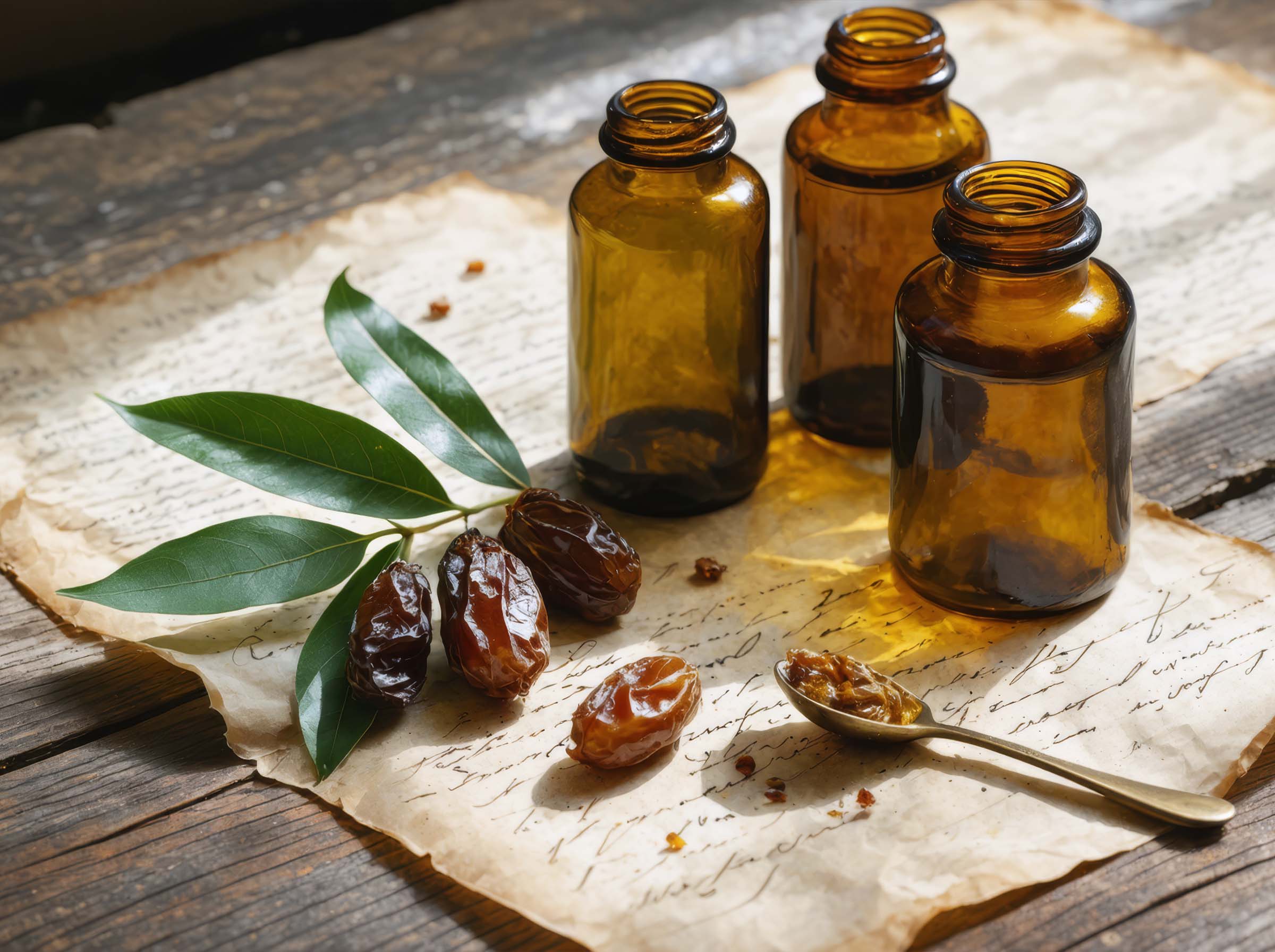
In ancient Egypt, physicians writing on papyrus more than three thousand years ago already named foods and oils believed to bring on birth, among them castor oil and the humble date. Centuries later in Greece, the physician Hippocrates described stimulating the body toward labor by other means entirely. Across these traditions ran a single thread of folk reasoning: substances that stirred and loosened the bowel were thought to stir the womb that sat right beside it. To the ancient eye, the gut and the womb were neighbors, and what troubled one was believed to rouse the other. You can read how induction methods evolved from ancient Egypt to the present day and see the same handful of remedies reappear, century after century, under new names.
Did You Know?
Castor oil appears as a remedy in the Egyptian Ebers Papyrus, dated to roughly 1550 BCE — making the “food that starts labor” belief more than 3,500 years old. Traditional midwives were still discussing it in the twentieth century, long after hospitals had other options.
Why a taco, of all things?
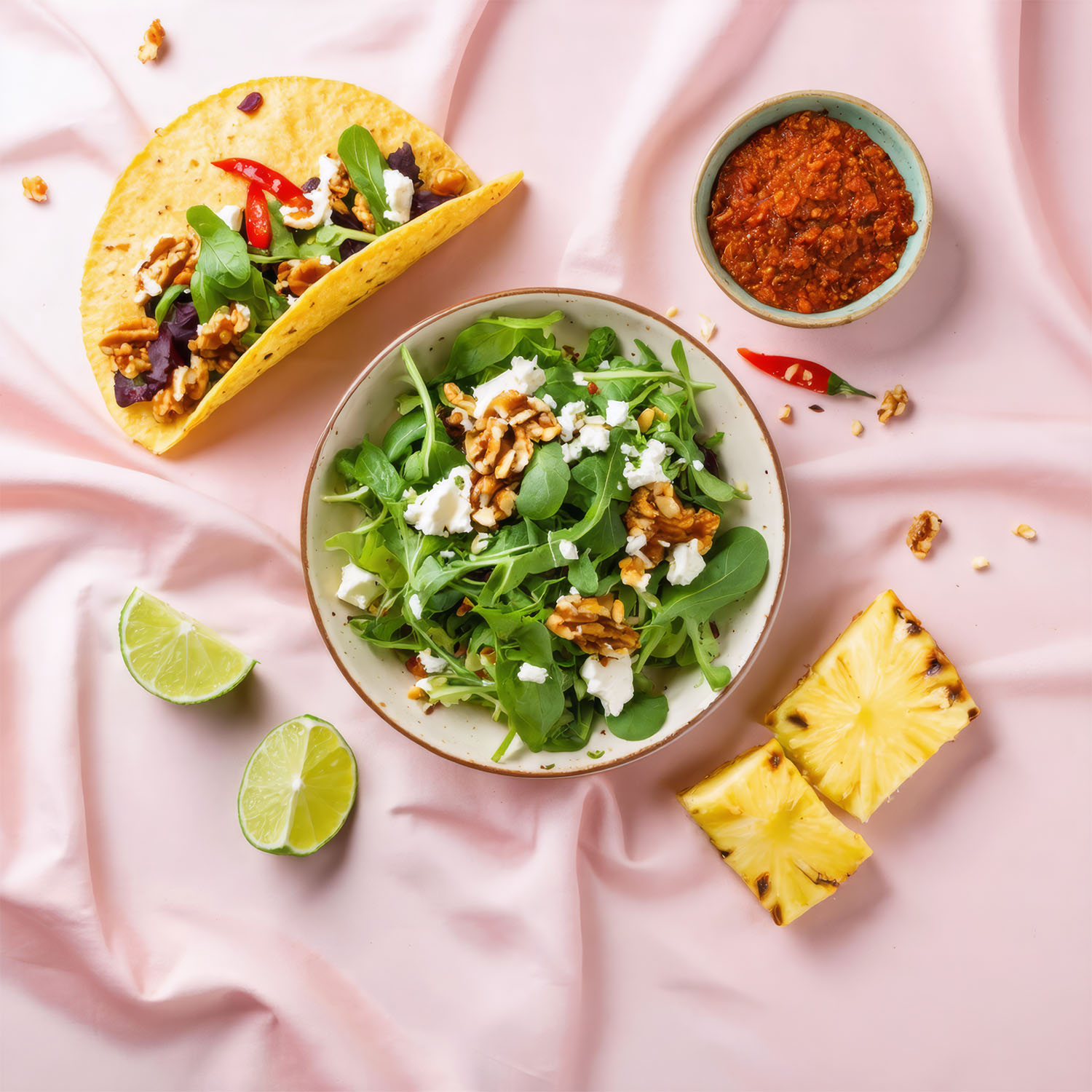
If the belief is ancient, the taco is the American accent it picked up along the way. In kitchens across the American South, in Mexican and Cajun cooking, heat and spice carried a reputation for “getting things moving,” and that phrase did double duty. A dish that sent a signal through the digestive system was thought to send one through the whole lower body. The spicy taco, the fiery curry, the eye-watering plate of wings — each is a regional translation of the same old instinct that a jolt to the gut might wake the womb.
Here folklore brushes up against something researchers have found genuinely interesting. When scientists studied why castor oil, that ancient remedy, seemed to affect both the bowel and the uterus, they traced its active compound to receptors the two organs share. In other words, the old “neighbors” theory was not pure fantasy — there is a documented biological channel by which strong gut stimulation and uterine activity can involve overlapping chemical messengers. That does not mean a taco will start your labor. It means the folk logic behind the belief had noticed a real pattern, even if it drew a shakier conclusion from it. For the curious, there is now peer-reviewed analysis of castor oil and uterine activity that lays out what is known and what remains uncertain.
What every version has in common is the moment it is used. These are remedies of the final stretch, reached for by women who are full-term, uncomfortable, and ready. That timing matters more than the menu, as we will see — it is the quiet engine that keeps every one of these legends alive.
The salad that built a legend
No modern tale shows how this folklore is made better than a small pizza restaurant in Studio City, California. According to the story its owners have told for decades, the whole thing began in the early 1990s, when an overdue customer ordered a simple romaine-and-watercress salad and went into labor soon after. Believing the meal had done it, she told an expecting friend. That friend, also past due, tried it — and her baby, too, arrived. Word spread the way word always does among mothers, and a legend was born.
Today that café sees a steady stream of pregnant women, some days only a handful, some days a dozen or more, ordering a dish known simply as “The Salad.” A secret balsamic dressing gets most of the credit. The restaurant keeps a running record of the babies said to have followed, and mothers write their stories into keepsake diaries. Tellingly, the owners themselves have never claimed the salad induces anything. They say plainly that they do not know why it has the reputation it does — only that it does.
That honesty is the most revealing part of the whole affair. A modern legend does not need a mechanism. It needs only four ingredients: a coincidence, a heartfelt testimony, a trusted friend to carry it, and a memorable name. “The Salad” has all four, which is why it has traveled further than any spicy taco ever will.
“A coincidence becomes a cure the moment a trusted friend swears by it.”
The Old Wives' Tales, Traced
| The Remedy | Where the Belief Comes From | What Research Has Explored |
|---|---|---|
| Spicy food & the “spicy taco” | A modern American reading of the ancient gut-stirs-the-womb idea, flavored by regional cuisine. | Studies have not found reliable evidence that spicy food starts labor; near-term timing best explains its reputation. |
| Castor oil | Named in Egyptian texts more than 3,000 years ago; carried on by traditional midwives. | Its active compound acts on receptors shared by gut and uterus; results in the research remain mixed and debated. |
| Fresh pineapple | A tropical-kitchen belief tied to an enzyme in the raw fruit. | The amounts involved make a meaningful effect unlikely; researchers treat it as folklore rather than method. |
| Dates | One of the oldest remedies on record, reaching back to ancient Egypt. | A handful of small studies have examined late-pregnancy date consumption; findings are limited and not conclusive. |
| “The Salad” & long walks | A pure modern legend, spread mother to mother by word of mouth. | No mechanism has been shown; the pattern is best understood through timing and shared testimony. |
So, does it actually work?
Here the folklorist has to be honest, and the honesty is gentler than you might expect. There is no strong evidence that a spicy taco, a famous salad, or a bowl of pineapple will start labor. But look closely at when these remedies are used, and you find the reason they will never lose their reputation. Every one of them is tried by a woman who is already at or past her due date — a woman whose labor was, in all likelihood, coming soon no matter what she ate. When the contractions do begin a day or two later, the last thing she tried gets the credit. That is not gullibility. It is simply how the human mind connects events, and it is the condition under which nearly every folk cure earns its name.
To stop there, though, would be to miss what these beliefs actually carried. Dismissing them as mere ignorance treats generations of women as fools, which they were not. These remedies were a form of knowledge in their own right: a way to feel some agency during a helpless wait, a reason for an anxious mother to be fed and fussed over, a thread connecting her to every woman who had done this before. Food has always held this kind of meaning, and what these traditions offered was rarely a chemical — it was comfort, ritual, and company. It belongs to the same family as the older beliefs explored in the folklore of the moon and the female cycle, and to the wider question of what our food traditions really feed. The answer, more often than not, is the spirit rather than the body.
The spicy taco, then, is not really a remedy at all. It is a small ceremony — a way of saying to an impatient body, gently and hopefully, we are ready whenever you are. That is why the legend survives. Not because it works, but because of what it means.
A Gentle Note
This piece explores the cultural history of these beliefs, not a course of action. Folklore is a wonderful window into how women have understood their bodies across time — but decisions about pregnancy and birth belong to a woman and the doctor or midwife who knows her story.
Questions Women Ask About This Legend
Disclaimer: All content on this website—including articles, educational materials, and interactive calculators—is for informational, educational, and entertainment purposes only. The calculations, percentiles, and outputs generated by tools on this site are based on general statistical data and mathematical models; they do not constitute medical data, a clinical assessment, or a diagnosis.
Nothing contained on this website is a substitute for professional medical advice, diagnosis, or treatment. Always seek the guidance of a qualified healthcare professional or urologist with any questions you have regarding physical development, anatomy, or health conditions. Reliance on any information or tools provided by this website is solely at your own risk.