English
  Español



There is a conversation most women have never had out loud — not with their mothers, not with their doctors, and certainly not with their friends over coffee. It goes something like this: By the end of the day, I notice a smell. Is that normal? Is something wrong with me? Am I... clean enough?
The answer to that quiet, anxious question is almost always yes — it is normal. But the fact that so many women carry that question alone, in silence, says a great deal about how our culture has treated the female body for a very long time.
This article is not about medical conditions. It is about the ordinary, everyday reality of how the female body smells, why it smells that way, and how a combination of history, commerce, and social pressure turned something completely natural into a source of shame. Understanding where the taboo came from is the first step toward putting it down.
"By the end of the day, the female body carries the evidence of simply being alive — and there is nothing wrong with that."
— Lexi Pierce
The Geography of the Problem
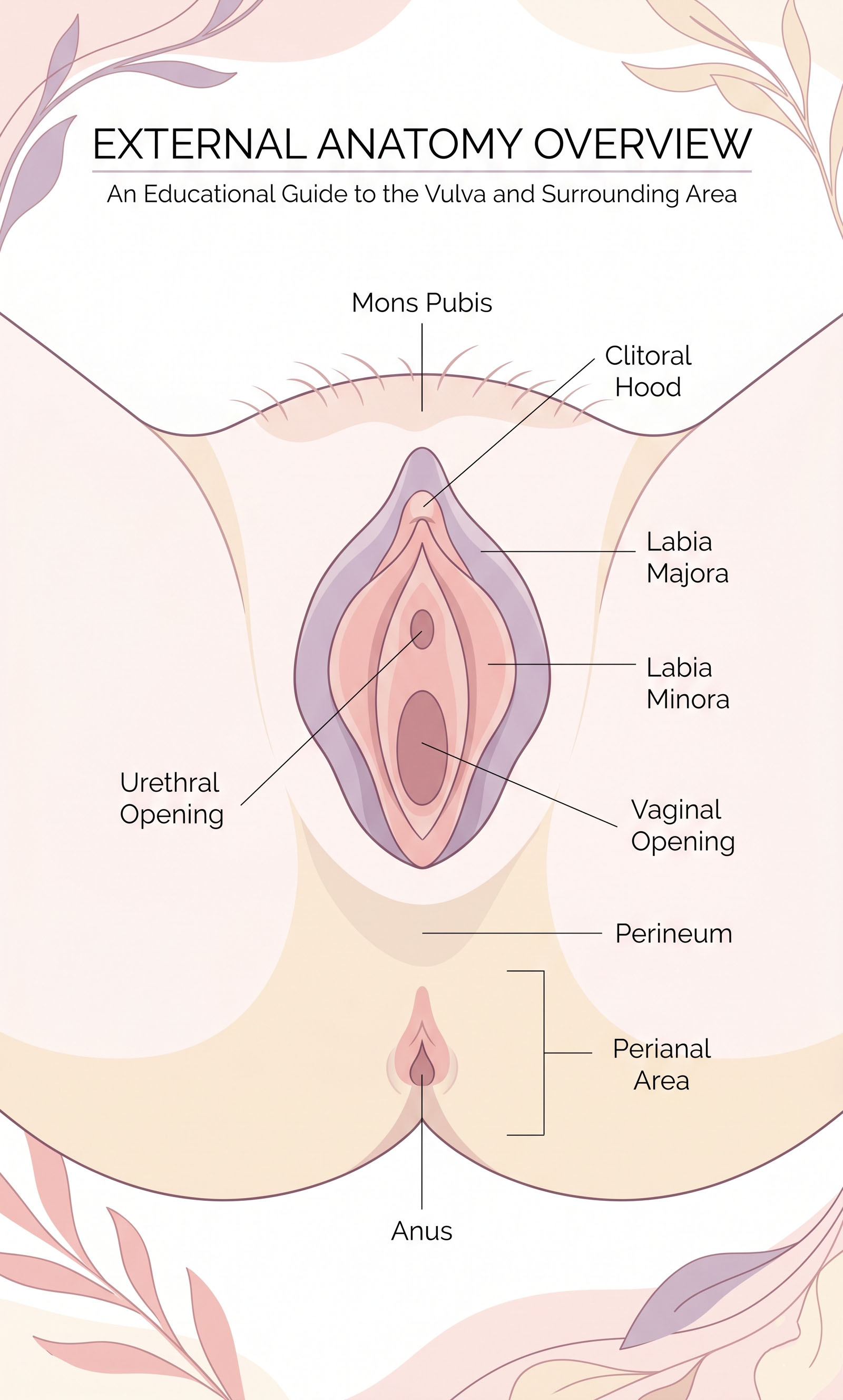
Before we can talk about odor honestly, we have to talk about anatomy — specifically, the fact that most people use the word "vagina" when they actually mean the entire external region, which is the vulva. The vagina is internal. The vulva is what you see on the outside: the labia majora, labia minora, the clitoral hood, and the vaginal opening. These are two different structures, and they each contribute to scent in different ways.
The vulva is skin. Like any skin that experiences warmth, friction, and moisture throughout the day, it produces sweat and carries bacteria — specifically from the apocrine glands found in the groin. These glands, the same type found in the underarms, produce a slightly richer sweat than other areas of the body. That sweat, combined with natural skin bacteria, creates scent. That is not a hygiene failure. That is biology.
Now add geography. The vulva is located in close proximity to the anus. This is simply how human bodies are built. The perineum — the small area of skin between the vaginal opening and the anus — means that bacterial communities from both regions exist in close quarters. By the end of a full day of activity, sitting, moving, and sweating, these scents accumulate. Layered together, they can produce an odor that is noticeably stronger in the evening than in the morning. For many women, this comes as a small shock — not because something is wrong, but because no one ever told them this would happen.
Know Your Anatomy
The Vulva, Vagina, and the Anatomy of Everyday Scent
- Vagina: Internal canal. Has its own microbiome, produces discharge, and has a mild, naturally acidic scent.
- Vulva: External skin. Contains apocrine sweat glands (same type as armpits). Produces sweat-based scent throughout the day.
- Perineum: The bridge of skin between the vaginal opening and the anus. A natural meeting point for bacterial communities from both areas.
- Anus / perianal skin: Close neighbor to the vulva. Contributes to the overall scent profile by end of day, especially during warmer months or after physical activity.
Inside the Vagina Itself
The vagina has its own microbiome — a community of bacteria, dominated in healthy women by Lactobacillus species, that keeps the internal environment slightly acidic. This acidity protects against infection. It also produces a mild, tangy, or slightly sour scent that is entirely normal. Many women mistake this for a problem. It is not. The vaginal microbiome is one of the body's more sophisticated self-regulating systems.
Vaginal discharge — which is normal and present in some amount throughout the month — also carries scent. The smell and consistency of discharge naturally shifts with the menstrual cycle. Around ovulation, it tends to be clearer and more stretchy. Before a period, it may have a stronger, muskier quality. None of these shifts are signs of infection. They are signs of a functioning reproductive system.
What does signal a problem is a sudden, significant change — particularly a strong fishy smell that appears abruptly, or discharge that is grey, foamy, or accompanied by itching and burning. Those symptoms point to infections like bacterial vaginosis or trichomoniasis, which deserve a visit to a doctor. But a mild to moderate scent that builds across the course of a normal day is not that. It is just you, going about your life.
Where Did the Shame Come From?
The shame did not arrive out of nowhere. It was manufactured — partly by history, partly by industry, and partly by the very human tendency to treat women's bodies as problems that need solving.
For centuries, medical and religious frameworks cast the female body as inherently unclean. Ancient texts across many cultures described menstruation, vaginal discharge, and female bodily functions in language that ranged from cautionary to explicitly polluting. Women were told, implicitly and explicitly, that their bodies were difficult, unpredictable, and in need of management. This framing stuck.
Cultural Insight
Lysol and the History of "Feminine Hygiene"
In the 1920s through the 1950s, Lysol — yes, the household disinfectant — was actively marketed to women in the United States and Canada as a feminine hygiene product. Advertisements in women's magazines implied that vaginal odor would ruin a marriage, using language designed to make women fear their own bodies.
The campaign was deeply harmful. Lysol used as a douche caused chemical burns and infections. But its cultural legacy — the idea that a woman's natural scent is something to be eliminated — outlasted the ads by decades.
Then came the 20th century and, with it, the feminine hygiene industry. Advertisers discovered that women's anxiety about their bodies was a highly profitable market. Douches, sprays, scented powders, and "deodorizing" products were sold with language that was deliberately alarming. The message was clear: your natural smell is offensive. You must cover it, eliminate it, and never acknowledge it in polite company.
This marketing was not based on medical guidance. Gynecologists have said for decades that the vagina is self-cleaning and that douching disrupts the natural bacterial balance, increasing the risk of infection. But the cultural idea had already been planted. Generations of women absorbed the message that their bodies were something to be managed with products — and that failure to do so would have social consequences.
Mothers passed this anxiety to daughters, not out of cruelty, but out of care — not wanting them to be embarrassed. The taboo reproduced itself quietly through the very relationships meant to nurture women.
By the Numbers
30%
of women report feeling embarrassed about their natural body odor, even when no infection is present.
$3B+
estimated size of the global feminine hygiene product market — a category built substantially on manufactured insecurity.
1 in 3
women will experience bacterial vaginosis at some point — the most common cause of a genuinely changed odor that warrants attention.
How Much Is Normal? How Much Is a Hygiene Issue?
This is the question at the center of it all, and it deserves a straight answer.
A mild to moderate musky or slightly sour scent in the vulvar area, particularly by mid-afternoon or evening, is normal. It is the result of sweat glands doing their job, bacteria doing theirs, and a day of ordinary activity. In warmer weather, after exercise, or after a long day without changing underwear, the smell will be more noticeable. That is not poor hygiene. That is physics.
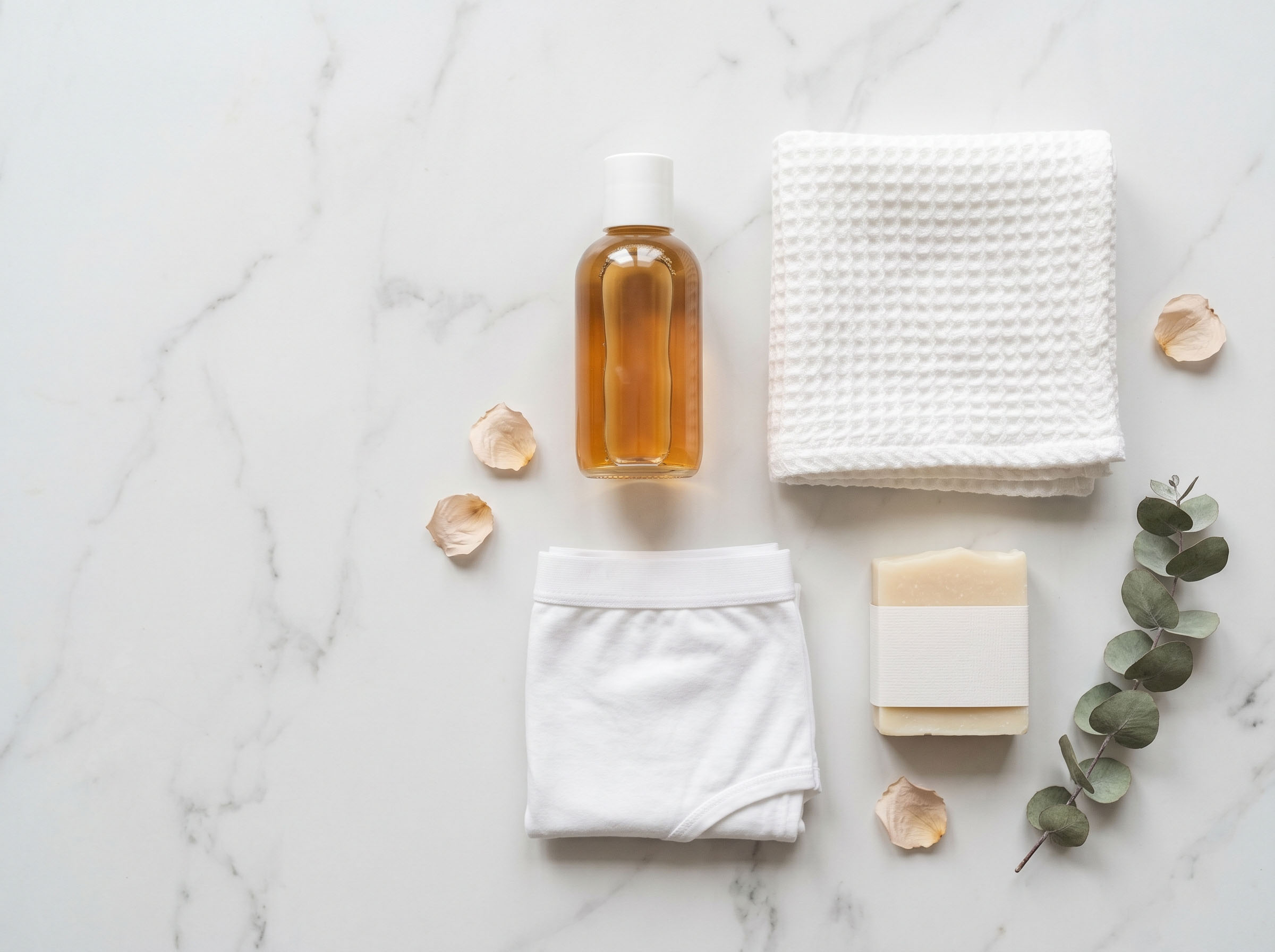
Hygiene becomes a factor when basic daily habits are not in place. Washing the external vulvar area once a day — with water, or a very mild, fragrance-free soap if preferred — removes accumulated sweat, discharge, and bacteria. Breathable underwear, like cotton, helps reduce moisture buildup. Changing underwear daily matters. These are simple, ordinary habits, and most women already practice them.
The issue is that many women, worried about odor, reach for products that do more harm than good — heavily fragranced soaps, douches, scented wipes, or internal deodorant sprays. These products can disrupt the vaginal pH, strip protective bacteria, and ultimately cause the very problem they claim to prevent. A woman who over-cleanses or uses the wrong products may end up with more irritation, more discharge, and a stronger smell than she started with.
Practical Guide
Daily Vulvar Care: What Helps, What Harms
✓ Do This
- Wash the vulva (external area) with warm water once daily
- Use fragrance-free, gentle soap on the outer folds only if needed
- Wear breathable, cotton underwear
- Change underwear daily — or after sweating heavily
- Pat dry, don't rub, after washing
- See a doctor if smell is sudden, strong, or paired with unusual discharge
✗ Avoid This
- Douching — disrupts natural bacterial balance
- Scented soaps, sprays, or wipes inside the labia
- Internal deodorant products of any kind
- Washing the inside of the vaginal canal
- Sitting in wet or sweaty underwear for extended periods
- Assuming all odor is a problem requiring a product
The Neighbor Nobody Talks About
There is another piece of this conversation that gets almost no airtime — the role of the anus and perianal area in the overall scent experience. This is understandable. It is not an easy topic to bring up. But it is also practically relevant for every woman who has ever been puzzled by a stronger-than-expected scent by day's end.
The anus, perianal skin, and the vulva are separated by just a few centimeters. The bacterial communities in both areas, combined with natural sweat from the groin region and the physical reality of sitting, moving, and going about daily life, mean that scent from both areas mixes. This is simply anatomy. It is not a reflection of cleanliness or hygiene standards. It is the reality of how bodies are designed.
Good perianal hygiene — gentle washing once a day, careful wiping front to back, and breathable clothing — is all that is needed to keep this in check. The goal is not to eliminate all scent. The goal is ordinary cleanliness, the same kind you apply to any other part of your body.
What Factors Make It Stronger?
Reference Table
Passing the Silence On — Or Not
One of the real costs of this taboo is what it does to the next generation. When mothers never speak openly about the body, daughters fill the silence with anxiety. They grow up not knowing what is normal, turning instead to search engines, unreliable online sources, or product advertisements to answer questions their own families never addressed.
This cycle is worth interrupting. Not with excessive detail or clinical lectures, but with simple, matter-of-fact reassurance. Your body is going to have a smell sometimes. That's normal. Here is what healthy looks like, and here is when to check with a doctor. That conversation takes five minutes. Its effects last a lifetime.
Women who are comfortable with the ordinary realities of their bodies are also more likely to notice when something actually changes — and to seek care promptly when it does. Normalizing the expected makes the unexpected easier to spot.
Did You Know?
The vaginal microbiome is one of the least diverse in the human body — by design. A healthy vaginal environment is dominated by Lactobacillus species, which crowd out harmful bacteria by producing lactic acid and keeping the pH low. This is the natural defense system at work. When products disrupt this balance, the body's first line of protection is compromised — which is exactly why gynecologists strongly advise against douching or inserting any scented products.
Source: American College of Obstetricians and Gynecologists (ACOG)
The Standard Worth Having
The goal for any woman is not to smell like nothing. That is not achievable for any human being — men included — who goes about an active day. The goal is ordinary cleanliness. A morning shower or wash, breathable clothing, changing undergarments daily, and a basic awareness of what is normal for your own body. That is it. That is genuinely all that is required.
By the end of the day, accumulation happens. It happens to everyone. The question has never been whether this is a problem — it is not, and it has never been. The question is why we spent so long believing it was.
Women deserve accurate information about their own bodies, free of the commercial anxieties that have historically been layered over straightforward biology. The taboo around vaginal odor did not form because something was genuinely wrong. It formed because a body that women trust is a body that doesn't need to be fixed — and fixing is a far more profitable narrative than reassurance.
Consider this your reassurance: you are, in all likelihood, completely fine.
Further Reading & Trusted Sources
- ACOG: What Every Woman Should Know About Vulvar Skin Care and Hygiene — American College of Obstetricians and Gynecologists
- Understanding Vaginitis and Vaginal Health — NICHD — National Institute of Child Health and Human Development (NIH)
Your Questions, Answered
Disclaimer: All content on this website—including articles, educational materials, and interactive calculators—is for informational, educational, and entertainment purposes only. The calculations, percentiles, and outputs generated by tools on this site are based on general statistical data and mathematical models; they do not constitute medical data, a clinical assessment, or a diagnosis.
Nothing contained on this website is a substitute for professional medical advice, diagnosis, or treatment. Always seek the guidance of a qualified healthcare professional or urologist with any questions you have regarding physical development, anatomy, or health conditions. Reliance on any information or tools provided by this website is solely at your own risk.