English
  Español



For most of human history, women wore far less against their skin than they do today, and what they did wear was made from cotton, linen, and wool — fabrics that let air move. The tight, synthetic, shape-holding pieces filling store shelves now are a very recent arrival. They look polished under clothing and photograph beautifully in a catalog, but the skin underneath was never asked for its opinion.
That skin, particularly in the intimate zones, does its best work when it can breathe. Choosing softer, breathable, vulva-friendly fabrics is one of the quietest favors a woman can do for herself.
Which raises a simple question more women are beginning to ask: if this skin thrives on airflow, would it help to wear nothing at all for part of the day? The most practical answer, and the one generations of grandmothers seemed to know instinctively, is to let the area breathe overnight. Sleeping without underwear is the easiest version of a habit that costs nothing and asks almost nothing.
Why Skin Prefers Air
The intimate zones sit in a naturally warm, enclosed part of the body. Add a layer of fabric that traps heat and holds moisture, and you create a small, humid pocket that stays damp far longer than skin would like. Research suggests that steady warmth, trapped moisture, and repeated friction are the three conditions that quietly encourage skin to deepen in tone over time, as pigment cells respond to the mild, ongoing stress. Air is the natural antidote to all three. When skin dries and cools between wearings, that pocket of dampness never gets the chance to settle in.
This connects directly to a worry many women carry about deeper skin tone along the bikini line and inner thighs. As covered in our look at why intimate skin darkens and how to care for it gently, airflow will not undo tone that is already there. What it can do is remove one of the daily conditions that encourage further darkening — reducing or delaying the change rather than reversing it. Breathing room is prevention, not a cure, and that honest distinction matters.
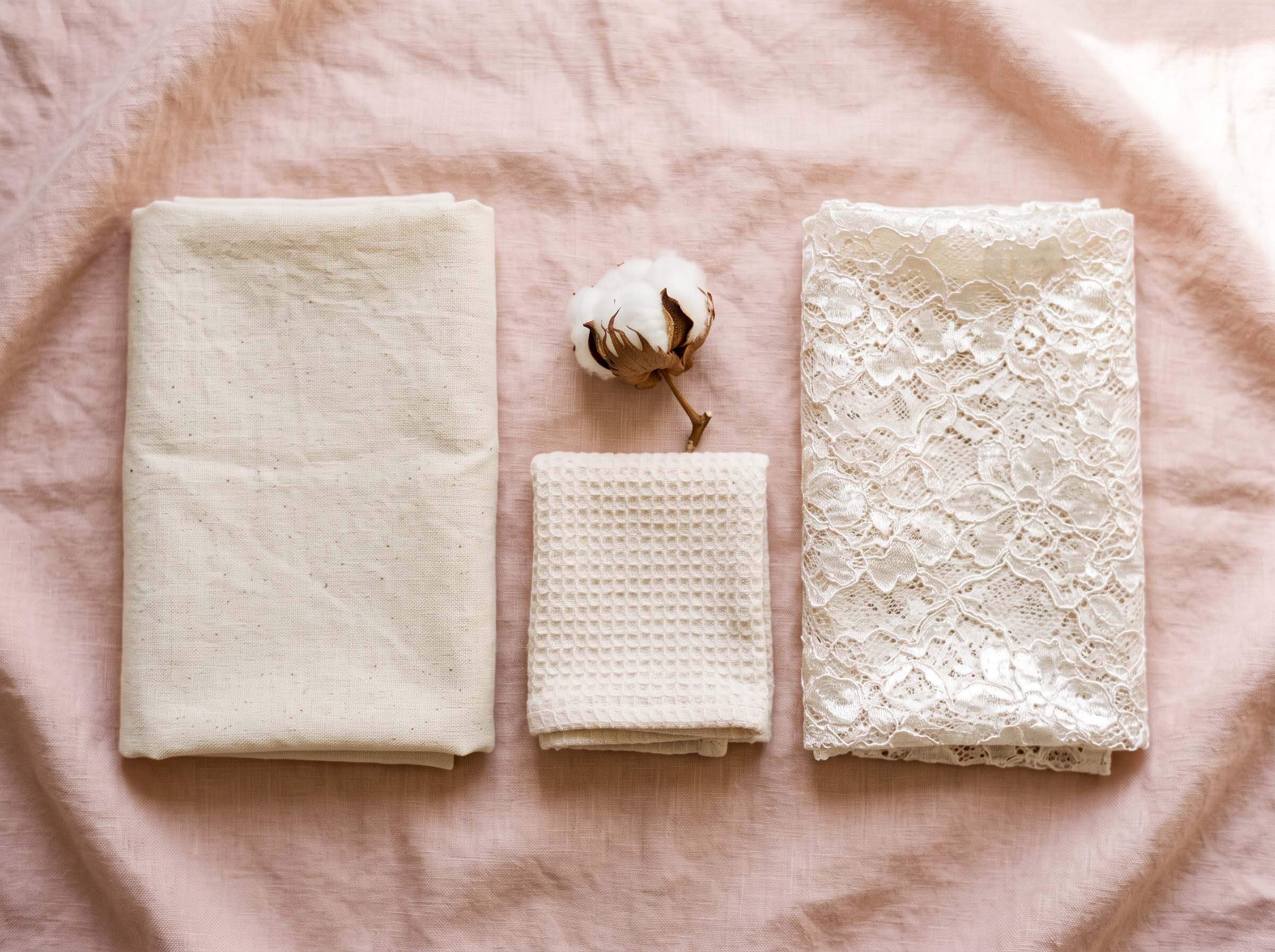
Cotton can absorb and release moisture into the air, staying drier against the skin. Many synthetic fabrics do the opposite — they hold warmth and dampness close, which is why a long day in them can leave the skin feeling anything but fresh.
What the Fashion Industry Actually Optimizes For
Here is a truth worth saying plainly: the companies designing modern underwear are not, for the most part, thinking about the long-term health of a woman's skin. They are thinking about cost, appearance, and how quickly a trend can move. Synthetic blends win on all three counts. They are cheap to produce, they hold their shape and color through dozens of washes, and they photograph as smooth, seamless, and fashionable. Breathability rarely enters the design conversation, because breathability does not sell the way lace, shine, and a flattering silhouette do.
The result is a market that quietly rewards the wrong things for the body. Thongs, tight seamless styles, and all-day shapewear are marketed on how they look under a dress, not on the warm, damp, high-friction environment they create for the most delicate skin a woman owns. None of this requires a villain. It is simply what happens when profit and passing trends set the priorities and the skin underneath is left out of the calculation. The older approach — plain cotton, a comfortable fit, and letting the body breathe at night — was never glamorous, but it treated the skin with a respect the modern market often skips.
Fabric & Habit at a Glance
*A general, directional comparison of how each choice affects the skin's warmth, moisture, and friction — not measured pigmentation data. Airflow may reduce or delay further darkening over time; it does not reverse tone that is already present.
Linen and cotton undergarments were the standard for centuries, not because women lacked options, but because natural fibers kept the body cool and dry in a way everyone understood.
The mass-produced synthetic came later, chasing lower costs and faster trends. What looked like progress on the shelf was, for the skin, a step backward.
What Your Skin May Be Telling You
A woman does not need a laboratory to read her own comfort. The body offers signals, and learning to notice them is a quiet form of self-knowledge. Some are things you can see: skin along the seams that looks pink or chafed by the end of the day, or a gradual deepening of tone in the areas held tightest. Others are things you feel: a sense of warmth and dampness that lingers for hours, a lack of freshness no matter the season, or mild irritation where fabric presses hardest.
These everyday cues are the skin asking for more air, and the fix is usually as simple as looser cotton and breathing room at night. That said, comfort signals are not the same as a diagnosis. If anything feels persistently uncomfortable, painful, or genuinely not right for you, that is a conversation for a doctor or a trusted health professional — not something to sort out from an article. Reading your own comfort is wise; guessing at anything beyond it is not.
“The fashion market sells the look. The night air, costing nothing, quietly takes better care of the skin.”
Do
- Sleep underwear-free under soft cotton sheets
- Choose loose cotton for everyday wear
- Change out of damp fabric promptly after workouts
- Save tight synthetics for short occasions only
Don’t
- Wear all-day shapewear as a daily habit
- Sleep in the same synthetics worn all day
- Assume “seamless” means skin-friendly
- Ignore lingering dampness or chafing
Questions Women Often Ask

The case for letting the skin breathe is not a trend or a product to be sold. It is a return to something quieter and older, folded into a modern routine that also includes a sensible everyday vulva care routine. A woman who trades tight synthetics for soft cotton, and gives her skin the night to breathe, is not chasing a look. She is listening to her own body and offering it the airflow it was always suited to. That kind of care asks for nothing but attention, and it tends to be the sort that lasts.
Disclaimer: All content on this website—including articles, educational materials, and interactive calculators—is for informational, educational, and entertainment purposes only. The calculations, percentiles, and outputs generated by tools on this site are based on general statistical data and mathematical models; they do not constitute medical data, a clinical assessment, or a diagnosis.
Nothing contained on this website is a substitute for professional medical advice, diagnosis, or treatment. Always seek the guidance of a qualified healthcare professional or urologist with any questions you have regarding physical development, anatomy, or health conditions. Reliance on any information or tools provided by this website is solely at your own risk.