English
  Español



There are things the female body does quietly, efficiently, and brilliantly — with no prompting and no applause. Vaginal lubrication is one of them. It is one of the most natural, purposeful, and often misunderstood aspects of female physiology, and yet most women move through their lives with only a vague sense of what it actually is, where it comes from, or why it matters.
Whether you noticed it for the first time as a teenager, asked your doctor about it after having children, or simply accepted it as something bodies just do, the story behind vaginal lubrication is worth knowing. It is not embarrassing, it is not mysterious, and it is not just about sex. It is about the extraordinary, well-designed machinery of the female reproductive system — doing its job, day and night.
Vaginal lubrication is not just about sexual readiness — it is a continuous act of biological housekeeping, immune defense, and structural care happening around the clock.
— Lexi PierceWhat Exactly Is Vaginal Lubrication?
Vaginal lubrication is a clear or slightly whitish fluid produced by the tissues of the vaginal wall and by specific glands in and around the vulva. It serves multiple purposes: it keeps the vaginal canal healthy and balanced, it assists in flushing out dead cells and potential irritants, and it reduces friction — both during everyday movement and during sexual activity.
It is important to distinguish between two types: the everyday baseline moisture that keeps the vaginal environment healthy, and the increased lubrication that occurs in response to sexual arousal. Both are normal, both are healthy, and both are produced through different — though sometimes overlapping — mechanisms.
At its most basic level, vaginal fluid is a mixture of water, proteins, sugars, and small amounts of electrolytes. It carries with it traces of naturally occurring bacteria (mostly Lactobacillus species), dead epithelial cells shed from the vaginal lining, and immune compounds that help protect against infection. This is not a random composition — it is a carefully balanced ecosystem working precisely as it should.
Where Does Lubrication Come From? The Anatomy Behind the Process
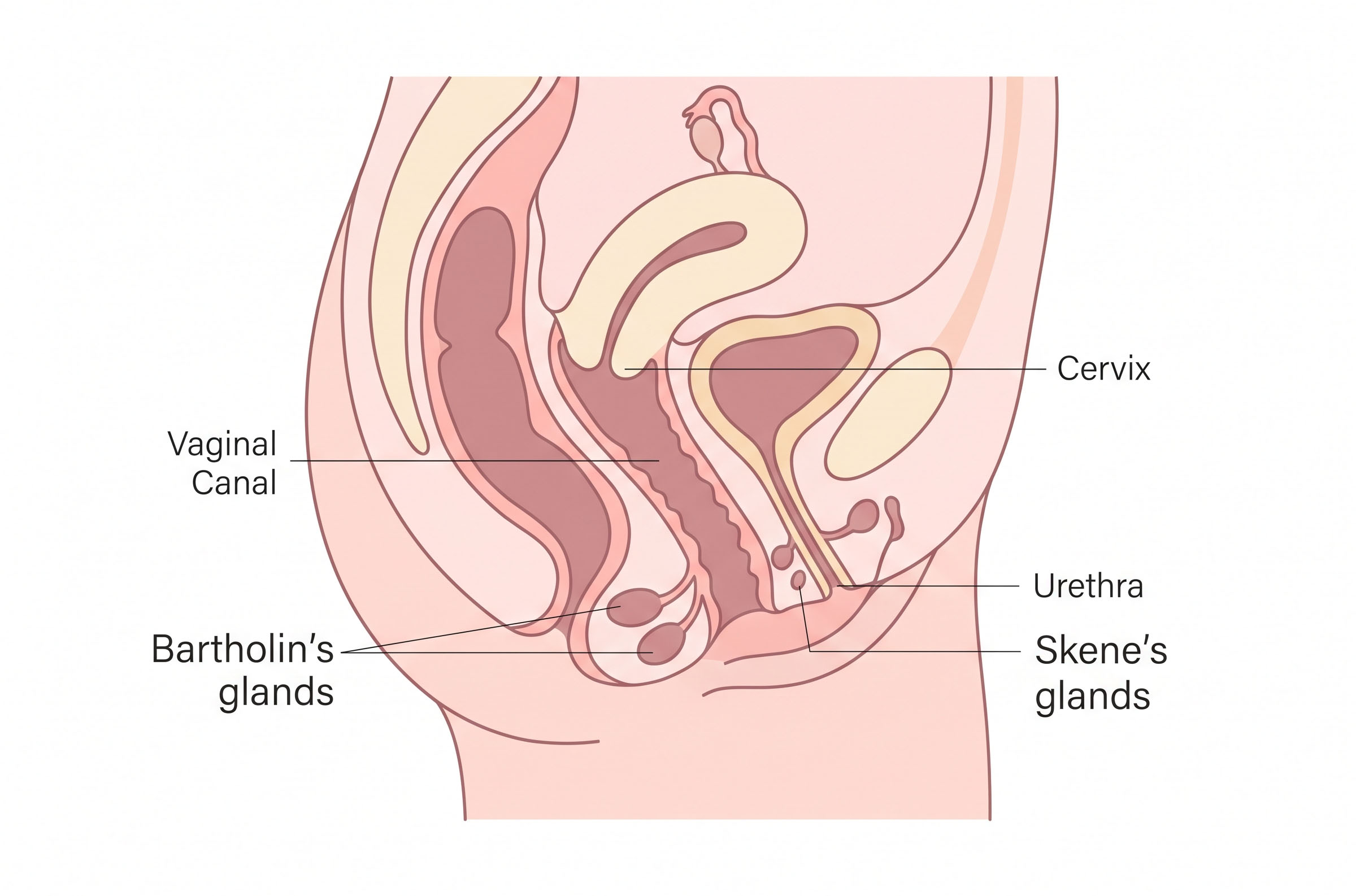
This is where things get genuinely fascinating — because lubrication does not come from a single source. It is produced by several different structures, each contributing in its own way.
The Vaginal Walls Themselves
The vaginal canal is lined with a mucous membrane made up of layers of squamous epithelial cells — the same type of tissue found inside the mouth. Unlike most of the skin on your body, the vaginal lining does not have its own glands. So how does it produce moisture?
The answer is a process called vaginal transudation. The blood vessels in the walls of the vagina are rich and densely packed. When the body needs to increase lubrication — especially during arousal — blood flow to the vaginal walls increases significantly. This causes plasma (the liquid part of blood) to seep through the capillary walls and pass through the epithelial tissue, emerging on the surface of the vaginal lining as fluid. This is the primary mechanism behind arousal-related lubrication, and it can happen remarkably quickly — sometimes within 10 to 30 seconds of stimulation.
Even at rest, a small, steady amount of this transudation occurs. This is what keeps the vaginal environment baseline-moist throughout the day.
The vaginal lining has no glands of its own — lubrication during arousal happens through transudation, a process where blood plasma seeps through the vaginal walls in response to increased blood flow. It is the same physical principle that causes sweating, but applied in a completely different context.
The Cervix: A Steady Contributor
The cervix — the lower, narrow end of the uterus that extends into the top of the vaginal canal — produces its own mucus constantly. Cervical mucus is made by glands inside the cervical canal called crypts, and its character changes throughout the menstrual cycle under the influence of estrogen and progesterone.
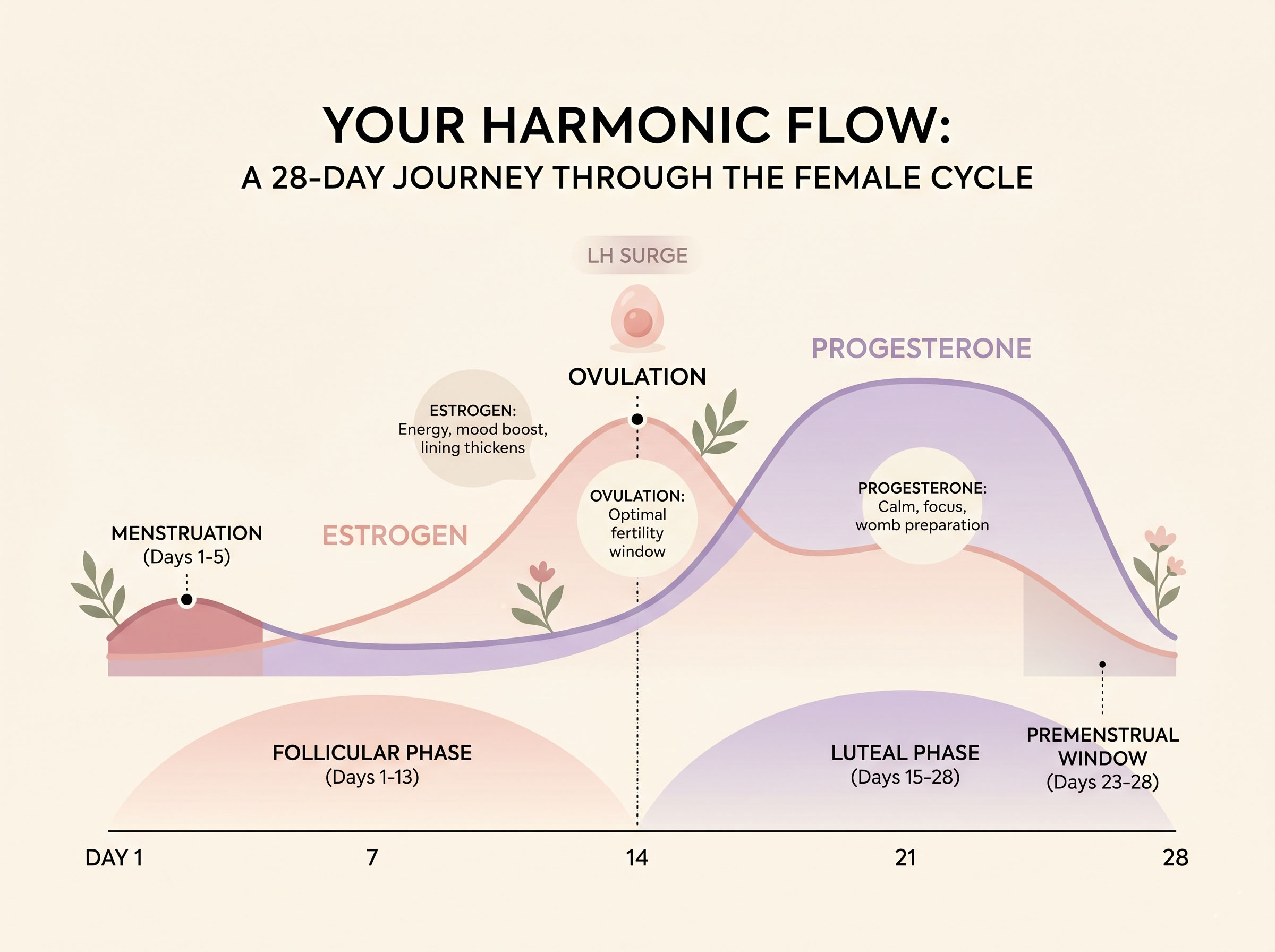
During the first half of the cycle, when estrogen rises, cervical mucus becomes thinner, clearer, and more stretchy — sometimes described as having the texture of raw egg whites. This is the body's way of preparing a friendly environment for sperm. After ovulation, progesterone causes the mucus to thicken into a denser, more opaque plug that acts as a barrier, protecting the uterus from bacteria and other pathogens.
This continuous production means that cervical mucus contributes to the overall vaginal environment throughout the entire month, not just around ovulation. Many women notice changes in their discharge throughout their cycle — and this is largely the cervix doing its job.
What's Normal Throughout Your Cycle
It is completely normal for vaginal discharge to change in texture, color, and volume across the month. Clear and stretchy near ovulation, thicker and whitish after — these shifts are your cervix responding to hormonal changes. Unless there is itching, unusual odor, or a sudden change in color (yellow, green, or grey), most cycle-related discharge variation is a sign the system is working exactly as it should.
Bartholin's Glands: The Hidden Pair
Located just inside the vaginal opening, on either side, are two small, pea-sized glands called the Bartholin's glands (also called the greater vestibular glands). For much of history, these were thought to be the primary producers of arousal lubrication. More recent research has shown they actually contribute only a small amount of fluid — but it matters.
Bartholin's glands secrete a small quantity of clear, slightly viscous fluid during sexual arousal. This fluid appears near the vaginal opening and may help with initial lubrication and comfort. These glands can occasionally become blocked, causing what is known as a Bartholin's cyst — a usually painless swelling that, if it becomes infected, can form an abscess. Most women will never have trouble with these glands, but it is worth knowing they exist and what they do.
Skene's Glands: The Lesser-Known Pair
Near the urethra, on the front wall of the vagina, lie two additional small glands: the Skene's glands, also called the paraurethral glands or the lesser vestibular glands. These are sometimes associated with female ejaculation, as they are structurally similar to the male prostate gland and produce a fluid that contains prostate-specific antigen (PSA).
Skene's glands are not present or equally developed in all women. Their contribution to overall lubrication is modest, but they play a role in the broader ecosystem of the vestibular glands. Research into their exact function is ongoing, and they remain one of the more interesting and underexplored aspects of female anatomy.
Sources of Vaginal Lubrication at a Glance
The Hormonal Connection
Lubrication does not exist in a vacuum — it is deeply tied to your hormonal environment. Estrogen is the key player. It keeps the vaginal tissues thick, elastic, and well-supplied with blood vessels. It also encourages the production of glycogen in the vaginal cells, which feeds the Lactobacillus bacteria that maintain the vaginal pH between roughly 3.8 and 4.5 — acidic enough to discourage harmful pathogens.
This is why changes in estrogen levels have such a noticeable effect on lubrication. During the postpartum period, when estrogen drops sharply (especially in breastfeeding women), vaginal dryness is extremely common. The same is true in perimenopause and menopause, when estrogen declines more permanently. This condition — called genitourinary syndrome of menopause (GSM), formerly known as vaginal atrophy — is experienced by a significant number of women and can cause dryness, discomfort, and changes in tissue texture.
Hormonal contraceptives can also affect lubrication. Some women on combined oral contraceptives or progestin-only pills notice reduced natural moisture, because these medications suppress the body's own estrogen fluctuations. This is not harmful, but it is useful to know — particularly if you are wondering why your body seems to behave differently on birth control than off it.
Lubrication as Immune Defense
Here is something that does not get discussed nearly enough: vaginal lubrication is not just about comfort or fertility — it is a front line of immune defense.
The fluid contains immunoglobulins (particularly IgA and IgG), which are antibody proteins that help neutralize bacteria and viruses on contact. It also contains lysozyme, an enzyme that can break down the cell walls of certain bacteria. Lactoferrin, another compound found in vaginal fluid, binds to iron and deprives many bacteria of the nutrient they need to survive and multiply.
Additionally, the acidity of healthy vaginal fluid creates an environment that is inhospitable to most pathogenic bacteria and yeasts. This is why disrupting the vaginal environment — through douching, harsh soaps, antibiotic overuse, or even prolonged stress — can tip the balance toward infections like bacterial vaginosis or yeast overgrowth. The system is self-regulating and beautifully balanced when left to operate as designed.
Cultural Insight
Ancient Knowledge, Modern Science
Ancient medical texts from Greek, Ayurvedic, and traditional Chinese medicine traditions all referenced female vaginal secretions — though they interpreted them through very different frameworks. In Ayurvedic medicine, healthy female secretions were considered a marker of ojas, or vital life essence. Greek physicians debated their origin for centuries. It was not until the 17th century that Bartholin's glands were formally identified, and the full picture of transudation was not understood until the 20th century. Women's bodies were being studied — but slowly, and often through a male-dominated lens. Modern anatomy has brought a far more accurate and respectful understanding of these mechanisms.
What Affects How Much Lubrication You Produce?
Lubrication is not a constant — it shifts depending on a wide range of factors, and understanding these can spare a lot of unnecessary worry.
Age and hormonal stage: As mentioned, estrogen has a profound effect. Teenagers and women in their twenties and thirties often experience robust lubrication. After childbirth, during breastfeeding, and through perimenopause and beyond, it can decrease. This is a normal biological shift, not a malfunction.
Hydration: The body needs adequate water to produce all of its fluids, and vaginal moisture is no different. Chronic mild dehydration can contribute to reduced vaginal secretion.
Medications: Beyond hormonal contraceptives, certain antihistamines, antidepressants (particularly SSRIs), antiretrovirals, and some blood pressure medications are known to reduce vaginal lubrication as a side effect. If you suspect this applies to you, it is worth raising with a doctor — not to necessarily change the medication, but to understand what is happening and explore supportive options.
Stress: The body's stress response (the sympathetic nervous system) competes with the parasympathetic response responsible for arousal and lubrication. Chronic stress, anxiety, and sleep deprivation can all reduce both baseline moisture and arousal-related lubrication.
Smoking: Smoking reduces blood flow and has been linked to decreased vaginal lubrication, among many other effects on reproductive health.
Where you are in your cycle: Lubrication naturally varies across the month. Many women notice increased moisture around ovulation when estrogen peaks, and reduced moisture in the days just before their period.
Common Questions About Vaginal Lubrication
The Role of the Clitoris and Arousal in Lubrication
It would be impossible to talk about lubrication honestly without mentioning the clitoris — not just the small visible tip (the glans clitoris), but the full internal structure, which extends several centimeters into the body in two curved legs (called crura) and two bulbs that flank the vaginal opening.
When the clitoris becomes engorged with blood during arousal — just as the penis engorges — those internal clitoral bulbs press against the vaginal walls from the outside. This increases blood flow and pressure in the vaginal wall tissue, which in turn accelerates the transudation process. In simple terms: clitoral arousal directly drives the production of vaginal lubrication. The two systems are anatomically linked.
This is why arousal time matters. Rushing into penetration before the body has had time to respond fully — regardless of desire — can result in discomfort simply because the transudation process has not had time to complete. It is not a personal failure; it is physiology that takes time to express itself.
By The Numbers
10–30
seconds for arousal lubrication to begin via transudation
3.8–4.5
healthy vaginal pH range — slightly acidic for natural protection
~50%
of postmenopausal women experience vaginal dryness (GSM)
2
separate gland pairs (Bartholin's & Skene's) contribute to lubrication
When Lubrication Changes — And When to Pay Attention
Most changes in lubrication are tied to predictable hormonal or lifestyle factors, and are nothing to be concerned about. But there are moments when paying attention to these changes is genuinely useful.
A sudden change in the color, consistency, or smell of vaginal discharge — especially if accompanied by itching, burning, or pelvic discomfort — can signal an infection that benefits from prompt treatment. Bacterial vaginosis, yeast infections, and some sexually transmitted infections can all alter the character of vaginal fluid.
Persistent dryness that causes pain during sex or daily discomfort is also worth raising with a healthcare provider. This is particularly true for women going through menopause, where genitourinary syndrome is underdiagnosed largely because women assume discomfort is simply something to be endured. It is not. There are well-studied treatments, including vaginal estrogen (which has a different risk profile than systemic hormone therapy), over-the-counter vaginal moisturizers, and lubricants, that can make a substantial difference in comfort and quality of life.
Caring for the System Without Disrupting It
The best thing most women can do for their vaginal health — including lubrication — is simply to avoid the practices that undermine the body's self-regulating mechanisms.
The vagina does not need to be cleaned internally. It does not need to smell like flowers or be free of all discharge. Discharge is healthy. Moisture is healthy. The ecosystem inside the vaginal canal is carefully maintained by the body itself, and the most common mistakes women make are the ones born from wanting to be "cleaner" — douching, using scented products internally, wearing tight synthetic underwear for extended periods, or applying products not designed for vaginal tissue.
What does support the system: staying well hydrated, maintaining a balanced diet, avoiding smoking, managing stress where possible, and having honest conversations with your doctor about hormonal changes rather than silently enduring them.
In Brief
- Vaginal lubrication comes from multiple sources: vaginal wall transudation, cervical mucus, Bartholin's glands, and Skene's glands.
- Estrogen is the primary hormonal driver — changes in estrogen (postpartum, breastfeeding, menopause) directly affect lubrication levels.
- Lubrication serves immune defense functions as well as physical comfort.
- The vagina is self-cleaning — internal washing products disrupt a naturally balanced ecosystem.
- Persistent dryness is treatable; it is not something women need to simply accept.
- Normal discharge varies in color and texture throughout the cycle — it is the body doing its job.
Understanding Your Body Is Not Optional — It Is Yours
There is something quiet but important about knowing how your own body works. Not because it makes you a better patient or a better partner — though it may — but because a woman who understands her body is better equipped to recognize when something has shifted, to advocate for herself at a doctor's appointment, and to move through life without the low-grade anxiety that comes from not knowing what is normal.
Vaginal lubrication is one of the most ordinary things the female body does. It is the body looking after itself: moistening, protecting, preparing, balancing. Every woman's experience of it will differ — by age, by hormonal stage, by health, by circumstance. But the underlying biology is shared, elegant, and worth understanding.
Your body has been doing this work for a long time. It is worth knowing the story behind it.
Disclaimer: All content on this website—including articles, educational materials, and interactive calculators—is for informational, educational, and entertainment purposes only. The calculations, percentiles, and outputs generated by tools on this site are based on general statistical data and mathematical models; they do not constitute medical data, a clinical assessment, or a diagnosis.
Nothing contained on this website is a substitute for professional medical advice, diagnosis, or treatment. Always seek the guidance of a qualified healthcare professional or urologist with any questions you have regarding physical development, anatomy, or health conditions. Reliance on any information or tools provided by this website is solely at your own risk.