日本語
日本語  Deutsch
  English
  Español
  Français
  Português



Every year, on the seventeenth of March, something remarkable happens in kitchens, churches, parade routes, and pubs from Dublin to Denver. Women pin on shamrocks, stir pots of corned beef and cabbage, braid their daughters' hair with green ribbons, and stand at the edge of parade routes holding the hands of children who have no idea they are part of something ancient.
Saint Patrick's Day is loud, it is green, it is celebratory — and quietly, steadily, it has always been carried forward on the shoulders of women.
That story rarely makes the highlight reel. The images most people associate with the holiday — rowdy pub crowds, marching bands, rivers dyed emerald green — are overwhelmingly male in their visual shorthand. And yet, if you trace the real roots of how this feast day survived centuries of famine, emigration, and cultural erasure, you find women at the center of it. Not loudly. Not with banners. Just faithfully.
In Brief
- Saint Patrick's Day began as a religious feast day, not a public celebration — and women were its quiet guardians for centuries.
- Irish women in America kept cultural traditions alive through food, faith, and community across generations of immigration.
- The corned beef and cabbage tradition is an Irish-American invention, shaped by immigrant women adapting to a new country.
- Irish step dancing is a tradition preserved almost entirely by women — mother to daughter, teacher to student.
- Saint Brigid, Ireland's female co-patron saint, represents the long tradition of powerful women in Irish spiritual life.
Cultural Insight
Ireland's Feminine Soul
Ireland's ancient mythological tradition — the Lebor Gabála Érenn (Book of Invasions) — places powerful women at the center of the island's founding stories. Figures like Ériu, after whom Ireland is named, were feminine sovereignty goddesses.
The blending of this older feminine spiritual tradition with Catholic saints like Brigid created a distinctly Irish reverence for womanhood that quietly shaped how the culture honored its holy days — including Saint Patrick's Day.
A Feast Day Born in Faith
Saint Patrick's Day began not as a party but as a religious feast. March 17th marks the death of Saint Patrick, the patron saint of Ireland, who by the fifth century had converted much of the island to Christianity. For centuries, it was observed as a holy day of obligation — Mass in the morning, a modest meal, perhaps a small gathering of neighbors. The pubs were actually closed by Irish law on Saint Patrick's Day well into the twentieth century. The solemnity of it was real.
Women were the keepers of that solemnity. They were the ones who brought the children to Mass, who wore the cross and the shamrock together, who taught the prayers and the stories. In a country where the Catholic faith was both spiritual identity and political resistance, this was not small work. It was the thread that kept Irish culture from unraveling entirely under centuries of British rule.
"In a country where the Catholic faith was both spiritual identity and political resistance, women's role as keepers of the feast was not small work — it was the thread that kept Irish culture from unraveling entirely."
— Amara Leclerc
The Irish Mother and the Art of Survival
The Irish woman of history is not a delicate figure. She is someone who buried children during the Famine of the 1840s, who packed what remained of her family into a coffin ship and crossed the Atlantic, who arrived in a strange city and found work before her husband did — then somehow kept the household running, kept the faith alive, and kept Saint Patrick's Day on the calendar even when there was barely food on the table.
Irish-American women in particular played an outsized role in keeping cultural traditions alive in the United States. They organized parish socials and community feasts. They cooked. They sewed costumes for children in school plays. They kept the Irish-American identity from dissolving into the broader American melting pot — not through protest, but through the daily, repeated act of remembrance.
The Irish Mothers' Association, various parish sodalities, and countless unnamed women in Catholic neighborhoods across Boston, New York, Chicago, and Philadelphia made sure Saint Patrick's Day was marked every year, generation after generation. The holiday you celebrate today is, in no small part, the product of their effort.
Did You Know?
- Ireland's pubs were legally required to close on Saint Patrick's Day until 1970, when the law was finally repealed.
- The first Saint Patrick's Day parade in America took place in Boston in 1737 — 25 years before New York's famous parade.
- The tradition of wearing green on Saint Patrick's Day is largely an American invention; in Ireland, blue was historically associated with Saint Patrick.
- Irish step dancing schools (scoileanna rince) are predominantly taught by women and have operated continuously for over 150 years.
- More than 33 million Americans claim Irish ancestry — the largest Irish diaspora population in the world.
The Parade: More Than a March
The New York City Saint Patrick's Day Parade is the oldest civilian parade in the United States, dating to 1762. It was organized by Irish soldiers serving in the British military who wanted to honor their patron saint. But the parade's survival and growth into a cultural institution owed as much to the communities that supported it as to those who marched in it.
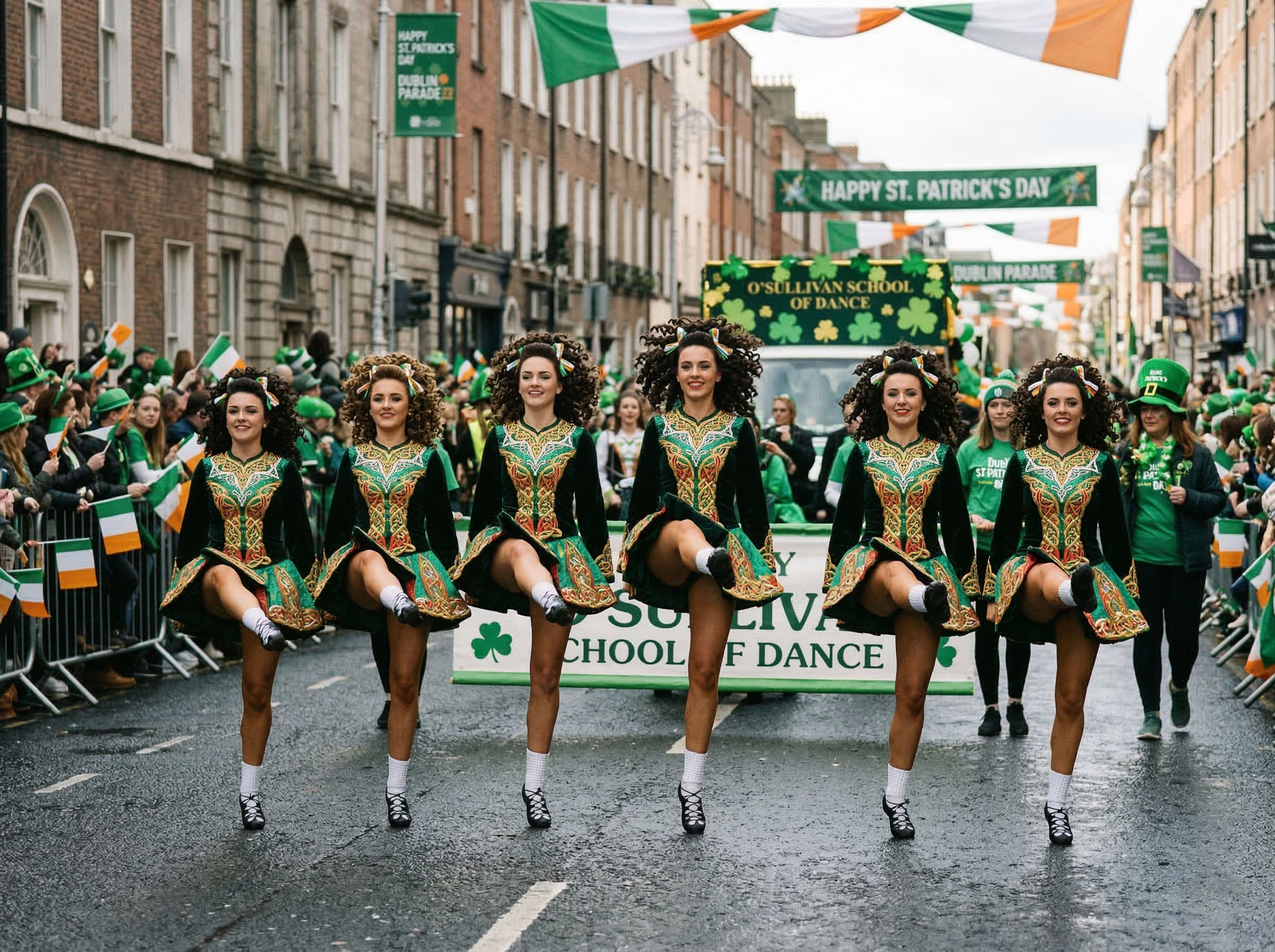
Women built the infrastructure around the parade — the church breakfasts, the neighborhood gatherings, the Irish step dancing schools that produced the young performers who made the spectacle worth watching. Irish dancing itself is an art form passed almost entirely from women to girls, mother to daughter, teacher to student, for generations. The rigid upper body, the precise footwork, the competition dresses — all of it is a tradition maintained largely by women.
The Shamrock, the Kitchen, and the Table
There is a version of Saint Patrick's Day that lives in the kitchen, and it is entirely female-coded. The corned beef and cabbage that Irish-Americans associate with the holiday is itself a story of adaptation — in Ireland, the traditional dish was bacon and cabbage, but Irish immigrants in America, living alongside Jewish communities in New York, adopted the more affordable corned beef. Women made that adaptation. They figured out what was available, what was affordable, and how to make it taste like home.
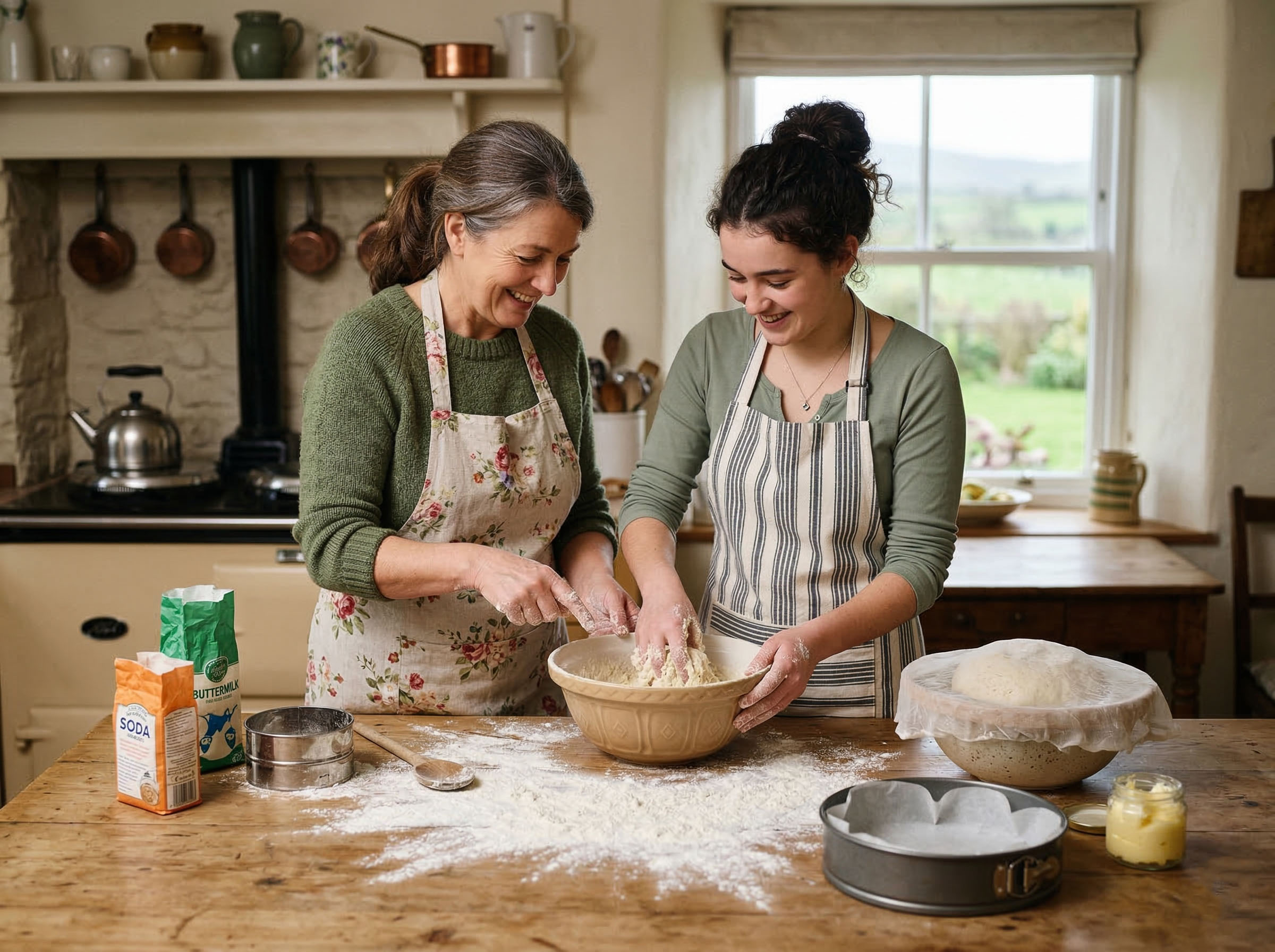
Food traditions on this day are carried almost entirely by women. Soda bread baked from a grandmother's recipe. Colcannon made the way your mother made it, which is the way her mother made it before her. Irish stew slow-cooked through the afternoon while the house fills with a smell that means something specific and irreplaceable. These are not trivial acts. Food is how culture is transmitted in the most direct, physical, sensory way possible. When a woman teaches her daughter to make soda bread on Saint Patrick's Day, she is teaching her something about who she is.
Traditional Recipes
Classic Irish Dishes Women Have Passed Down for Generations
| Dish | Origin | Key Ingredients | Notes |
|---|---|---|---|
| Soda Bread | Ireland, 1800s | Flour, buttermilk, baking soda, salt | No yeast needed; a staple of the Famine era |
| Colcannon | Ireland | Mashed potatoes, kale or cabbage, butter | A harvest dish; hidden coins = good luck |
| Corned Beef & Cabbage | Irish-American, NYC | Corned beef brisket, cabbage, carrots, potatoes | Adapted from Jewish immigrant neighbors |
| Irish Stew | Rural Ireland | Lamb or mutton, potatoes, onions, carrots | Slow-cooked; a Sunday and holy day tradition |
| Barmbrack | Ireland | Yeast bread with dried fruit, tea | Traditionally baked for feast and festival days |
Saint Brigid: The Woman the Holiday Forgot
If you want to understand the role of women in Irish Catholic tradition, you have to meet Saint Brigid. She is Ireland's other patron saint — co-patron, technically — and her feast day falls on February 1st, the old Celtic festival of Imbolc, marking the first stirring of spring. Saint Brigid of Kildare was a fifth-century abbess who founded a monastery, served the poor, and became one of the most beloved figures in Irish religious history.
In Irish homes, women traditionally wove Saint Brigid's crosses from rushes on her feast day and hung them over the door for protection. That tradition, quieter than the Saint Patrick's Day celebrations, speaks to the same thing: women as the guardians of spiritual and cultural life in the home.
The Irish tradition has always held space for powerful women — not in the modern political sense, but in the ancient sense of women as bearers of life, faith, and memory. Saint Brigid is part of that lineage. So is every Irish mother who kept a Saint Patrick's Day tradition alive in her family across generations.
Questions & Answers
Saint Patrick's Day: What Women Often Ask
The Modern Woman and the Holiday
Today, Saint Patrick's Day looks different than it did a century ago. The religious observance has largely given way to secular celebration. Green beer has replaced morning Mass for many. The holiday has spread far beyond the Irish diaspora and become a broadly American — and increasingly global — party.
Women participate in all of it. They go to the parades, they host the parties, they dress their children in green. But the more interesting thing is what some women are choosing to do alongside that: returning to the roots. There is a genuine and growing interest among younger women in Irish heritage, in learning the dances, in finding the old recipes, in understanding what the shamrock actually meant to Saint Patrick as a symbol of the Trinity.
This is not nostalgia for its own sake. It is a recognition that traditions carry meaning — that the things women have passed down for generations are worth understanding, not just performing. The woman who bakes soda bread on March 17th and tells her children why is doing something valuable. She is making a choice to be a link in a chain rather than the first of her line.
Green Is Not Just a Color
The color green in Irish tradition carries layers of meaning. It is the green of the Irish countryside, of the shamrock, of the Emerald Isle itself. It became a symbol of Irish nationalism, of resistance, of identity held onto fiercely under pressure. When Irish immigrants arrived in America wearing green, they were saying something about who they were and where they came from, even when the world around them told them to disappear into the crowd.
Women wore that green. They dressed their families in it. They made it mean something in their households when the broader culture did not always welcome them. That small act of putting on a green ribbon or a shamrock pin was, in its own quiet way, an act of cultural preservation.
Saint Patrick's Day belongs to everyone who celebrates it now — Irish or not, religious or not, American or not. But understanding where it came from, and who kept it alive, matters. It did not survive centuries of hardship and emigration by accident. It survived because women decided it would.
This March 17th, when you reach for the green, when you stir the pot, when you pin the shamrock on your child's collar — you are part of something that stretches back further than you probably realize. And you are in very good company.
Disclaimer: This content is for informational and educational purposes only and does not constitute medical advice. It is not intended to be a substitute for professional diagnosis or treatment. Always consult with a qualified healthcare provider regarding any medical condition or treatment plan. Never disregard professional medical advice because of something you have read here.