日本語
日本語  Deutsch
  English
  Español
  Français
  Português



There's a quiet corner of women's hygiene that almost nobody talks about — not your doctor, not your mother, not the back of a shampoo bottle. Yet it's one of the most sensitive, most overlooked, and most misunderstood areas of the female body: the clitoral hood and the clitoral glans tucked beneath it.
Most women shower every day without ever thinking twice about this small but significant area. And that's perfectly understandable — it's not exactly the subject of mainstream conversation. But a lack of proper cleaning here can quietly lead to odor, discomfort, irritation, and the buildup of a substance called smegma. None of these are cause for alarm, but they are absolutely worth knowing about.
This is a guide for every woman who wants to take excellent care of her body — honestly, clearly, and without embarrassment.
In Brief
What This Article Covers
- What the clitoral hood and glans actually are
- Why this area needs regular, intentional cleaning
- What smegma is and why it accumulates
- How to wash correctly — step by step
- How often to clean, and what products to use (or avoid)
- Warning signs that something needs attention
First, a Quick Anatomy Refresher
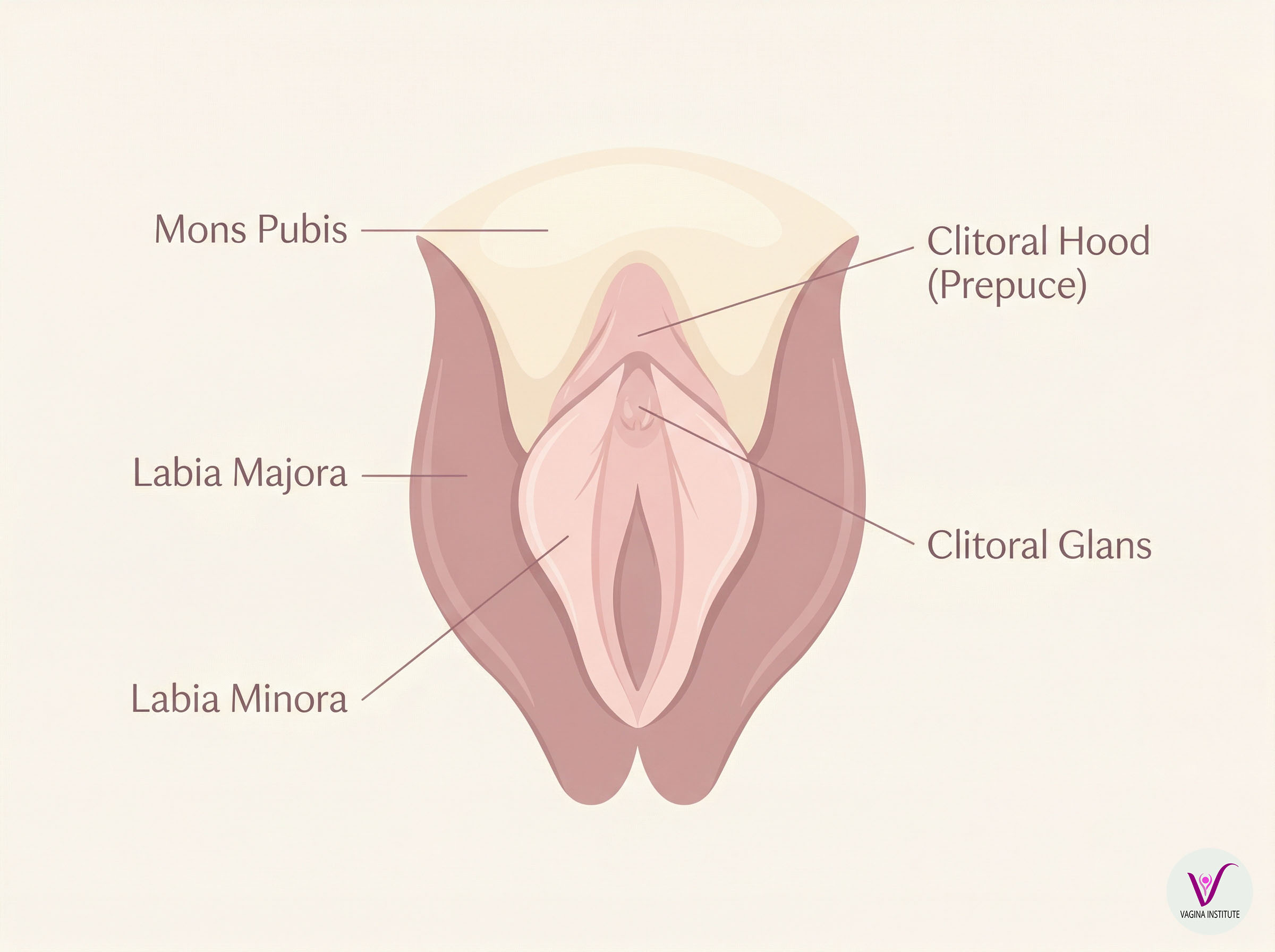
The clitoris is far more extensive than most women realize — it extends internally in a wishbone shape — but the part relevant to this conversation is the external portion. At the very tip of the external clitoris is the clitoral glans, a small, rounded structure packed with nerve endings. In most women, it's partially or fully covered by a fold of skin called the clitoral hood (medically known as the prepuce of the clitoris).
Think of the clitoral hood as functioning similarly to the foreskin in male anatomy. It's a protective fold of skin that shields the sensitive glans from direct friction and external exposure. This design is clever and purposeful — but it also creates a sheltered, moist space where things can accumulate if not properly cleaned.
It's also worth knowing that clitoral hoods vary enormously from woman to woman — and every variation is completely normal. Some women have a very minimal hood, little more than a thin fold of skin that leaves most of the glans visible and exposed at rest. Others have a moderate hood that partially covers the glans. And some women have a larger, more prominent hood that fully covers the glans even when aroused, with the clitoris essentially tucked out of sight beneath a deeper fold of tissue. In women with a more pronounced hood, this deeper, enclosed space means that smegma and moisture have more surface area to accumulate — and that the glans itself may be harder to reach without intentional, gentle retraction. Neither a small hood nor a large one is better or healthier than the other. They simply require the same care with slightly different technique. If you've always assumed your anatomy was unusual in some way, know that the range of normal is far wider than most women are ever told.
What Is Smegma — and Why Does It Happen?
Smegma. It's not a word that rolls off the tongue pleasantly, but understanding it is genuinely useful for every woman. Smegma is a naturally occurring substance made up of shed skin cells, sebum (the skin's natural oil), moisture, and in some cases, bacteria. It's produced by the body in both women and men — in men it accumulates under the foreskin; in women it collects under the clitoral hood.
In small amounts and when regularly cleaned away, smegma is simply a normal byproduct of your body doing what it does. The problem arises when it's left to build up. Over time, accumulated smegma can:
- Produce an unpleasant, cheesy or musty odor
- Harden into a whitish or yellowish deposit
- Cause the clitoral hood to become sticky or partially adhered to the glans
- Create irritation or mild inflammation if bacteria multiply in the buildup
- Lead to discomfort during daily movement or intimacy
None of this means something is wrong with you — it means you're human, with a body that naturally produces these substances. The fix is simple: regular, gentle, intentional cleaning.
✦ Did You Know?
The clitoral glans contains approximately 8,000 nerve endings — more than any other part of the human body per square centimeter. Because of this extreme sensitivity, the clitoral hood exists specifically to shield it from constant stimulation. This also means that irritation in this area, even minor, can feel disproportionately uncomfortable. Gentle, thorough cleaning is your best prevention.
Beyond Smegma: Other Things That Can Accumulate
🌿 Cultural Insight
Hygiene Rituals Across Cultures
In many traditional cultures, female hygiene rituals were passed down through generations of women — mothers to daughters, grandmothers to granddaughters. In parts of West Africa, Southeast Asia, and the Middle East, intimate cleansing was considered a sacred act of self-respect, often involving warm water, natural plant-based rinses, and specific bathing postures.
In contrast, Western women have historically received very little specific guidance on intimate hygiene beyond general bathing instructions. Modern gynecological awareness is slowly restoring what these older traditions knew intuitively: specific areas require specific care.
Smegma is the most commonly discussed buildup, but it's not the only thing that can collect under the clitoral hood. Women who wear tight clothing, work out, or live in warmer climates may also find:
- Sweat and moisture: The vulvar region is warm and often covered, making it prone to sweat accumulation, which can increase bacterial growth and odor.
- Lint and fabric fibers: Yes, really. Tiny fibers from underwear, particularly synthetic fabrics, can work their way under the hood. This is more common than most women realize.
- Residue from products: Body washes, soaps, lotions, and even laundry detergents can leave residue that irritates or lingers in the folds of the hood.
- Dead skin cells: The glans, like any skin surface, sheds cells — these mix with moisture and oils to form part of the smegma complex.
- Discharge: Normal vaginal discharge can sometimes travel slightly forward and settle into the folds around the clitoral hood.
All of this is normal. Bodies are not sterile environments — and that's fine. The goal of washing isn't to eliminate every trace of natural substance; it's to prevent buildup from reaching a level that causes odor, irritation, or discomfort.
How to Wash the Clitoral Hood and Glans Properly
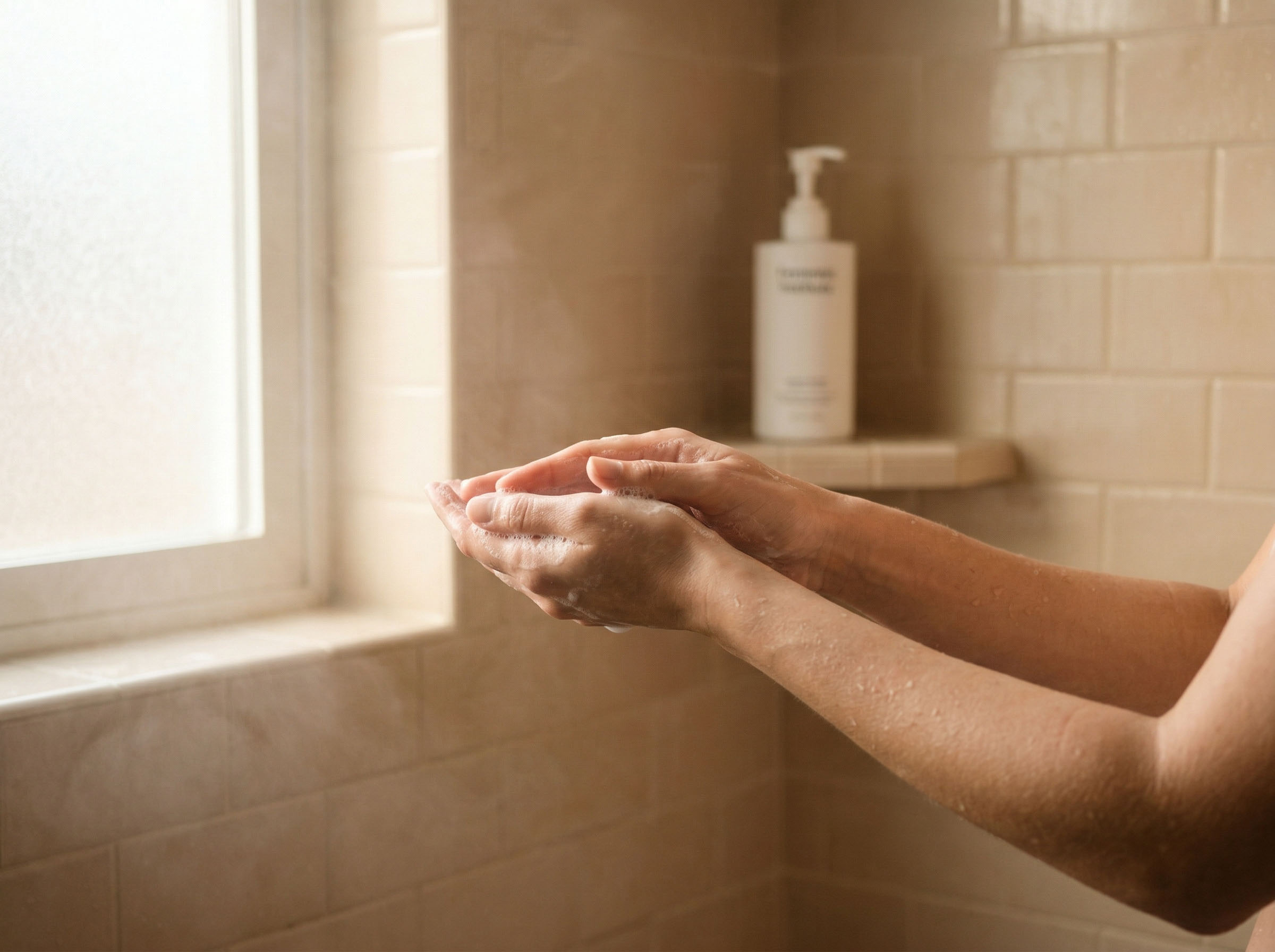
This is the heart of the matter. The process is simple once you know it, and it takes only an extra minute or two during your regular shower or bath. Here's how to do it correctly:
Step 1: Use Warm Water Only (or a Very Mild, Fragrance-Free Wash)
Before anything else, understand this: the clitoral glans is extremely sensitive skin. It is not meant to be scrubbed with soap, particularly not fragranced soap, antibacterial body wash, or exfoliating products. Plain warm water is genuinely sufficient for the glans itself. If you choose to use a wash, it should be specifically formulated for sensitive skin — fragrance-free, dye-free, and ideally with a pH appropriate for the vulvar region (around 3.8 to 4.5).
Step 2: Gently Pull Back the Clitoral Hood
Using clean fingers, very gently retract the clitoral hood upward or to one side, just enough to expose the glans beneath. You do not need to pull firmly or force anything. In most women this is straightforward; in some, the hood may be snug but should still move with gentle coaxing. Do not use fingernails or any instrument — just the soft pad of your finger.
Step 3: Rinse the Glans Gently
With your other hand or the shower stream, allow warm water to rinse the surface of the glans directly. If there is visible smegma or buildup, use the pad of one finger to gently wipe it away — think of it like rinsing a delicate surface, not scrubbing a dish. Circular, light strokes are all you need.
Step 4: Rinse the Inside of the Hood
Allow water to flow along the inner surface of the hood as well — this is where buildup most commonly forms. Again, a very light touch with a fingertip is fine if needed. No soap, no pressure.
Step 5: Rinse Thoroughly and Pat Dry
Make sure all water and any product residue is fully rinsed away. When drying, pat the area gently with a clean towel — never rub, which can cause micro-irritation on such sensitive tissue.
How Often Should You Do This?
For most women, washing the clitoral hood and glans two to three times per week is sufficient to prevent buildup. However, daily cleansing is perfectly appropriate — and may even be preferred by women who are physically active, live in humid climates, or simply feel more comfortable doing so.
The key is consistency rather than intensity. A gentle, thorough rinse every couple of days is far better than an aggressive scrub once a week. Think of it the same way you would care for any delicate skin: regular, light maintenance beats infrequent, harsh treatment every time.
There are also specific times when you may want to be extra attentive to this area:
- After exercise or heavy sweating
- After swimming in chlorinated or salt water
- During menstruation
- After intimate activity
- During humid summer months
Choosing the Right Products (and What to Avoid)
Walk down any personal care aisle and you'll find no shortage of products marketed toward feminine hygiene — wipes, washes, sprays, gels, and powders. The marketing is often appealing. The reality is more nuanced.
The vulvar skin — and especially the skin of the clitoral glans — is significantly more sensitive than the skin on your arms or legs. It has a lower tolerance for fragrance, preservatives, and pH imbalance. Most standard body washes, while perfectly safe for the rest of the body, are too alkaline and too harsh for this area. Even "natural" products with plant-based fragrances can cause irritation on mucous membrane tissue.
"The goal of washing isn't to eliminate every trace of natural substance — it's to prevent buildup from reaching a level that causes odor, irritation, or discomfort."
— Lexi Pierce, Women's Health Writer
Here's a sensible framework for product choices:
Table 1: Product Guide for Clitoral Hood Hygiene
Talking About Odor Honestly
Odor is one of the most common concerns women have about this area, and it's one of the most common reasons buildup goes unnoticed for too long. Many women assume some level of odor is simply normal and inevitable. Sometimes it is — but persistent, noticeable odor specifically from the clitoral area is almost always a sign that buildup needs to be cleared away.
The smell associated with old smegma is often described as cheesy, musty, or sharp. It can be stronger after exercise, during warmer months, or after a day in tight clothing. Once properly washed away, the odor resolves completely — no sprays, no fragrances, no masking necessary.
If odor persists despite regular, correct cleaning, that's worth paying attention to. Persistent or unusually strong odor, particularly accompanied by redness, swelling, itching, or unusual discharge, may indicate a skin condition or infection that warrants professional attention. Clitoral hood conditions like smegma buildup leading to clitoral adhesions, contact dermatitis, or lichen sclerosus can all affect this area. These are real, treatable conditions — but they require a healthcare provider's assessment, not a stronger scrub routine.
⚠ When to See a Doctor
If you notice persistent odor despite proper cleaning, redness, swelling, or itching around the clitoral hood, pain or tenderness in the area, skin changes such as white patches or thickening, or difficulty retracting the hood — please make an appointment with your gynecologist or primary care provider. These symptoms are not cause for embarrassment or panic, but they do deserve professional evaluation.
Making It Part of Your Normal Routine
One of the biggest obstacles to proper clitoral hood hygiene is simply that women don't know to do it. It wasn't in the health class curriculum. It's rarely discussed at annual gynecological appointments. It doesn't appear on the back of any product bottle. And yet it's no more complicated or strange than any other targeted washing routine we've long accepted as normal — like carefully cleaning behind the ears, or between the toes.
Once you incorporate this into your shower routine, it becomes entirely unremarkable. Most women find it takes under two minutes, becomes habit within a week, and — once they start — wonder why no one ever mentioned it before.
A few lifestyle habits also support overall hygiene in this area:
- Wear breathable underwear: Cotton allows airflow and reduces moisture buildup. Synthetic fabrics trap heat and increase the environment for bacterial growth.
- Go underwear-free occasionally: Allowing the vulva to breathe is beneficial. When wearing a dress or skirt, try skipping underwear for some air circulation.
- Nude at home: After bathing, give your vulva time to air dry. Spending time nude around the house helps your vulva receive fresh air and supports a healthy balance.
- Change out of workout clothes promptly: Damp activewear is one of the most common contributors to vulvar discomfort and odor.
- Sleep without underwear occasionally: Allowing the area to air out overnight supports natural balance.
- Stay hydrated: Adequate water intake supports healthy skin turnover throughout the body.
Your Questions Answered
The Bigger Picture: Knowing Your Own Body
There's something quietly valuable about becoming familiar with every part of yourself — including the parts that rarely get mentioned in polite conversation. The clitoral hood and glans are not shameful or mysterious. They are simply part of your anatomy, and they deserve the same care and attention as the rest of you.
Proper hygiene here isn't about achieving some impossible standard of cleanliness. It's about feeling comfortable in your own skin, preventing avoidable irritation, and taking ownership of your body's care with confidence and knowledge. That's never been something to shy away from.
Once you know, you know. And it takes only two minutes.
Disclaimer: This content is for informational and educational purposes only and does not constitute medical advice. It is not intended to be a substitute for professional diagnosis or treatment. Always consult with a qualified healthcare provider regarding any medical condition or treatment plan. Never disregard professional medical advice because of something you have read here.