日本語
日本語  Deutsch
  English
  Español
  Français
  Português



There is a version of history that scrubs away everything uncomfortable, peculiar, or quietly human. Fortunately, anthropologists and historians have spent the better part of a century digging through the scrubbed-away parts — and what they have found is extraordinary.
From the bathhouses of ancient Rome to the coded beauty rituals of feudal Japan, women across every era and culture have held intimate knowledge, passed it quietly through generations, and woven it into the fabric of daily life in ways that formal history rarely bothered to record.
That silence is not absence. It is, if anything, an invitation to look more carefully.
Intimate traditions — the customs surrounding the body, bathing, fertility, beauty, and the rituals of private life — are among the most revealing windows into any civilization. They tell us what a culture valued, feared, and sought to control. They tell us how women moved through the world: what freedoms they held, what knowledge they guarded, and how creatively they negotiated the social structures around them.
The Bathhouse Was Never Just About Bathing
In ancient Rome, public bathing was close to a civic religion. The great thermae — the massive imperial baths — were co-ed spaces in the earlier republic, though emperors like Hadrian eventually mandated separate hours or separate facilities for men and women. Scholars have debated the extent of mixed bathing across different periods, but one thing is clear: women's bathing spaces became something more than hygiene facilities. They were, in many documented cases, the most socially permissive spaces available to women of multiple classes.
Wealthier Roman women would visit the baths accompanied by attendants who applied oils infused with rose, saffron, and myrtle — substances we now know have mild antimicrobial properties. The practice of depilation, using a sticky resin called dropax or a pumice stone, was commonplace and widely referenced in Roman literature. The poet Ovid, never shy, wrote extensively about the body routines of Roman women — not with contempt, but with the casual acknowledgment that these were known, normal, feminine practices.
In Ottoman culture, the hamam — the Turkish bath — served a similar and perhaps even richer social function. For women in conservative households who rarely moved freely through public space, the hamam was the notable exception. Visits could last hours. Brides were ceremonially bathed there before their weddings, a tradition called the gelin hamamı, attended by female family members and friends. Women exchanged gossip, matchmaking intelligence, and medical knowledge within those steamed walls. The hamam was not just a bathhouse. It was the women's civic square.
🌸 Cultural Insight
The Ottoman Hamam Tradition
In Ottoman society, a woman's visit to the hamam was one of the few socially sanctioned opportunities to leave the household. These visits were elaborate, lasting three to five hours, and served as de facto social courts.
Mothers visiting the hamam to scout potential brides for their sons was so common that the spaces developed an informal reputation as marriage markets — a fact well-documented in Ottoman memoir literature and later in Western travel writing of the 18th century.
Nudity, Modesty, and the Line That Keeps Moving
One of the more surprising discoveries for modern readers is how fluid the concept of bodily modesty has been across cultures and time. What constitutes "private" or "public" exposure has never been universal — and its meaning has always been deeply tied to social class, geography, religious context, and era.
In ancient Sparta, young women participated in athletic competitions in states of undress that would have been completely unremarkable within their cultural context. The Spartan value system placed physical excellence above social concealment, and female bodies were understood, within that framework, as part of civic life rather than private shame. Greek pottery from the period depicts female athletes with the same matter-of-fact naturalism applied to their male counterparts.
Medieval Europe, by contrast, operated under layers of church-mediated modesty norms — yet even there, the picture is complicated. Communal bathing continued through much of the medieval period, including co-ed bathing in smaller towns where separate facilities were economically impractical. Church records show repeated admonishments against the practice, which suggests, ironically, that it kept happening. Moral instruction is rarely issued toward things no one is actually doing.
Among certain Pacific Islander cultures, particularly in pre-colonial Polynesia, the exposure of the upper body for women carried no particular social meaning, while the exposure of specific other areas of the body was considered deeply transgressive. The categories were simply different — not absent.
Across sub-Saharan African cultures, body decoration, ritual scarification, and ceremonial states of undress during coming-of-age ceremonies were never understood as sexual. They were sacred. The distinction between the sacred body and the sexualized body is one that modern Western culture has at times collapsed in ways that older traditions did not.
"The distinction between the sacred body and the sexualized body is one that modern Western culture has at times collapsed in ways that older traditions did not."
— Amara Leclerc, Insights / Expert Analysis
Fertility, Herbal Knowledge, and the Women Who Kept It
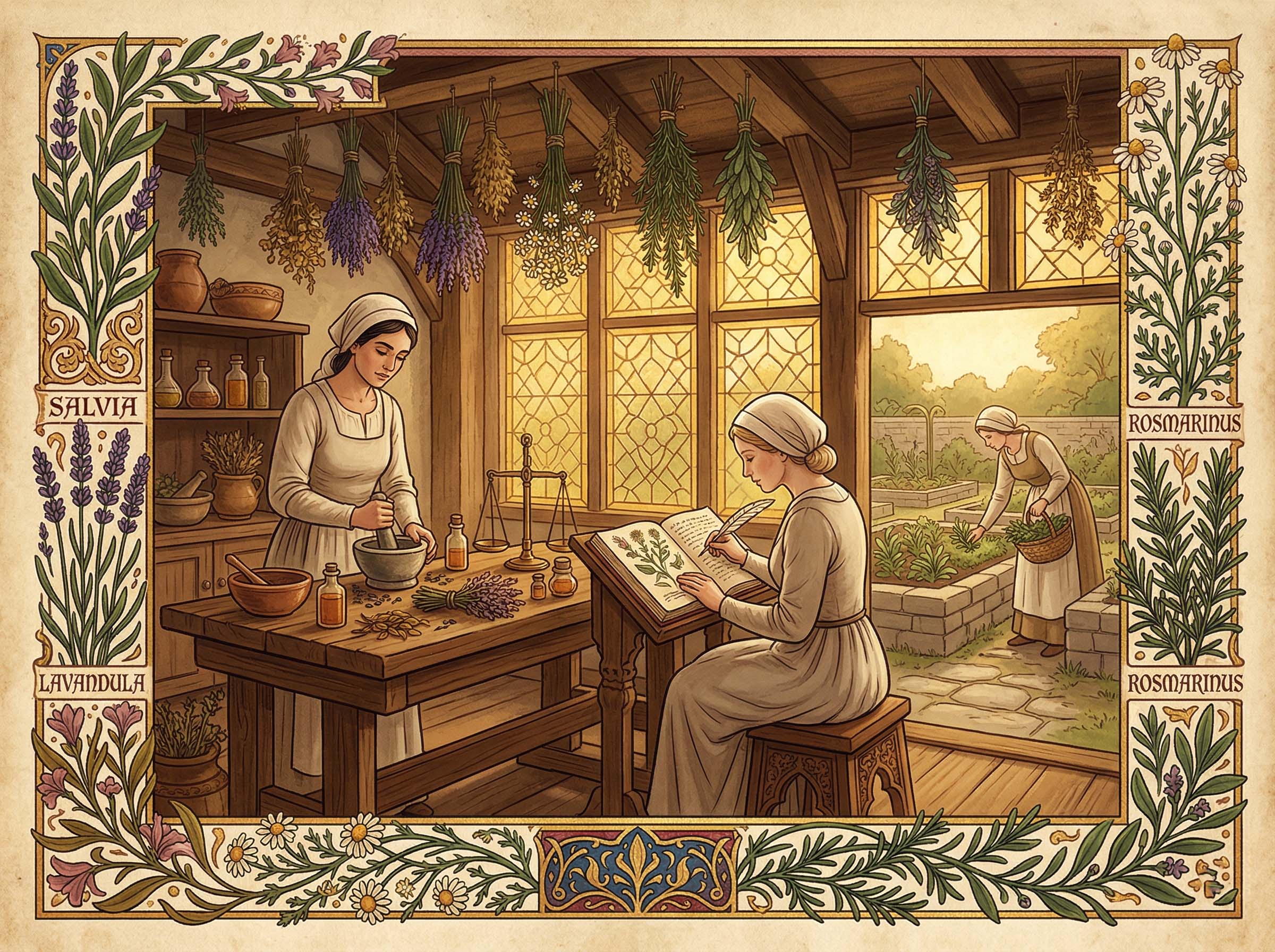
For most of recorded history, the specialized knowledge of the female body was held by women. Midwives, herbalists, and village healers — overwhelmingly female — maintained an oral and practical tradition of gynecological knowledge that predates the formalization of medicine by centuries.
In ancient Egypt, papyri from as early as 1800 BCE describe pregnancy tests, contraceptive preparations, and treatments for menstrual irregularity. Some of these formulations — including preparations involving acacia, which modern chemistry confirms has mild spermicidal properties — show a sophistication that challenges the assumption that ancient medicine was purely superstitious. Egyptian women of multiple classes had access to these remedies, and the knowledge appears to have circulated through networks of female practitioners.
Ancient Greek women had access to the writings attributed to the Hippocratic tradition, though the texts themselves were largely written by and for male physicians. The gap between formal medical literature and actual women's practice is significant. Soranus of Ephesus, writing in the 2nd century CE, produced the most complete ancient gynecological text that survives — and even he acknowledged that much of what he recorded came from the observation of experienced midwives.
In medieval Europe, figures like Hildegard of Bingen formalized centuries of herbalist tradition into written medical treatises. Her Physica and Causae et Curae described, among other things, the use of plant preparations for conditions that would today be classified as reproductive health concerns. Hildegard was exceptional in her literacy and her platform — but the knowledge she recorded was not exceptional. It was the accumulated inheritance of generations of women who understood the body pragmatically, practically, and with considerable accuracy.
✨ Did You Know?
The ancient Egyptians had a pregnancy test recorded in the Kahun Papyrus (c. 1800 BCE) that involved a woman urinating on wheat and barley seeds. If the wheat sprouted first, she was said to be carrying a girl; if barley, a boy. Modern researchers in the 1960s actually tested this — and found the test correctly predicted pregnancy (not sex) approximately 70% of the time. Pregnant women's urine does contain hormones that promote plant growth.
The Rituals of Readiness: Bridal Traditions Around the World
If there is one universal category of intimate feminine tradition, it is the ritual preparation of a woman for marriage. Across cultures separated by thousands of miles and centuries, the pattern repeats: women gather, the bride is bathed, anointed, perfumed, adorned, and ceremonially made ready. The specific practices vary enormously. The underlying structure does not.
In Indian Hindu wedding tradition, the haldi ceremony involves the application of a turmeric paste to the bride's skin — and often the groom's — by female family members. Turmeric has documented antibacterial and anti-inflammatory properties, but the ceremony is not primarily medical. It is communal, joyful, and deeply symbolic. The yellow stain left by turmeric was historically associated with auspiciousness, and the collective act of women tending to the bride's body was understood as a transfer of blessings and feminine knowledge from one generation to the next.
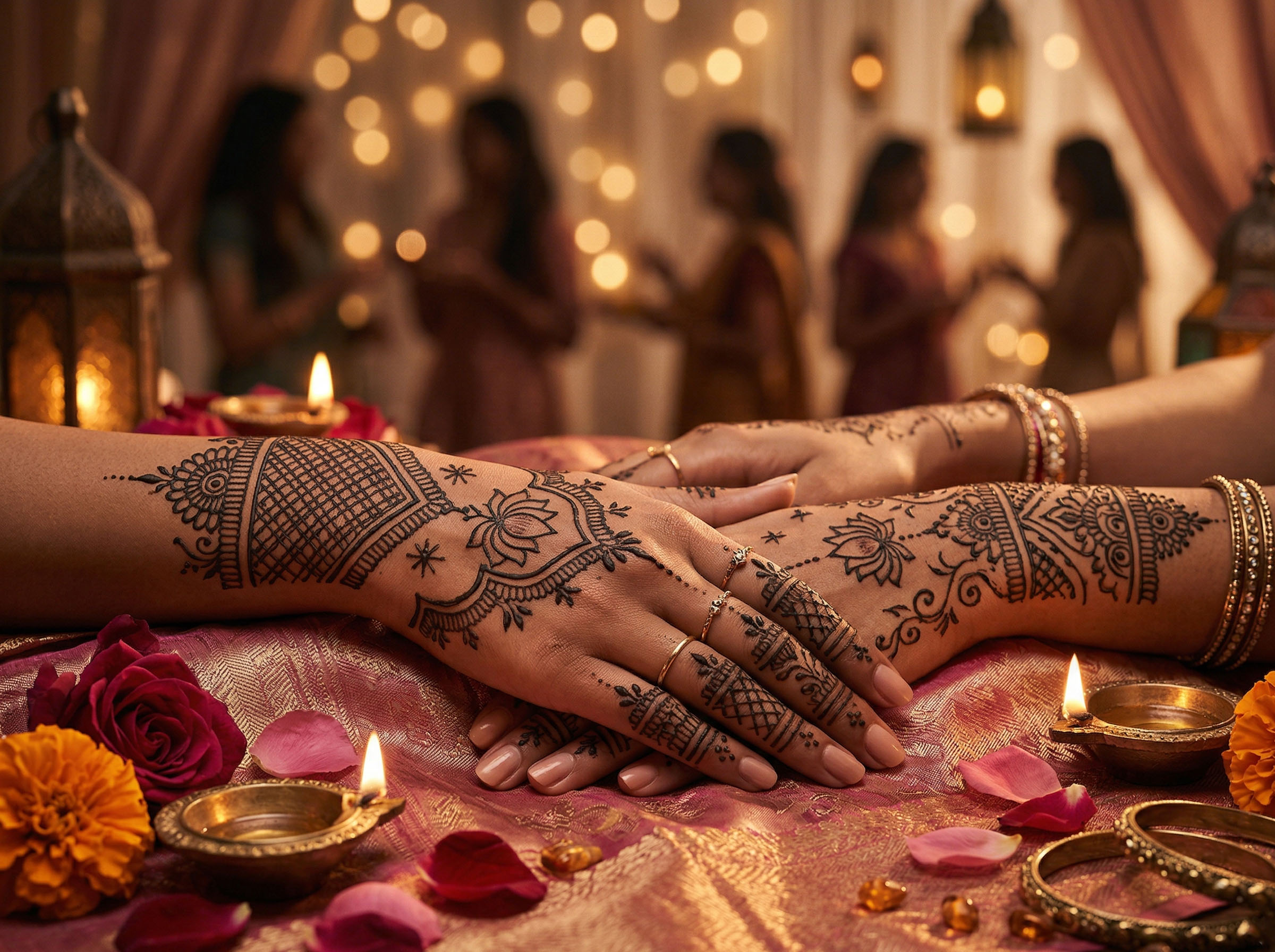
In Morocco, the laylat al-henna — the night of henna — is an elaborate pre-wedding celebration in which the bride's hands and feet are decorated with complex henna patterns, each carrying its own meaning and blessing. Moroccan brides traditionally sit still for hours while female relatives and professional artists work. It is, among other things, one of the last moments of collective female attention the bride will receive before her life changes permanently.
In Japan, the classical preparations for a bride included the whitening of the teeth — ohaguro, the practice of blackening teeth, was itself a marker of married status for centuries — and the elaborate construction of the bridal hairstyle. The knowledge required to construct these hairstyles was specialized enough that professional nihongami artists were employed, and their craft was passed down through familial lines of women.
Insights / Expert Analysis
Bridal Preparation Traditions Across History & Culture
When the Body Was a Language
Across these traditions, a consistent pattern emerges: the female body has rarely been treated as merely physical. It has been understood as communicative — a surface on which social status, marital condition, religious identity, and communal belonging were written, read, and re-inscribed through ritual.
In Victorian England, the tightly corseted silhouette was not only a fashion statement but a legible social text. A woman's dress communicated her class, her marital status, her degree of respectability. The elaborate etiquette surrounding gloves, hair covering, and what could be exposed at different times of day was a full grammar of social meaning. Women were not passive recipients of these codes — they manipulated them, as any student of 19th-century social history or literature can confirm.
In ancient China, the practice of foot-binding — which persisted for roughly a thousand years before its abolition in the early 20th century — is often presented today as pure oppression, and its physical consequences were genuinely severe. But the historical record is more complicated. Women within the tradition were often its most ardent enforcers, precisely because the lotus foot was the primary marker of marriageability and social class within the system they inhabited. Understanding this is not endorsement. It is the more difficult and more honest acknowledgment that women have always operated within the structures of their time — negotiating, preserving, and sometimes perpetuating them — rather than existing outside history.
📖 In Brief
What History Tells Us About Women and the Body
- Communal bathing traditions — from Rome to the Ottoman Empire — functioned as women's social institutions, not merely hygienic ones.
- Standards of bodily modesty have shifted dramatically across time and geography; there is no single historical "norm."
- Women maintained specialized reproductive and herbal knowledge for centuries before formal medicine existed.
- Bridal preparation rituals appear in nearly every culture, serving as intergenerational transfer of feminine knowledge and communal blessing.
- The female body has historically served as a legible social text — communicating status, identity, and belonging through adornment and ritual.
The Things Passed Between Women
Perhaps the most striking feature of women's intimate traditions, across every culture and era, is their fundamentally communal nature. These were not solitary practices. They were performed together, taught by mothers to daughters, guarded by guilds of midwives, celebrated at collective ceremonies. The individual female body was always understood in relationship — to other women, to the community, to the lineage of women who came before.
This stands in some contrast to the contemporary experience, where intimate knowledge about the female body is increasingly mediated through digital platforms, clinical settings, and commercial products rather than through direct human transmission. There is something to be said for the efficiency of modern information — but there is also something worth acknowledging about what was once carried in the hands and voices of women who had seen things, done things, and survived things.
A Roman midwife who had attended four hundred births held a kind of knowledge that no text could fully capture. A Japanese grandmother who had constructed bridal hairstyles for thirty years knew something in her fingers that no manual recorded. An Ottoman herbalist who had prepared remedies through decades of practice understood cause and effect through direct observation, accumulated over a lifetime.
That knowledge was not always right — some ancient remedies were ineffective, some social codes were genuinely harmful — but it was earned. It was specific. And it was held by women for women, transmitted in the spaces — the hamam, the kitchen, the lying-in chamber, the garden — where women gathered and the world briefly made room for what they knew.
📊 By the Numbers
~3,800
years ago the Kahun Papyrus recorded women's gynecological treatments in ancient Egypt
1,000+
years that the Ottoman hamam tradition served as women's primary social gathering space
70%
accuracy rate of the ancient Egyptian grain-sprouting pregnancy test when validated by 20th-century researchers
12th C.
when Hildegard of Bingen formally recorded centuries of women's herbal medical knowledge in writing
The Continuity Beneath the Change
History, studied carefully enough, has a way of making the world feel less strange and women's lives feel less isolated. The specific customs change — the resin depilatories give way to modern alternatives, the hamam becomes the spa, the midwife becomes the OB-GYN, the henna night becomes a bachelorette weekend — but the underlying human impulse that drives them remains recognizable.
Women have always sought to understand their bodies. They have always gathered to support one another through the transitions of life. They have always created beauty from the raw material of their circumstances. And they have always passed what they learned to the women who came after them — sometimes in formal traditions, sometimes in whispered asides, sometimes in the wordless language of hands that know what to do.
There is something grounding in that continuity. The woman preparing for her wedding today, surrounded by her mother and sisters, is part of a lineage that stretches back through the Ottoman hamam and the Roman bath and the Egyptian papyrus to the very beginning of women gathering together to mark the moments that matter. The specific knowledge changes. The gesture of passing it on does not.
That is not a small thing. That is, in many ways, the whole thing.
Questions Readers Ask
Disclaimer: This content is for informational and educational purposes only and does not constitute medical advice. It is not intended to be a substitute for professional diagnosis or treatment. Always consult with a qualified healthcare provider regarding any medical condition or treatment plan. Never disregard professional medical advice because of something you have read here.