日本語
日本語  Deutsch
  English
  Español
  Français
  Português



There's a quiet revolution happening in bedrooms across the country, and it doesn't require a single purchase, subscription, or lifestyle overhaul. It just requires you to take off your pajamas.
Sleeping naked — or as wellness circles have started calling it, "free sleeping" — sounds deceptively simple. And it is. But the science stacking up behind this habit is anything but trivial. From hormonal balance to skin health, from deeper sleep to a healthier relationship with your own body, the case for ditching the nightgown is surprisingly compelling.
This isn't about being daring or provocative. It's about listening to what your body actually needs after the lights go out — and giving it exactly that.
— Lexi Pierce, Wellness & Women's Health
Why Temperature Is Everything
Your body is doing something remarkable while you sleep. It's repairing tissue, consolidating memories, regulating hormones, and — critically — dropping its core temperature. This cooling process isn't incidental; it's a trigger. Your brain reads the drop in body temperature as a signal that it's time to enter deep, restorative sleep stages.
When you sleep in heavy pajamas, flannel sets, or even snug leggings, you're essentially fighting your body's own thermostat. A 2012 study published in the Journal of Physiological Anthropology found that skin temperature plays a direct role in sleep onset and quality. Cooler skin surfaces correlated with faster sleep onset and more time spent in slow-wave sleep — the deep, physically restorative phase most women don't get nearly enough of.
Sleeping without clothing allows your skin to breathe and your body to self-regulate, which means you fall asleep faster, wake up less, and wake up feeling more rested. That alone is worth a trial run.
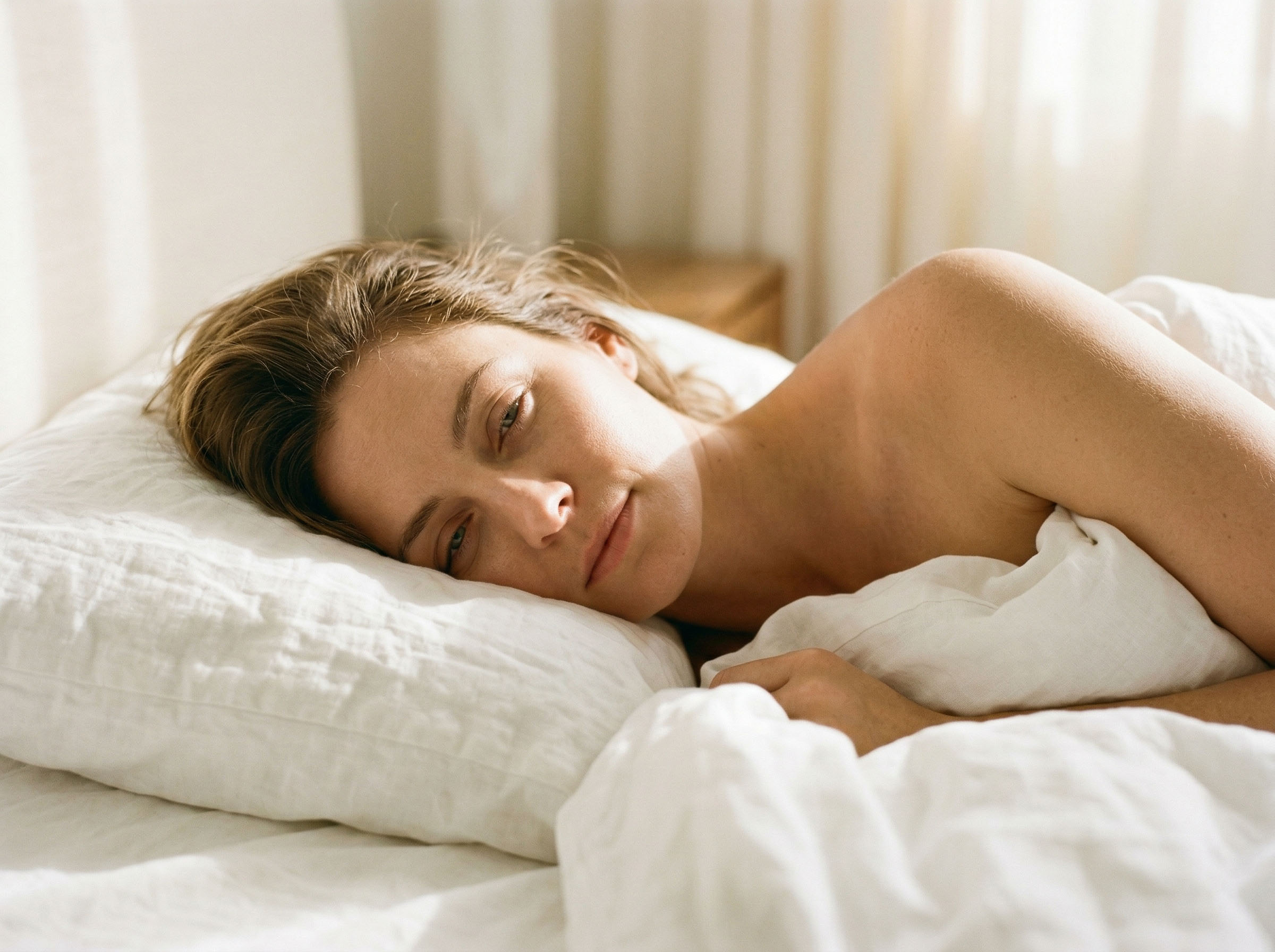
✦ Did You Know?
Your core body temperature needs to drop by about 1–2°F to initiate sleep. Sleeping in a room between 60–67°F (15–19°C) — and skipping the pajamas — is one of the most evidence-supported ways to encourage that drop naturally.
The Vaginal Microbiome Deserves Fresh Air Too
Here's a conversation most women have never had with their doctors, but probably should. Tight, synthetic sleepwear — think polyester shorts, snug underwear, even some moisture-wicking fabrics — creates a warm, humid environment in the vaginal area throughout the night. That environment is exactly what opportunistic yeast and bacteria thrive in.
Recurrent yeast infections and bacterial vaginosis are frustratingly common for women of all ages. While there are many contributing factors, gynecologists have long recommended going without underwear at night as a basic, cost-free preventive measure. A consistently warm, moist environment disrupts the delicate pH balance and microbial ecosystem that keeps that area healthy.
Sleeping naked allows air circulation, reduces localized heat and moisture, and lets the body's natural self-cleaning mechanisms work unimpeded. It's the kind of unglamorous but genuinely useful advice that doesn't make headlines — but makes a real difference.
⬡ Worth Knowing
The vaginal microbiome is self-regulating — but only when conditions support it. Chronic warmth and moisture from tight sleepwear can tip the balance toward yeast overgrowth. Ob-gyns routinely recommend sleeping without underwear as a simple first step for women who experience recurring vaginal infections.
Cortisol, Oxytocin, and the Skin-to-Skin Effect
Sleep isn't only about physical recovery. It's one of your most powerful hormonal reset buttons. And what you wear — or don't wear — has more influence on that process than most people realize.
Cortisol, your body's primary stress hormone, follows a natural daily rhythm. It should be at its lowest during deep sleep. When your sleep is fragmented or poor quality (which overheating can cause), cortisol doesn't drop as it should. Chronically elevated cortisol at night is linked to weight gain, particularly around the abdomen, immune suppression, and mood disturbances.
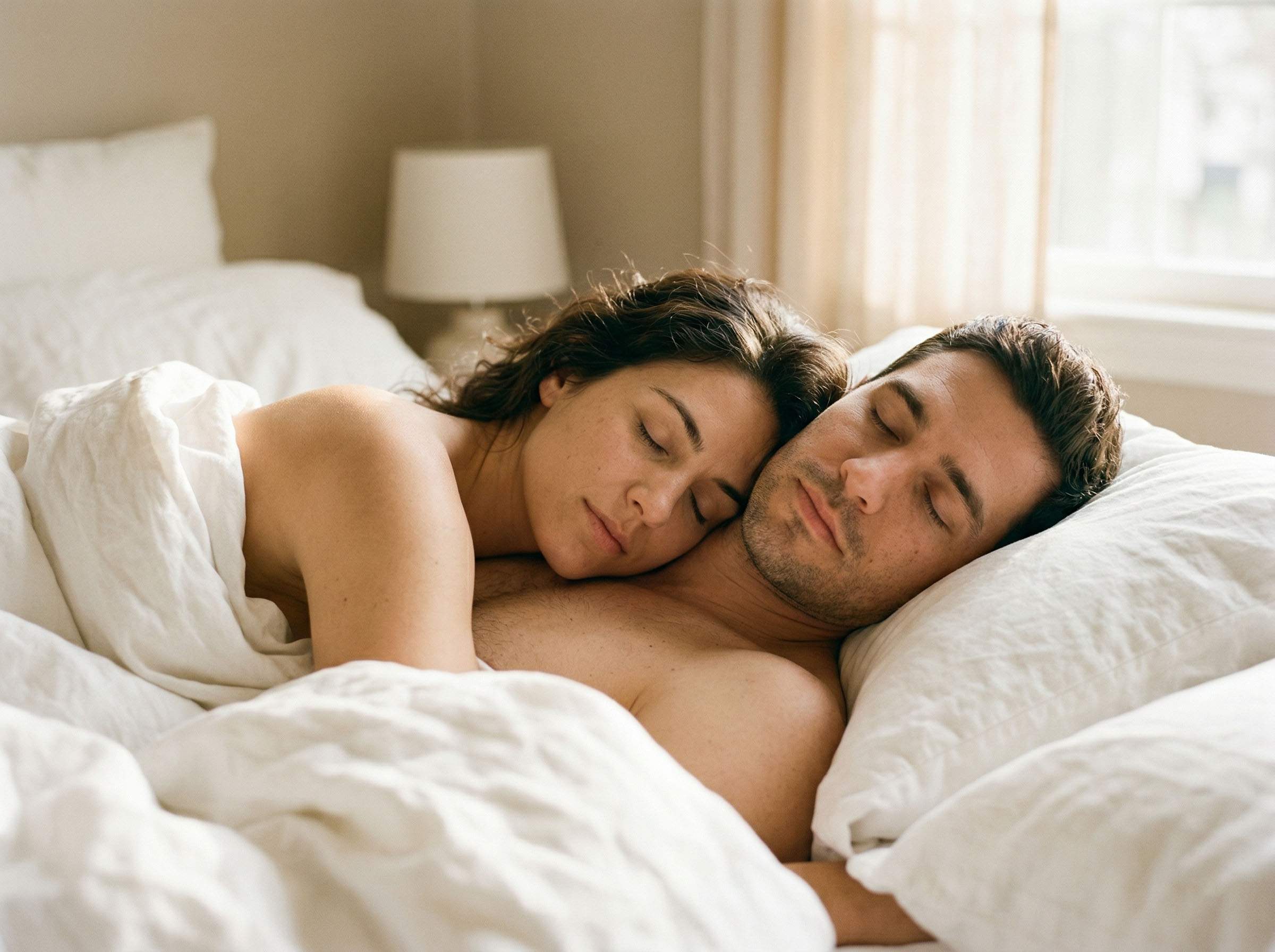
On the flip side, skin-to-skin contact — even with your own sheets, or with a partner — stimulates oxytocin release. Oxytocin is the bonding hormone, the one associated with warmth, safety, and reduced anxiety. Sleeping naked heightens your sensitivity to tactile sensation, and for women who share a bed, the skin-contact effect can meaningfully strengthen emotional intimacy and relationship satisfaction.
A 2015 UK survey conducted by Cotton USA found that couples who slept naked reported higher relationship satisfaction than those who slept clothed. The numbers were striking: 57 percent of naked sleepers described themselves as happy in their relationships, compared to 48 percent of pajama wearers and just 43 percent of those who slept in onesies. The connection between physical closeness and emotional connection is not just folklore — it's biochemistry.
◆ By the Numbers
57%
of naked sleepers report being happy in their relationships (Cotton USA, 2015)
1–2°F
core temperature drop needed to trigger deep, restorative sleep stages
30%
of Americans say they sleep in the nude, per a 2023 YouGov survey
↑ GH
Cooler sleep temperatures support greater growth hormone release during deep sleep
Growth Hormone and the Anti-Aging Case for Cool Sleep
Here's one that tends to get women's attention quickly: sleeping cool — which sleeping naked helps achieve — supports the release of human growth hormone (HGH) during deep sleep cycles.
HGH is essential for tissue repair, muscle maintenance, fat metabolism, and yes, skin health. Its release is tightly linked to the depth and quality of slow-wave sleep. When sleep is shallow or fragmented — often because the body is too warm — HGH secretion drops. Over time, reduced overnight HGH contributes to slower recovery, decreased muscle tone, and accelerated skin aging.
This is not a minor footnote. For women navigating perimenopause or menopause, when HGH naturally declines, protecting the sleep conditions that optimize its release becomes even more worthwhile. It's one of the most accessible tools for supporting the kind of overnight restoration that keeps you feeling and looking like yourself through the years.
Skin Health: What Happens When You Let It Breathe
Your skin is your body's largest organ, and it does critical work while you sleep — regenerating cells, repairing UV damage, and producing collagen. Most of that activity happens more effectively when the skin isn't trapped under synthetic fabric, subjected to friction from waistbands and seams, or overheated by layers of clothing.
Chronic friction from pajama elastic, tight waistbands, or synthetic fabric can cause localized irritation, clogged pores, and in some women, exacerbate conditions like folliculitis or contact dermatitis. Sleeping naked eliminates all of that. Your skin gets uninterrupted circulation and the freedom to regulate moisture without being trapped against fabric.
Dermatologists often recommend sleeping in breathable, natural fabrics as a minimum — but many note that the absence of clothing entirely is even better for overall skin health, particularly in warmer climates or for women prone to heat rashes or body acne.
Table: Sleepwear Comparison — What Science Says
Ratings are general indicators based on sleep science and dermatology literature; individual results vary.
Body Image and the Mirror You Sleep In
This one is quieter than the others, but it might be the most profound.
Many women live at arm's length from their own bodies. We dress them, cover them, scrutinize them — but we rarely just exist in them without purpose or performance. Sleeping naked is one of the few times in modern life when a woman is completely unclothed without any particular agenda attached to it. No gym. No intimacy. Just rest.
Psychologists who study body image have noted that habitually sleeping naked tends to increase body acceptance over time. Without the buffer of clothing, you become more accustomed to your own form — the softness, the warmth, the simple fact of your own skin. You stop seeing your body as something that needs to be dressed up or dressed down to be acceptable.
That may sound like a small thing. It isn't. The relationship a woman has with her own body shapes almost everything — her confidence, her choices, her ease in the world. Anything that quietly strengthens that relationship is worth taking seriously.
🌿 Cultural Insight
The Nordic Tradition of Thermal Rest
Scandinavian sleep culture has long prioritized cool, unencumbered rest. In Norway, Denmark, and Sweden, it's common to sleep with heavy duvets but minimal clothing — or none at all — even in cold months. The duvet traps heat while the body regulates freely beneath it. This tradition, rooted in centuries of practical Nordic wisdom, aligns precisely with what modern sleep science now recommends: cool body, warm cover. It's a balance, not an extreme.
Melatonin, Darkness, and the Full Hormonal Picture
Sleep is orchestrated by hormones, and melatonin — the hormone that regulates your sleep-wake cycle — is particularly sensitive to environmental conditions. Light suppresses it; darkness encourages it. But temperature plays a supporting role that's often overlooked.
Research from the National Institutes of Health has shown that even mild sleep disruptions caused by thermal discomfort can reduce melatonin output and delay REM sleep. When you're too warm, you're more likely to wake partially, toss and turn, and miss the deep, regenerative sleep stages where the body does its most important repair work.
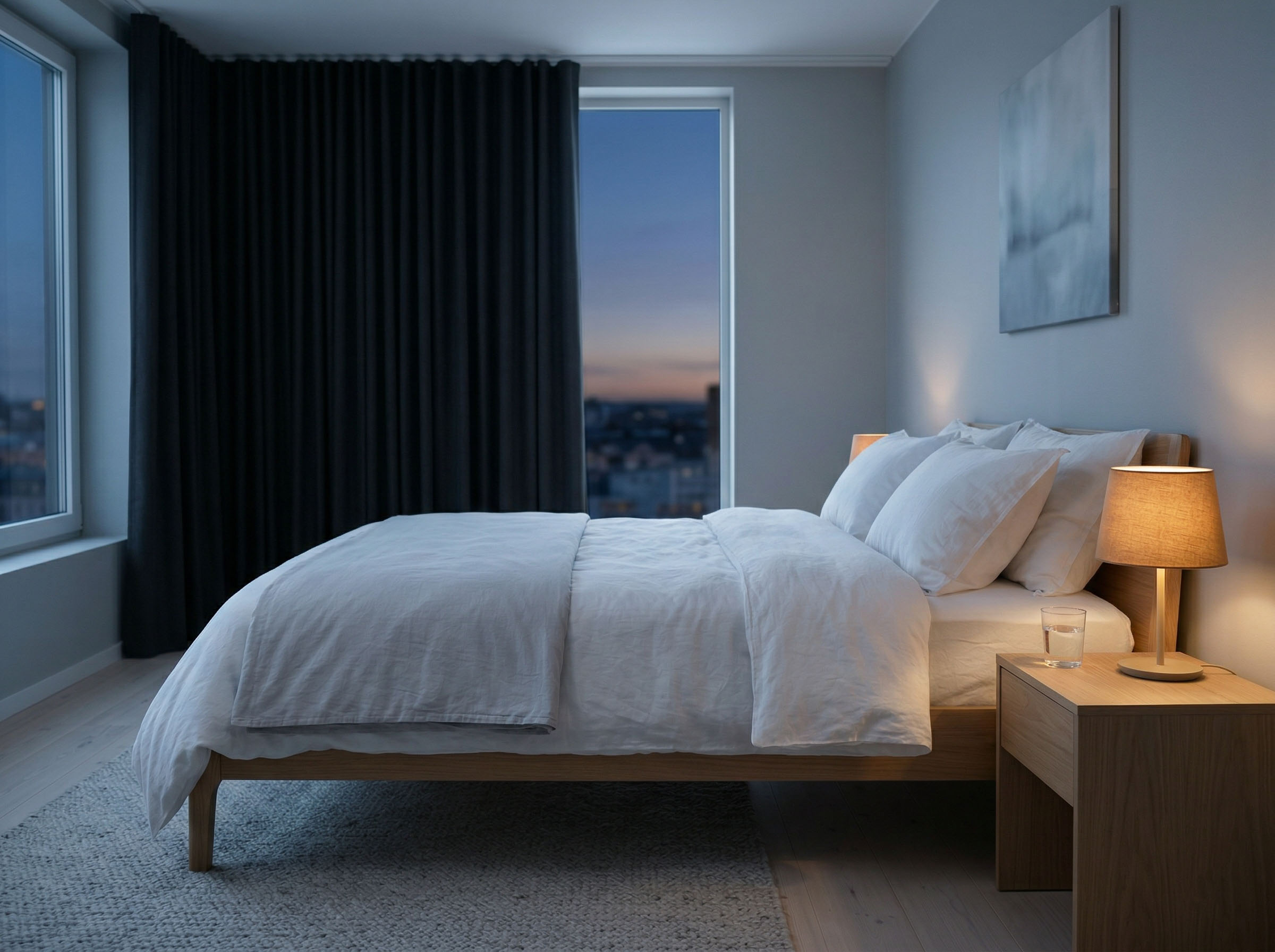
Sleeping naked, in a cool room with blackout curtains, creates the hormonal conditions your body was designed to sleep in. It's the closest modern women can get to the natural sleep environment our biology was built for — before electric lighting, climate-controlled homes, and the modern pajama industry intervened.
✦ Quick-Start Guide: Your First Week of Sleeping Naked
✔ Do This
- Set your room temperature between 60–67°F (15–19°C)
- Use breathable, natural bedding — linen or cotton
- Start on a night you're home alone if you feel self-conscious
- Keep a light robe or wrap nearby for middle-of-the-night needs
- Use blackout curtains to maximize melatonin production
- Give it a full 7 nights before you decide it's not for you
✖ Avoid
- Synthetic sheet materials — they trap heat and moisture
- Sleeping with the heat cranked up to "make up" for no pajamas
- Skipping a shower before bed — basic hygiene protects your bedding
- Giving up after one uncomfortable night — adjustment takes a few days
ℹ Worth Knowing
- Wash sheets more frequently — weekly is ideal
- If you share a bed, discuss it with your partner first
- It's completely safe during pregnancy — speak with your midwife if uncertain
- Children and shared living situations may call for practical compromises
Yes, But… The Real Objections Answered Honestly
What about hygiene? Sleeping naked is hygienic when paired with clean sheets changed weekly and a shower before bed. Your skin naturally regulates itself — clothing is not a hygiene requirement for sleep.
What if I have kids who might come in? This is the most practical objection, and it's a real one for some couples. That said, you might be surprised at how many households have no issue with nudity. Simple solutions exist — keeping a robe or wrap next to the bed takes just two seconds to grab. Most mothers of young children don’t worry about their kids seeing them naked. It all depends on the person, and it’s a solvable problem.
What if I get cold? The solution isn't more pajamas — it's a better duvet and cooler room. A high-quality duvet or weighted blanket over cool, bare skin is what the Nordic tradition has practiced for generations. You stay warm without overheating.
I'm not comfortable with my body. That's exactly why this is worth trying. Exposure to your own body — even just in the privacy of your own bed — gently shifts your relationship with it. Comfort with your own form, built over time in safe, private conditions, is one of the quieter gifts this habit offers.
— Lexi Pierce
◈ In Brief — The 7 Science-Backed Benefits
- Faster sleep onset — cooler skin signals the brain to begin deep sleep sooner
- Deeper, more restorative sleep — body temperature self-regulates without clothing interference
- Reduced yeast and bacterial overgrowth — better air circulation in the vaginal area
- Better stress hormone balance — proper sleep depth supports natural cortisol rhythm
- Boosted growth hormone release — cool, deep sleep encourages overnight cellular repair
- Improved skin health — no friction, better circulation, uninterrupted repair
- Stronger body image and intimacy — habitual nakedness builds body acceptance and partner closeness
Common Questions About Sleeping Naked
The Permission You Didn't Know You Needed
There's no grand gesture required here. No lifestyle overhaul, no Pinterest board, no wellness investment. You simply stop wearing something to bed that your body has been politely asking you to remove for years.
The benefits are real, the research is solid, and the cost is literally nothing. What you gain — better sleep, a healthier body, a warmer relationship with yourself and possibly with your partner — is everything the wellness industry sells in a bottle and charges a premium for.
Sleep is sacred. Give your body the conditions it was designed for. Let it breathe. You might be surprised what wakes up with you in the morning.
About the Author
Lexi Pierce
Lexi Pierce writes about women's health, sleep science, and everyday wellness with a clear, evidence-based approach. She believes the best health decisions are the ones women feel genuinely informed to make — not pressured into.
Disclaimer: This content is for informational and educational purposes only and does not constitute medical advice. It is not intended to be a substitute for professional diagnosis or treatment. Always consult with a qualified healthcare provider regarding any medical condition or treatment plan. Never disregard professional medical advice because of something you have read here.