



 Deutsch
  English
  Español
  Français
In Brief
- Comparison often starts automatically, shaped by media, comments and old expectations.
- Shifting focus from “How do I look?” to “How do I feel?” builds a more grounded connection to your body.
- Vulva appearance varies widely; there is no single “correct” way to look.
- Small, repeatable habits—comfortable clothes, balanced self-talk, realistic mirror routines—support body appreciation over time.
Comparison is so deeply woven into modern life that many women barely notice it happening. A glance in a mirror, the angle of a selfie, a scroll through social media, an unexpected memory of how your body looked at nineteen, a quick thought sparked by another woman at the gym—these tiny sparks of contrast can shift how you feel about yourself before you’ve had time to register them.
While comparison is an ordinary human behavior, relying on it to measure your worth rarely leaves anyone feeling grounded. The body you have is personal, lived-in, and shaped by countless factors that no other woman’s life could replicate. Learning to appreciate your body without stacking it against someone else’s is both a practical skill and an ongoing relationship.
This guide offers an honest, steady approach to seeing your body as your own—without judgment, without unrealistic advice, and without pretending the world around you doesn’t create pressure. Instead, you’ll find clear strategies that help you move toward something far more stable: appreciation rooted in reality rather than comparison.
Why Comparison Feels Automatic
Most women do not consciously choose comparison; the mind does it as a way of organizing information. Throughout childhood and adolescence, many girls receive contradictory messages: love your body, but also look a certain way; be natural, but also stay polished; be confident, but not too confident. Over time, these expectations become background noise that shapes your internal dialogue.
Comparison also gets reinforced in situations most women face daily:
-
Images that favor a narrow range of appearances
-
Comments from peers or partners about body shape, skin, hair, or vulva appearance
-
Medical or health conversations that focus heavily on “ideal” measurements
-
Cultural emphasis on youth over experience
-
Moments of transition—pregnancy, aging, hormonal shifts—where your body changes faster than your comfort level
Understanding that comparison has a psychological and social foundation does not mean resigning yourself to feeling its effects. It simply means you’re not “failing” if you experience it. You’re human.
What matters is learning how to navigate those moments without letting them define your relationship with yourself.
Step 1: Shift From “How Do I Look?” to “How Do I Feel?”
Appearance is only one lens through which a woman experiences her body, but it often takes up the most attention. The next time you catch yourself mentally critiquing your reflection or comparing yourself to another woman, pause and redirect the question.
Instead of:
“Do I look good enough today?”
Try:
“How does my body feel right now?”
This shift sounds small, but it grounds you in your lived experience rather than external judgment. Noting sensations—warmth, tension, comfort, fatigue—brings you into the present. From there, self-care becomes more intuitive, and your self-perception becomes less dependent on appearance.
If your shoulders feel tight, your body is asking for movement.
If your stomach feels unsettled, maybe you need a softer meal.
If you feel strong, balanced, or simply comfortable, that is worth acknowledging.
Appreciation grows when you reconnect to function, not only form.
Quick Start: Appreciate Your Body Today
Use this one-day reset to practice body appreciation without comparison.
- Mirror in natural light
- Small notebook or notes app
- Comfortable outfit you enjoy wearing
- Check in once: “How does my body feel?”
- Write down one thing your body made possible today.
- Unfollow one account that triggers harsh comparison.
- Zoom in on “problem areas” in the mirror.
- Measure your worth by a number on a scale.
- Assume edited or filtered images are realistic reference points.
Step 2: Practice a More Realistic Mirror Routine
Some women avoid mirrors entirely; others check their reflection dozens of times a day. Neither extreme is necessarily unhealthy, but both can create distorted perceptions.
Try establishing a simple, realistic mirror routine:
1. Choose one consistent moment each day
Morning works well, before the outside world shapes your mood.
2. Look at yourself as a whole, not in fragments
Many women fixate on specific areas—the stomach, thighs, breasts, vulva, or skin. Looking only at “problem areas” can reinforce the idea that your body is a collection of flaws. Take in the full picture instead. It reduces the intensity of criticism.
3. Replace criticism with curiosity
Instead of judging, ask:
-
What looks different today?
-
What has changed as I’ve grown, aged, or lived my life?
-
What does this change tell me about where I’ve been?
Curiosity softens reactive judgment. It also helps you build a more stable understanding of your body, one that holds steady even when lighting, angles, or mood shift.
Step 3: Reconsider Your Reference Points
Comparison often comes from placing your body next to unrealistic or irrelevant “standards.” These might be women you see online, celebrities whose bodies depend on professional support, or even younger versions of yourself.
Ask yourself two questions:
“Is this a realistic reference point?”
If not—meaning the image is filtered, photoshopped, surgically altered, or simply unrelated to your lifestyle—it cannot serve as a fair comparison.
“Is this a meaningful reference point?”
A meaningful comparison is one that helps you reflect on health, comfort, or personal goals.
For example:
-
Comparing your energy levels to last year to see if you’re sleeping enough
-
Comparing your mobility to earlier stages of an injury recovery
-
Comparing how your skin reacts to different products to learn what suits you
These comparisons are useful because they’re grounded in your own life, not someone else’s.
When you adjust your reference points, your expectations shift from aspirational or punitive to personal and relevant.
Helpful vs Unhelpful Comparison Habits
| Helpful habits | Unhelpful habits |
|---|---|
| Comparing your energy and comfort levels to last month to adjust sleep or routines. | Comparing your body to edited photos or younger versions of yourself. |
| Noticing what your body can do today (walk, stretch, carry, rest well). | Focusing only on “problem areas” in the mirror instead of the whole body. |
| Using neutral language: “This is my body today” instead of harsh criticism. | Mentally ranking yourself against other women in social situations. |
Step 4: Build a Balanced Relationship With Social Media
Social media can fuel comparison, yet many women rely on it for inspiration, connection, and enjoyment. You do not need to remove yourself from it entirely; instead, you can adjust how you use it.
1. Audit your feed with honesty
Ask yourself:
-
Who makes me feel pressured?
-
Who makes me feel informed?
-
Who makes me feel comfortable in my own skin?
-
Who makes me feel “less than”?
Keep the accounts that bring value. Quiet or unfollow those that don’t.
2. Add content that reflects realism
Look for creators, educators, midwives, dermatologists, pelvic-floor physiotherapists, or women in your age group who present information rather than unattainable visuals.
3. Identify comparison triggers
You may notice patterns—bikini photos, postpartum body updates, skincare transformations, or fitness images. When you recognize what triggers comparison, you can pause, breathe, and redirect your attention instead of spiraling into self-judgment.
4. Set consumption limits
Even positive accounts can overwhelm you if scrolling becomes automatic. Designate time windows for checking social media or use built-in app timers to keep habits in check.
Balanced social media use doesn’t mean eliminating aspiration; it means choosing what supports your well-being.
“Your body is not a snapshot to compare against someone else. It is a timeline of everything you have lived.”
Step 5: Understand the Natural Variety of Vulva Appearance
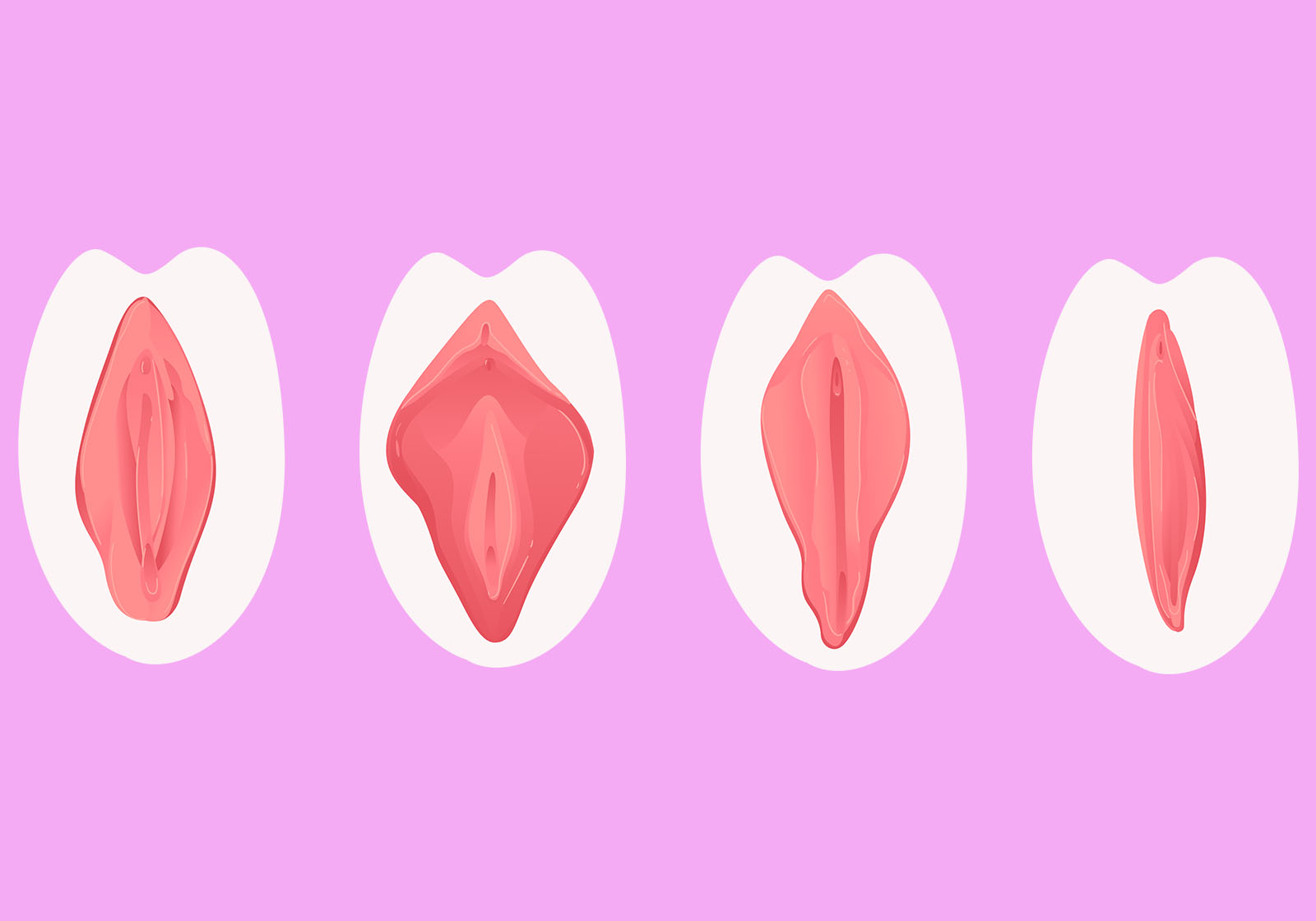
Many women secretly compare their vulva to what they’ve seen online, in medical diagrams, or in private conversations. But vulva appearance varies more widely than most women realize. Labia size, color, symmetry, skin texture, hair patterns, and clitoral hood shape all differ naturally.
You are not supposed to look like anyone else.
You’re not supposed to look “standard.”
There is no standard.
If part of your comparison struggle centers on vulva appearance, try grounding yourself in a few key truths:
-
Labia minora can be tucked inside or extend well beyond the outer labia—both are normal.
-
Color variation—from pink to brown to deep plum tones—is common across all skin tones.
-
Asymmetry is natural. One side of the labia or clitoral hood may be longer or fuller.
-
Texture changes are common with age, childbirth, hormones, or sexual activity.
-
Pubic mound shape varies based on fat distribution and pelvic structure.
Understanding this helps create distance between your body and the narrow images often circulated online.
If you want more guidance on vulva anatomy or appearance, consider resources from pelvic-floor specialists or gynecologists—professionals who present information without judgment or pressure.
Medical research and clinical experience show wide variation in labia size, color and shape. Many women who worry that their labia are “too long” or “too uneven” are well within the natural range. Asymmetry and visible inner labia are common, not mistakes.
Step 6: Strengthen Your Body Appreciation Through Small Behaviors
Body appreciation grows through repetition, not grand gestures. Consistency is more important than intensity.
Below are realistic practices that support appreciation:
1. Wear clothing that fits the body you have today
Many women hold onto clothes that fit their past selves, hoping they will “fit again someday.” This creates daily friction. Clothing should support your current life, not remind you of a different era.
2. Nourish your body without punishment
Eating regularly, choosing satisfying meals, and avoiding deprivation support a more stable relationship with your body.
3. Choose movement for well-being, not correction
Gentle stretching, walking, dancing, swimming, or strength training can be more sustainable than chasing a specific aesthetic result.
4. Use skincare and vulva care routines as acts of comfort, not correction
You don’t need an elaborate routine. A gentle cleanser, breathable underwear, and occasional moisturizing can be enough.
5. Rest when you need it
Fatigue often turns into self-criticism. Rest is not a sign of inadequacy; it’s a normal biological requirement.
6. Track non-appearance victories
Examples:
-
“I slept well this week.”
-
“My cramps were easier to manage.”
-
“I walked farther than I did last month.”
-
“My pelvic-floor exercises feel more natural.”
These moments reflect real growth and help reframe how you interpret your body’s value.
From Comparison to Connection: Simple Shifts
Step 7: Build Self-Dialogue That Isn’t Forced or Overly Positive
Many women reject body-positivity phrases because they feel unrealistic. Instead of trying to love every inch of your body, aim for something more attainable: neutral, balanced self-dialogue.
Try:
-
“This is my body today. It’s okay if it changes.”
-
“I don’t need to judge this.”
-
“This part of my body feels new or unfamiliar, but that doesn’t make it wrong.”
-
“I’m learning what feels comfortable for me.”
These statements acknowledge your experience without forcing positivity or exaggeration.
Over time, neutrality makes space for honest appreciation.
Step 8: Recognize That Your Body Is a Timeline, Not a Snapshot
Every woman’s body carries a history. Puberty, sports, illnesses, heartbreak, adulthood, motherhood (if chosen), weight fluctuations, aging, and hormonal transitions contribute to the shape you see today.
Your body tells a story about:
-
Growth
-
Injury and healing
-
Pleasure
-
Stress
-
Moments of strength
-
Seasons of fatigue
-
Experiences you’ve lived and survived
When comparison starts to surface, remind yourself that you’re comparing a single snapshot of someone else’s life to the full timeline of your own. It cannot be equal. Nor should it be.
Your body is not a static object; it is a living record.
Step 9: Rebuild Trust With Your Body by Setting Respectful Boundaries
Appreciating your body means noticing what undermines your confidence—and taking action.
Consider creating boundaries around:
-
Conversations you no longer want to engage in
(e.g., friends who constantly critique their own bodies) -
Comments from partners that feel unhelpful or pressuring
Open communication can shift dynamics and strengthen intimacy. -
Workplace or family expectations around appearance
You can decline comments or jokes, change the subject, or set limits. -
How often you weigh yourself
A scale can be a useful data point but is not an identity.
Boundaries support appreciation by protecting your mental space.
Step 10: Acknowledge When Professional Support Could Help
Body image concerns can sometimes feel persistent or overwhelming. If you experience distress that affects your daily life, consider support from a therapist, counselor, or body-image specialist.
Professional guidance is not a last resort—many women benefit from having a place to explore their relationship with their appearance in a structured, non-judgmental environment.
It’s a practical step, not an emotional failure.
Body Appreciation: Questions Women Ask
Final Thoughts: Appreciation Is a Practice, Not a Destination
Learning to appreciate your body without comparison does not require complete confidence or constant positivity. You do not need to unlearn a lifetime of pressures overnight, nor must you reshape yourself into a woman who never doubts how she looks.
Instead, think of appreciation as a skill—steady, humble, ongoing.
Some days you will feel at ease in your skin. Other days you may feel disconnected. Both experiences are part of living in a body that changes, adapts, and responds to life.
When you base appreciation on your own comfort, your own history, and your own goals—not on someone else’s appearance—you build a relationship with your body that lasts.
One grounded in honesty.
One shaped by choice.
One that belongs fully to you.
Disclaimer: The articles and information provided by the Vagina Institute are for informational and educational purposes only. This content is not intended to be a substitute for professional medical advice, diagnosis, or treatment. Always seek the advice of your physician or another qualified health provider with any questions you may have regarding a medical condition.