



 Deutsch
  English
  Español
  Français
For a long time, the world of beauty and skincare seemed to stop abruptly at the bikini line. While women have spent decades refining ten-step facial routines and scouting the perfect botanical body butters, the conversation around intimate skincare remained hushed, clinical, or—worse—driven by products that did more harm than good.
Fortunately, the tide is turning. Women are increasingly looking for a middle ground between "ignore it" and "use harsh chemicals." We are seeking a way to care for our most delicate skin with the same intentionality we bring to our faces and hair. The goal isn’t to meet an impossible standard of perfection, but to maintain comfort, soothe irritation, and support the skin’s natural barrier.
When it comes to the vulva, the skin is unique. It is thinner, more permeable, and more sensitive than the skin on your arms or legs. It’s also an area where the pH balance is crucial. Using the wrong ingredients can lead to a cycle of dryness, itching, and discomfort. This is why many are returning to nature, looking for simple, time-tested ingredients that provide relief without the baggage of synthetic fragrances and sulfates.
Here, we explore ten natural ingredients that are making waves in the world of intimate skincare for their soothing, hydrating, and protective properties.
Quick-Start Guide: Intimate Care
Essential tips for a healthy routine.
- Choose fragrance-free products.
- Wear breathable cotton fabrics.
- Patch test new oils on your thigh.
- Don't use harsh "antibacterial" soaps.
- Avoid internal douching.
- Don't ignore persistent discomfort.
1. Aloe Vera: The Ultimate Soother
If there were a hall of fame for botanical skincare, Aloe Vera would be at the center of the stage. Known as the "plant of immortality" by ancient Egyptians, its clear, gel-like substance is packed with vitamins, minerals, and antioxidants.
For intimate care, Aloe Vera is prized for its immediate cooling effect. Whether you are dealing with friction from exercise or the lingering sting of hair removal, Aloe provides a lightweight barrier that hydrates without feeling greasy. It contains polysaccharides that support skin repair, making it a staple for any woman looking to calm redness.
Tip: When choosing an Aloe-based product, ensure it is "decolorized" or "purified" to remove aloin, which can sometimes be irritating to sensitive skin.
2. Coconut Oil: Nature’s Simple Emollient
Coconut oil has been a polarizing figure in skincare circles, but for many women, it remains a gold-standard natural lubricant and moisturizer. Rich in lauric acid, it has natural properties that help maintain a clean environment on the skin’s surface.
As a barrier cream, it is excellent for preventing "chafing" during long walks or workouts. Because it is a solid at room temperature and melts upon contact with the skin, it provides a luxurious feel that locks in moisture.
Note: While many women love it, coconut oil is comedogenic (can clog pores). If you are prone to ingrown hairs or "bikini line" breakouts, use it sparingly or opt for a lighter oil.
3. Chamomile: The Calming Botanical
We often think of chamomile as a bedtime tea, but its benefits for the skin are just as restorative. Chamomile extract contains bisabolol and chamazulene, compounds known for their ability to reduce the appearance of redness and soothe "angry" skin.
In the context of intimate beauty, chamomile is frequently used in washes and balms designed for sensitive skin. It works quietly to settle irritation from tight clothing or hormonal changes that can leave the skin feeling thin and reactive.
4. Calendula: The Skin Repairer
Traditions of Care
The use of botanicals for intimate wellness is far from a new concept. Women throughout history have looked to the earth to support their physical comfort.
In Ancient Egypt, honey and botanical oils were frequently used as protective barriers. In the Mediterranean, women have used olive and almond oils for generations to maintain skin elasticity and soothe dryness.
These practices were never about complex beauty standards; they were practical, common-sense ways for women to care for their bodies using the resources available to them. Today, we are simply returning to those roots with a modern understanding of skin science.
Derived from the marigold flower, Calendula is a powerhouse for skin recovery. It has been used for centuries in traditional medicine to treat minor scrapes and burns. In modern intimate care, it is used to support the skin’s natural healing process.
For women who wax or shave, Calendula-infused oils can be a lifesaver. It helps to smooth the skin’s texture and provides a gentle touch that doesn’t disrupt the delicate balance of the area. It’s less about "fixing" and more about "supporting" the skin's resilience.
5. Jojoba Oil: The Biomimetic Wonder
Technically a liquid wax, Jojoba oil is unique because its chemical structure closely mimics human sebum—the natural oil our skin produces. This makes it incredibly well-tolerated by almost all skin types.
Because the body "recognizes" Jojoba, it absorbs easily without leaving a heavy residue. In intimate skincare, it is often used to combat dryness, particularly for women going through menopause or postpartum changes when estrogen levels dip and skin can become more fragile.
Did You Know?
The skin of the vulva is significantly more permeable than the skin on your face. This means it absorbs ingredients—both good and bad—at a much higher rate, making ingredient purity essential.
Understanding the "Why" Behind Natural Choices
The shift toward natural ingredients in this category isn't just a trend; it's a response to the biology of the female body. The vulvar skin lacks the thick "stratum corneum" (the outermost layer of skin) found elsewhere on the body. This means chemicals are absorbed more easily into the bloodstream. By sticking to recognizable, plant-based ingredients, women reduce the "chemical load" on their most sensitive systems.
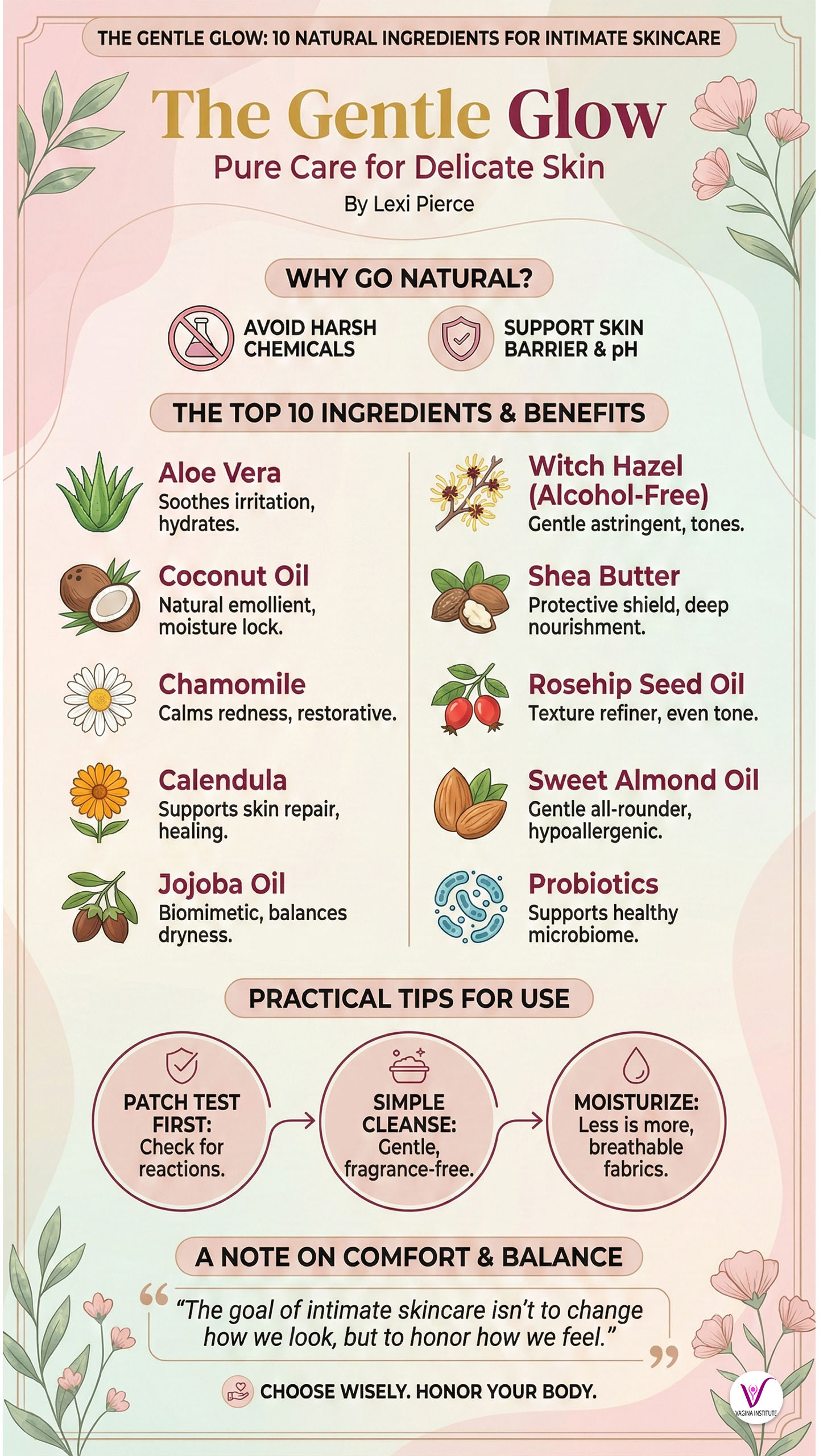
6. Witch Hazel (Alcohol-Free): The Gentle Astringent
Witch hazel is often misunderstood. Many remember the stinging, alcohol-laden versions of the 90s. However, high-quality, alcohol-free witch hazel is a wonderful natural toner. It contains tannins, which have a mild "shrinking" effect on tissues, helping to soothe inflammation.
In intimate care, it is best used as a spot treatment or a wipe-off solution after hair removal. It helps to keep the pores clear and reduces the "bumps" that often follow a bikini wax.
7. Shea Butter: The Protective Shield
For deep nourishment, nothing beats Shea butter. Extracted from the nuts of the African Shea tree, it is incredibly rich in fatty acids and vitamins E and A.
While oils are great for hydration, Shea butter provides a physical barrier. This makes it ideal for women who experience discomfort from exercise—such as cycling or running—where skin-on-skin or skin-on-fabric friction is an issue. It stays put longer than oils, providing hours of protection and softening.
The goal of intimate skincare isn't to change how we look, but to honor how we feel.
”8. Rosehip Seed Oil: The Texture Refiner
If you are concerned with the appearance of the skin—perhaps looking to even out skin tone or soften the look of scars from past ingrown hairs—Rosehip seed oil is the answer. It is naturally high in Vitamin C and Vitamin A (retinol).
Unlike the high-strength retinoids used for facial aging, the Vitamin A in Rosehip oil is gentle. It promotes cell turnover without the peeling or harshness associated with synthetic versions. It’s a "slow and steady" ingredient that improves the look and feel of the skin over time.
9. Sweet Almond Oil: The Gentle All-Rounder
Sweet almond oil is a "carrier oil" that is frequently used as the base for high-end intimate serums. It is hypoallergenic and very mild. It’s rich in Vitamin E, which is a known antioxidant that helps protect skin cells from oxidative stress.
Its light consistency makes it perfect for daily use. Many women find that a few drops of almond oil after a shower helps to maintain a soft, supple texture without any scent or irritation.
10. Probiotics: The Modern Addition
While not a "plant" in the traditional sense, topical probiotics (like Lactobacillus ferment) are becoming a cornerstone of natural intimate care. We already know that a healthy internal balance is key for women's health, but research suggests that the skin's microbiome is just as important.
Topical probiotics help to support the "good" bacteria on the skin’s surface. This reinforces the skin’s natural defenses against environmental stressors and helps maintain the slightly acidic pH that is vital for intimate health.
"The goal of intimate skincare isn't to change how we look, but to honor how we feel. When we use ingredients that work with our biology rather than against it, we foster a sense of comfort that radiates outward."
Practical Tips for the Modern Woman
Transitioning to a natural intimate skincare routine doesn't have to be complicated. Here are a few ways to integrate these ingredients safely and effectively:
-
Patch Test First: Even natural ingredients can cause reactions. Before applying any new oil or balm to the entire area, test a small amount on your inner thigh and wait 24 hours.
-
Less is More: The vulva is self-regulating in many ways. You don't need a dozen products. A gentle cleanser (or just warm water) and a single, high-quality moisturizer are often enough.
-
Check the Label: Ensure your products are free from "parfum" or "fragrance." Even if a product claims to be natural, synthetic scents are the number one cause of contact dermatitis in the intimate area.
-
Breathable Fabrics: Skincare doesn't stop with bottles. Pair your natural routine with cotton or bamboo silk underwear to allow for airflow, which prevents the moisture buildup that can lead to irritation.
The Importance of Ph Balance
One of the most critical aspects of intimate care is maintaining an acidic environment. Most soaps are alkaline, which can disrupt the natural protective layer of the skin. Natural ingredients like Aloe Vera and certain fermented extracts naturally sit at a lower pH, making them more compatible with a woman's body. When the pH is balanced, the skin is better able to defend itself against dryness and external irritants.
A Note on Honesty and Comfort
Intimate beauty is often marketed with a lot of "fluff," but at its core, it is about functional wellness. Women go through many stages of life—puberty, pregnancy, postpartum, and menopause—and each stage brings different needs for the skin.
There is no "right" way to look, but there is a "right" way to feel: comfortable. Whether you are dealing with the dryness that comes with age, the irritation that comes with an active lifestyle, or simply wanting to treat yourself to a moment of self-care, natural ingredients offer a path that is both effective and respectful of your body’s unique chemistry.
By choosing ingredients like Jojoba, Chamomile, and Aloe, you are opting for a tradition of care that spans generations. These are not "miracle cures," but rather steady, reliable companions in a woman's journey toward total body confidence.
Common Questions
Just Caring
Caring for your intimate skin is an act of self-respect. It is about acknowledging that every part of your body deserves quality ingredients and thoughtful attention. As we move away from the "taboo" nature of these topics, we open the door to better education, better products, and ultimately, a better relationship with ourselves.
The next time you reach for a moisturizer or a soothing balm, take a look at the ingredient list. Look for the botanicals that have stood the test of time. Your skin—and your peace of mind—will thank you.
Disclaimer: The articles and information provided by the Vagina Institute are for informational and educational purposes only. This content is not intended to be a substitute for professional medical advice, diagnosis, or treatment. Always seek the advice of your physician or another qualified health provider with any questions you may have regarding a medical condition.