



 Deutsch
  English
  Español
  Français
The Scent of Self: A Woman’s Guide to Vaginal Health and Natural Odor
There is perhaps no topic in women’s health more shrouded in unnecessary mystery—and occasional anxiety—than the natural scent of the vagina. For decades, women have been bombarded with marketing messages suggesting that they should smell like a spring meadow, a vanilla cupcake, or a tropical breeze. This cultural narrative has created a disconnect between women and their own bodies, leading many to worry about a perfectly healthy, natural biological function.
Understanding vaginal odor isn’t just about hygiene; it is about literacy regarding our own biology. It is about knowing what is normal, what is a sign of a shift in the internal ecosystem, and how to care for ourselves in a way that respects the body’s natural design. The truth is that the vagina is a self-cleaning, highly sophisticated organ with its own unique "signature." Learning to navigate this topic with clarity and confidence allows us to move away from shame and toward proactive, healthy self-care.
Quick-Start Guide: Vaginal Freshness
- Wear 100% breathable cotton.
- Sleep without underwear to "air out."
- Wash with warm water only.
- Stay hydrated to flush toxins.
- Avoid douching or internal sprays.
- Don't use scented soaps on the vulva.
- Avoid tight, synthetic gym wear for long periods.
- Don't ignore persistent fishy odors.
The Biological Signature: What Is "Normal"?
The first and most important thing every woman should know is that a healthy vagina has a scent. It is not meant to be odorless, nor is it meant to smell like perfume. Because the vaginal environment is acidic and home to billions of bacteria, a mild, musky, or slightly sour scent is the physiological baseline.
This scent is primarily governed by the vaginal microbiome. Much like the gut, the vagina hosts a delicate balance of micro-organisms. The "heroes" of this environment are Lactobacilli. these beneficial bacteria produce lactic acid, which maintains a low (acidic) pH level, typically between 3.8 and 4.5. This acidity is a defense mechanism; it prevents harmful bacteria and yeast from overgrowing.
When Lactobacilli do their job, the resulting scent may be tangy or reminiscent of fermented foods like yogurt or sourdough bread. This is a sign of a high-functioning immune barrier. Throughout a woman’s menstrual cycle, this scent will naturally fluctuate. You may notice a more metallic tang during or after your period due to the iron content in blood. Around ovulation, the scent may become milder, while after heavy exercise, a more pungent, "sweaty" musk is common as the apocrine sweat glands in the groin area interact with the air.
| Scent Type | What it Usually Means | Action Required |
|---|---|---|
| Tangy / Fermented | Healthy pH and Lactobacilli presence. | None—this is normal. |
| Metallic | Blood from menstruation. | Normal during or after period. |
| Strongly Fishy | Potential Bacterial Vaginosis (BV). | Consult a healthcare provider. |
| Sweet / Yeasty | Possible overgrowth of yeast. | Monitor for itching; see a doctor. |
The Myth of the "Clean" Scent
The "feminine hygiene" industry, which began booming in the mid-20th century, was built largely on the premise that women’s natural scents were a problem to be solved. This led to the creation of douches, scented wipes, vaginal deodorants, and "pH-balanced" perfumes.
From a health perspective, these products are often the primary cause of the very problems they claim to fix. The vagina is a self-cleaning organ. It produces mucus to wash away dead cells and pathogens naturally. When we introduce harsh soaps or internal "cleansers," we disrupt the delicate pH balance. This disruption kills off the protective Lactobacilli, allowing "bad" bacteria to flourish. The result? A condition called Bacterial Vaginosis (BV) or a yeast infection—both of which produce strong, unpleasant odors.
In essence, trying to make a vagina smell like a flower can actually cause it to develop an odor that signals distress. Understanding this paradox is the first step toward better care.
Did You Know? The vagina produces its own natural antibiotics. The Lactobacilli mentioned earlier produce hydrogen peroxide, which helps kill off invasive bacteria naturally without the need for external soaps.
Common Causes of Changes in Odor
While a baseline scent is normal, significant shifts can be a communication from your body that something is out of balance. Here are the most common factors that influence a change in odor:
1. Dietary Influences
What we eat affects all our bodily secretions, from sweat to saliva to vaginal fluids. High-sugar diets can sometimes encourage yeast overgrowth, leading to a "bready" or sweet smell. Pungent foods like garlic, onions, and certain spices can temporarily alter the scent, usually clearing within 24 to 48 hours.
2. Hormonal Shifts
The vagina is highly sensitive to estrogen. During menopause or while breastfeeding, estrogen levels drop, which can thin the vaginal lining and change the pH, leading to a different scent profile. Similarly, the hormonal shifts during the different phases of the menstrual cycle—follicular, ovulatory, and luteal—will create subtle variations in moisture and musk.
3. The Role of Sweat and Fabrics
The groin area contains a high concentration of sweat glands. When sweat is trapped against the skin by synthetic fabrics like polyester or nylon (commonly found in lace underwear and athletic leggings), it reacts with the bacteria on the skin’s surface. This can create a strong, stale odor that is often mistaken for a vaginal issue when it is actually a skin-and-fabric issue.
4. Bacterial Vaginosis (BV) and Infections
A "fishy" odor is the most common sign of Bacterial Vaginosis, a condition where the bacterial balance has shifted. Trichomoniasis, a common and treatable infection, can also cause a strong, foul odor accompanied by a change in discharge color. If an odor is strong enough to be noticed through clothing or is accompanied by itching and burning, it is a signal to consult a healthcare provider for a simple test.
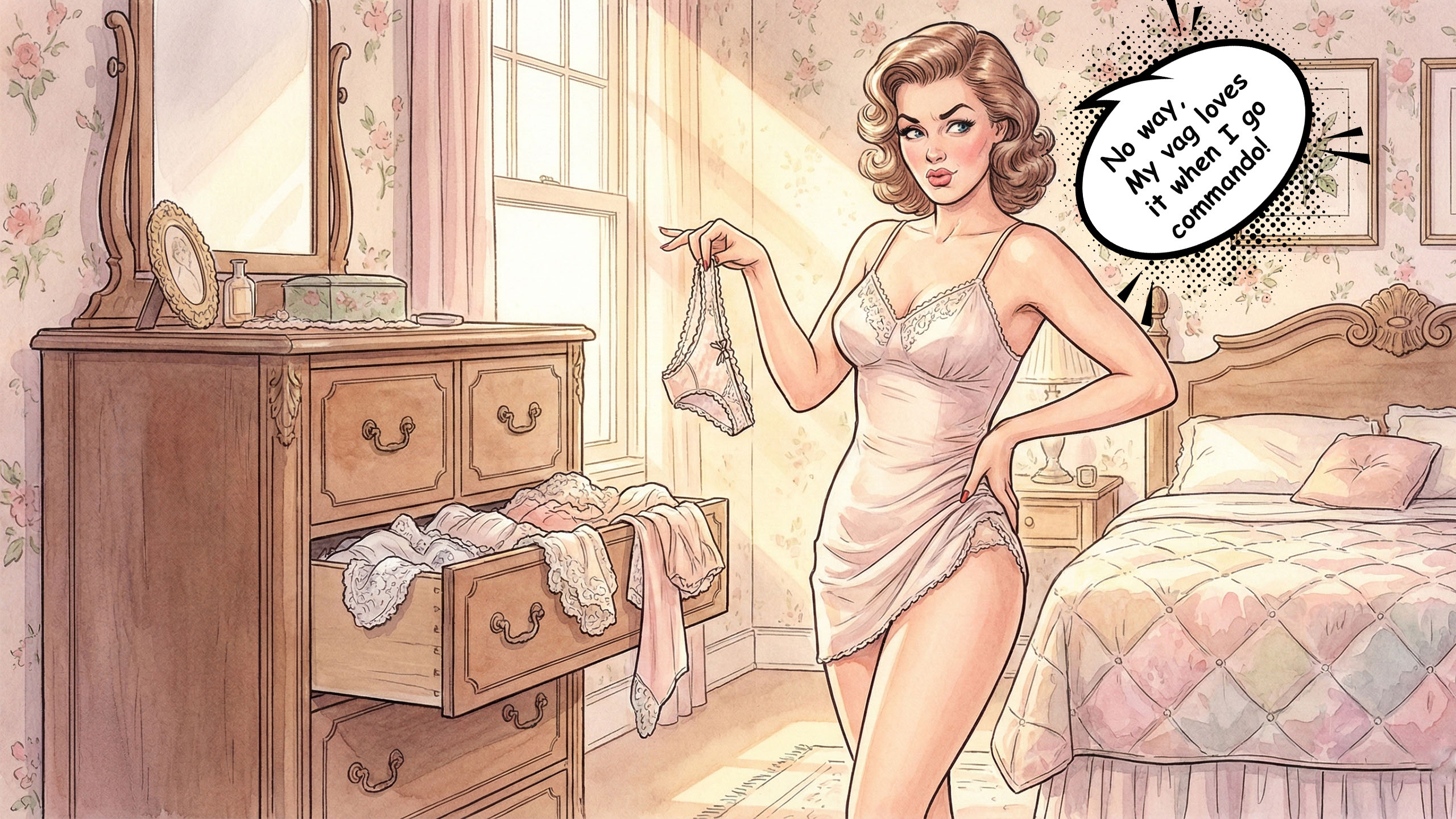
The Importance of "Airing Out"
One of the most overlooked aspects of vaginal care is the simple act of breathing. In our modern world, we are often "bundled up" 24 hours a day. We wear tight leggings to the gym, restrictive trousers to work, and synthetic underwear underneath it all.
The vagina and the surrounding vulvar skin are meant to have access to air. Constant occlusion—trapping moisture and heat against the body—creates a greenhouse effect. This warmth and dampness are the ideal breeding grounds for yeast and odor-producing bacteria.
Finding Time to be Underwear-Free
Optimal vaginal health involves finding periods during the day or night to be "underwear-free." For many women, the easiest way to implement this is at night. Sleeping in loose-fitting pajama bottoms without underwear, or sleeping naked, which is ideal, allows the area to dry out and the skin to breathe.
If being underwear-free at night isn't comfortable, which would be odd, consider "airing out" during the day when you are at home. Swapping tight jeans for a loose cotton skirt without underwear or breathable lounge pants without restrictive undergarments can significantly reduce the accumulation of moisture. Think of the vagina as an organ that thrives when it isn't constantly compressed.
A Practical Guide to Daily Care
Caring for your vaginal health doesn't require a ten-step routine. In fact, when it comes to this part of the body, less is almost always more.
1. Choose the Right Fabrics
When you do wear underwear, stick to 100% cotton. Cotton is breathable and absorbs moisture, whereas synthetic fabrics like spandex and nylon trap it. If you love your lace or seamless synthetics, try to save them for special occasions or short durations, rather than daily wear.
2. The Golden Rule of Washing
You do not need to wash the inside of the vagina. Ever. To clean the external area (the vulva), use only warm water or a very mild, fragrance-free, soap-free cleanser. Avoid anything with "fragrance," "parfums," or "deodorizing" properties. Thoroughly rinse and, most importantly, pat the area completely dry before putting on clothes. Putting on underwear while the skin is still damp is a recipe for irritation.
3. Post-Exercise Hygiene
Staying in sweaty gym clothes is one of the quickest ways to develop an odor or an infection. After a workout, change out of your leggings as soon as possible. If you can’t shower immediately, at least change into dry, cotton underwear and loose clothing.
4. Hydration and Probiotics
Staying hydrated helps the body flush out toxins and maintains the quality of mucosal membranes. Additionally, some women find that taking a probiotic specifically formulated for vaginal health (containing Lactobacillus rhamnosus and Lactobacillus reuteri) helps maintain the internal balance, especially after a course of antibiotics.
Navigating the Emotional Landscape
It is vital to address the psychological component of vaginal odor. Many women feel a sense of "uncleanliness" that is entirely unsupported by biological facts. This often leads to over-washing, which creates a cycle of irritation and further odor.
We must shift the perspective: a scent is a sign of life. It is a sign of a complex, functioning system. If you find yourself feeling self-conscious, ask yourself if the scent is actually "foul" or if it is simply "present." A present scent is normal.
Being honest and non-judgmental with ourselves about our bodies allows us to spot actual problems more quickly. When we aren't afraid of our natural musk, we can easily identify when that musk changes into something that requires medical attention. It turns "shame" into "data."
When to Seek Professional Advice
While this guide focuses on natural care and understanding, there are times when a professional opinion is necessary. You should schedule a visit with a doctor if you experience:
- An odor that is significantly different from your usual scent and persists for more than a few days.
- A "fishy" smell that becomes more pronounced after intercourse.
- Discharge that is thick and white (like cottage cheese) or greenish-yellow.
- Persistent itching, burning, or redness in the vulvar area.
- Pain during urination or intercourse.
These symptoms are usually indicative of an imbalance that is easily treated with a short course of medication. There is no reason to suffer in silence or try to "scrub away" an infection.
Common Concerns Answered
Embracing the Natural Rhythm
The journey to vaginal health is paved with simplicity. By rejecting the unnecessary products of the "feminine hygiene" industry and embracing the body’s natural design, women can find a sense of peace and confidence.
Remember that your body is a dynamic system. It reacts to what you eat, how you move, and what you wear. Giving your vagina the space to breathe—literally—is one of the kindest things you can do for your physical comfort. By choosing breathable fabrics, avoiding harsh chemicals, and allowing for "air time," you are supporting a biological masterpiece that knows exactly how to take care of itself.
Your natural scent is not a flaw to be corrected; it is a part of your unique biological identity. Treat it with the respect and the simple care it deserves.
Disclaimer: The articles and information provided by the Vagina Institute are for informational and educational purposes only. This content is not intended to be a substitute for professional medical advice, diagnosis, or treatment. Always seek the advice of your physician or another qualified health provider with any questions you may have regarding a medical condition.