



 Deutsch
  English
  Español
  Français
A “fresh start” means something different to every woman. Sometimes it’s the quiet resolve that comes with a new season. Sometimes it’s the practical decision to pay closer attention to parts of health that are easy to ignore until something feels off. Vaginal pH falls into that latter category—rarely discussed openly, often misunderstood, yet central to everyday comfort.
This guide is not about perfection, products that promise miracles, or rigid rules. It’s about understanding how the vaginal environment works, why balance matters, and how daily habits can support a sense of ease and normalcy. No shame. No extremes. Just clear information and thoughtful context, so you can make choices that feel right for your body.
Quick Start: Supporting Vaginal Balance
- Do: Use gentle, fragrance-free cleansing externally
- Do: Choose breathable fabrics when possible
- Don’t: Clean internally or use scented products
- Don’t: Assume all change means a problem
What Vaginal pH Actually Means
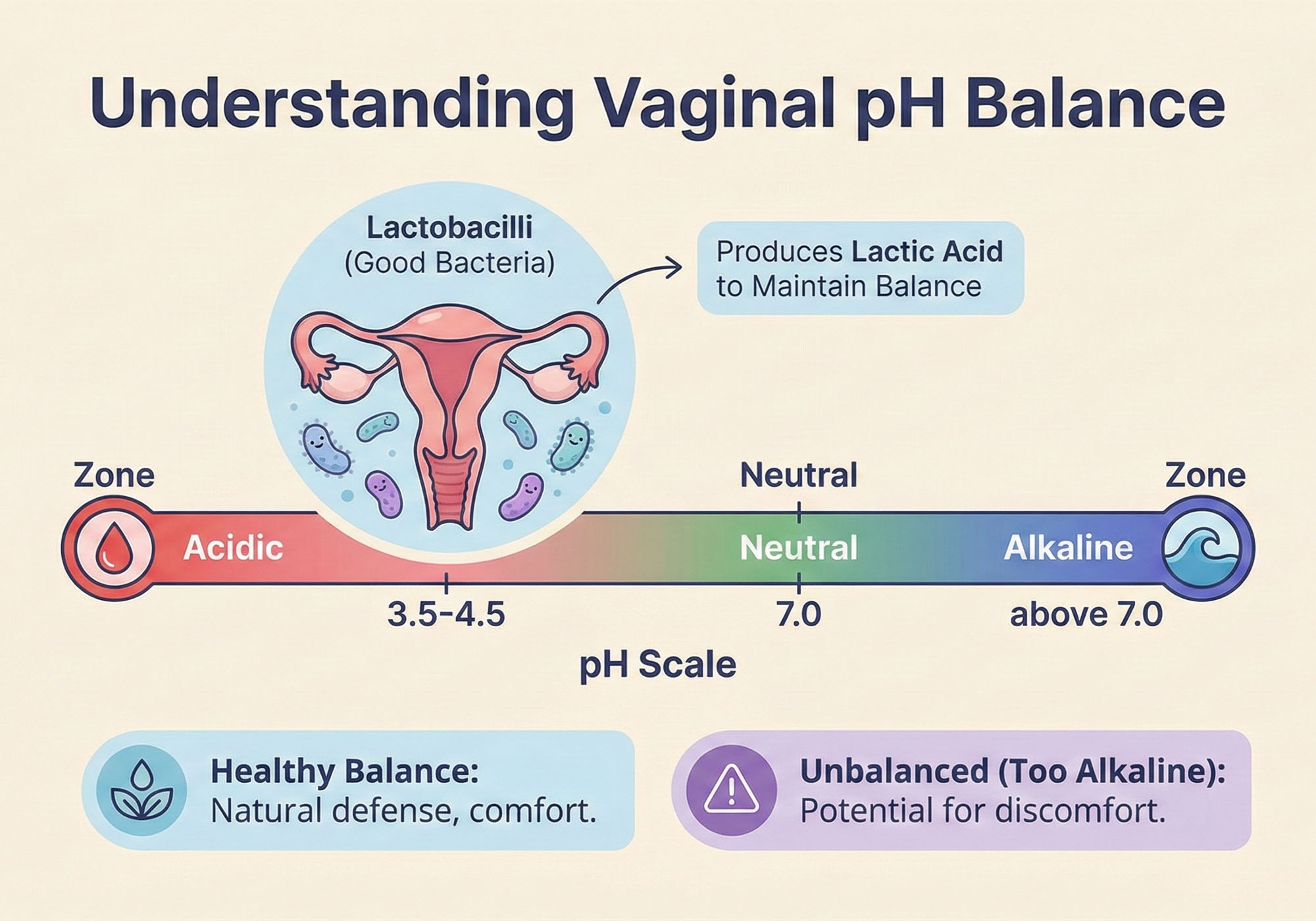
pH is a scale used to describe how acidic or alkaline something is. The vagina naturally maintains a mildly acidic environment, typically around pH 3.8 to 4.5. This acidity is not a flaw or something to “fix.” It’s a feature.
That slightly acidic setting supports beneficial bacteria—especially lactobacilli—which help keep the vaginal ecosystem stable. These bacteria play a quiet but important role in discouraging the overgrowth of organisms that can cause irritation, odor, or discharge changes.
When the balance shifts, symptoms may appear. Sometimes they’re subtle, like a change in scent or texture. Other times they’re more noticeable. Either way, these shifts are common and usually influenced by everyday factors rather than anything dramatic or alarming.
The Vaginal Ecosystem: A Self-Regulating System
The vagina is self-cleaning. This phrase gets repeated often, but it’s worth understanding what it means in practice.
Vaginal tissues naturally shed cells and produce discharge that helps flush out debris. Beneficial bacteria help regulate acidity. Cervical fluid changes throughout the menstrual cycle, adjusting texture and volume in response to hormonal shifts.
This system is dynamic, not fragile—but it can be disrupted by outside interference or internal changes. Supporting balance often means doing less, not more.
Common Factors That Influence Vaginal pH
A shift in pH doesn’t point to a single cause. Usually, it’s the result of overlapping influences that vary from woman to woman.
Hormonal Changes
Estrogen levels affect the vaginal lining and the presence of beneficial bacteria. Puberty, pregnancy, postpartum recovery, breastfeeding, perimenopause, and menopause can all alter vaginal pH temporarily or over time.
These changes are part of normal physiology, though they can bring new sensations or patterns that take adjustment.
Sexual Activity
Semen is alkaline, which means vaginal pH may temporarily rise after intercourse with men. This is a natural chemical interaction, not a problem in itself. For some women, balance returns quickly. For others, especially with frequent intercourse, it may take longer.
Lubricants, condoms, and other products can also influence the vaginal environment depending on their ingredients.
Hygiene Habits
Soaps, washes, wipes, sprays, and douches are often marketed as solutions, but many are unnecessary or overly harsh. Fragrance, strong surfactants, and antiseptic ingredients can disrupt beneficial bacteria and irritate sensitive tissue.
Even “gentle” products can be too much when used internally.
Clothing and Moisture
Tight clothing, non-breathable fabrics, and prolonged moisture can create conditions that affect comfort. This doesn’t mean avoiding fitted clothes altogether, but it does mean paying attention to airflow and dryness, especially during exercise or hot weather.
Stress and General Health
Stress affects the body in layered ways, including immune function and hormonal balance. Diet, sleep patterns, and overall health can also influence how resilient the vaginal ecosystem feels from day to day.
Everyday Factors That Influence Vaginal pH
| Factor | How It May Affect Balance |
|---|---|
| Hormonal shifts | Changes in estrogen can influence acidity and comfort |
| Sexual activity | Semen is alkaline and may temporarily raise pH |
| Hygiene products | Fragrance or harsh cleansers may disrupt beneficial bacteria |
| Clothing & moisture | Limited airflow can affect comfort and balance |
Signs Your Body May Be Out of Balance
Not every variation means something is wrong. Vaginal discharge, scent, and sensation naturally change throughout the menstrual cycle. Still, certain shifts can feel unfamiliar.
Women often notice:
-
A persistent change in odor that doesn’t resolve on its own
-
Discomfort, itching, or irritation
-
A noticeable change in discharge color or consistency
-
A feeling of dryness or sensitivity
These signs are signals, not verdicts. They’re your body’s way of communicating that something has changed.
Fresh Starts Begin With Gentle Care
Supporting vaginal balance is less about intervention and more about alignment with how the body already works.
External Cleansing Only
Warm water is often enough for the vulva. If a cleanser is used, keeping it mild, fragrance-free, and limited to external skin can help reduce irritation. The vagina itself does not need internal washing.
Rethinking “Freshness”
The idea that a vagina should smell like flowers or soap is a cultural invention, not a biological standard. A natural, mild scent or odor is normal, becoming stronger at night. Trying to mask it can lead to more discomfort, not less.
Freshness, in a practical sense, usually comes from balance—not added fragrance.
Fabric Choices That Support Comfort
Breathable underwear fabrics like cotton allow airflow and reduce moisture buildup. Changing out of damp clothing promptly after exercise or swimming can also help maintain comfort.
These are small choices, but they add up.
“Balanced vaginal health is less about doing more and more about respecting how the body already works.”
Diet, Hydration, and the Vaginal Environment
While food doesn’t act as a direct switch for vaginal pH, overall nutrition plays a role in immune health and bacterial balance throughout the body.
Many women notice that staying well-hydrated supports comfortable discharge patterns. A varied, balanced diet supports the body’s natural regulatory systems.
The connection isn’t about rigid rules or specific foods—it’s about supporting the body’s baseline resilience.
Menstrual Products and pH Awareness
Pads, tampons, menstrual cups, and period underwear each interact differently with moisture and airflow.
-
Tampons absorb both blood and natural vaginal moisture, which may feel drying for some women.
-
Pads sit externally and can trap moisture against the vulva if changed infrequently.
-
Cups collect fluid without absorption, which some women find more comfortable.
There’s no universal “best” option. Paying attention to how your body feels with different products can guide personal preference.
Intimacy Without Disruption
Sexual comfort is closely tied to vaginal balance, yet conversations around it often feel awkward or incomplete.
Using lubrication when needed, allowing time for arousal, and choosing products with simple ingredient lists can reduce friction and irritation. Communication with a partner about comfort is not clinical or unromantic—it’s practical.
A healthy vaginal environment supports intimacy, not the other way around.
Myths That Create More Confusion Than Clarity
Myth: Odor means poor hygiene.
Reality: Odor usually reflects bacterial balance, not cleanliness.
Myth: You need special products to stay balanced.
Reality: Many women do well with minimal intervention.
Myth: A healthy vagina has no discharge.
Reality: Discharge is a normal, functional part of vaginal health.
Dispelling these myths reduces unnecessary worry and overcorrection.
A Balanced Perspective on “Normal”
There is no single version of normal. Vaginal pH fluctuates across the month, across life stages, and in response to routine changes. What feels normal for one woman may feel different for another.
Balance is not a fixed point—it’s a range. And comfort is often the best indicator that things are working as they should.
When Awareness Matters More Than Anxiety
Learning about vaginal pH is not about monitoring or micromanaging. It’s about recognizing patterns over time.
If something feels persistently different, paying attention early can prevent frustration later. If everything feels fine, there’s no need to search for problems that aren’t there.
A fresh start, in this sense, is about trust—trust in your body’s ability to regulate, and trust in your own awareness.
Common Questions About Vaginal pH
Gentle, Informed, and Grounded
Balanced vaginal pH is not an achievement or a trend. It’s a quiet background process that supports comfort, confidence, and everyday life.
Supporting it doesn’t require harsh products, complicated routines, or constant vigilance. Often, it means respecting the body’s design, choosing gentleness, and letting go of unrealistic standards.
A healthy start isn’t about doing more. It’s about understanding more—and allowing that understanding to guide simple, thoughtful care.
Disclaimer: The articles and information provided by the Vagina Institute are for informational and educational purposes only. This content is not intended to be a substitute for professional medical advice, diagnosis, or treatment. Always seek the advice of your physician or another qualified health provider with any questions you may have regarding a medical condition.