English
  Español
  Português



For many women, the mirror is a source of both confidence and quiet questioning. We live in an era where we are more "connected" than ever, yet we often remain strangely disconnected from the most intimate realities of our own bodies.
As mothers, wives, and daughters, we are taught to care for others with a fierce, nurturing love, yet when it comes to the physical specifics of our own anatomy—specifically the vulva—many women carry a silent, heavy burden of comparison.
There is a persistent myth that there is a "standard" or "correct" look for female genitalia. This myth has been fueled by everything from the rise of high-definition digital media to the ubiquity of specific grooming trends. However, when we look at the biological reality, a different story emerges. The female genitalia is arguably the organ with the most variation in shape, color, and size of any other organ on the human body.
Understanding this variation isn’t just about biology; it’s about reclaiming a sense of peace. It is about recognizing that the feminine design is not a mass-produced blueprint, but a unique signature of nature.
Medical illustrators and researchers have found that the labia minora vary in length from a few millimeters to over 5 centimeters. There is no biological "average" because the diversity is so vast!
The Spectrum of Normalcy
In the quiet of a doctor’s office or the privacy of a bedroom, the question "Am I normal?" is whispered more often than one might think. The answer, almost universally, is a resounding yes. The vulva is comprised of several parts—the labia majora (outer lips), the labia minora (inner lips), the clitoris, and the vaginal opening. Each of these components varies significantly from woman to woman.
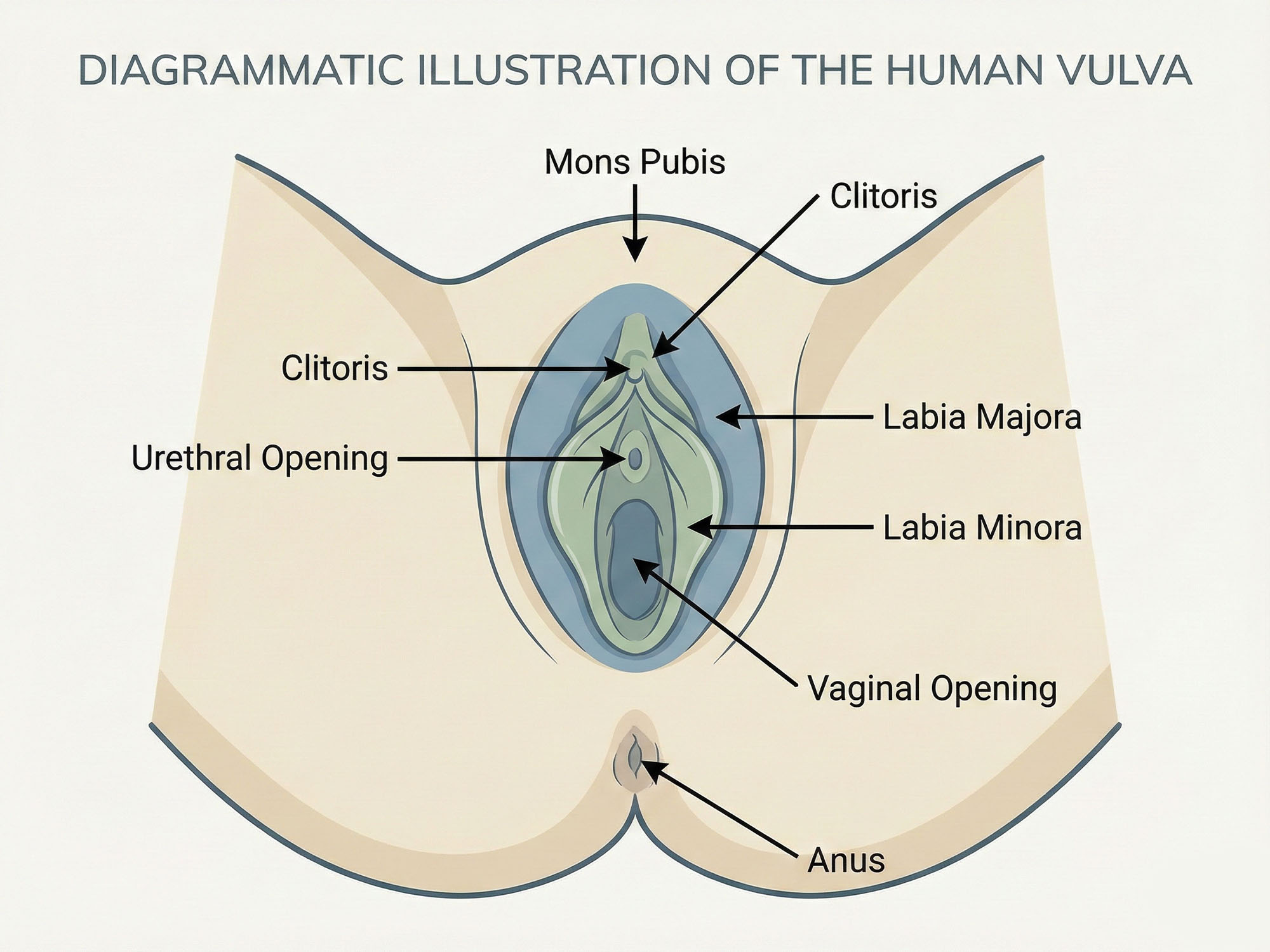
In many women, the labia minora are tucked neatly inside the labia majora. In others, they extend past the outer lips, sometimes by several centimeters. They can be smooth or scalloped, thin or thick, symmetrical or noticeably different from one side to the other. Colors range from pale pink to deep mahogany or even a purplish hue, often darkening after puberty or childbirth.
Historically, these differences were rarely discussed. In a more traditional social structure, the privacy of the female body was respected, which offered a certain protection but also created a vacuum of information. Today, we have the opposite problem: we are flooded with information, but much of it is curated and filtered, leading to a "Goldilocks" complex where women feel they must be "just right"—not too large, not too dark, not too different.
The Rise of the "Barbie" Aesthetic and Labiaplasty
Cultural Insight
Historically, the "hidden" nature of the feminine form was viewed as a matter of modesty and sacredness. In traditional cultures, the transition to womanhood was guided by elder women, ensuring that young girls understood their bodies through the lens of family and life-giving potential, rather than external commercial standards.
The shift in how women perceive their bodies cannot be discussed without addressing the rise of labiaplasty. This surgical procedure, which involves shortening or reshaping the labia minora, has seen a significant increase in popularity over the last two decades. While some women seek this surgery for genuine physical discomfort—such as chafing during exercise or pain during intimacy—a growing number are motivated by aesthetic anxieties that did not exist a generation ago.
Why has this happened? The narrative often blames the modern grooming habit of total hair removal, but the reality is more complex and insidious. It is true that for generations, natural growth acted as a veil. When laser removal and waxing became common, the architecture of the vulva became visible. Yet, this reveal did not inherently spark self-loathing. For many women, seeing their full anatomy was a normalizing experience; they saw their unique design and appreciated the reality of their adult female bodies.
The insecurity was not a natural reaction to the mirror; it was incited by external factors. We moved away from the relative bodily openness seen in eras like the 1970s toward a culture that became paradoxically more restrictive about "real" nudity while simultaneously flooding the zone with hyper-curated, digital imagery. A commercial enterprise emerged that recognized profit in playing on women's fears. The cosmetic medical industry, alongside the ubiquity of airbrushed adult media and pornography, began promoting a singular, homogenized "ideal"—a symmetrical, "tucked-in," almost prepubescent look.
Suddenly, through the lens of this manufactured standard, the perfectly normal variations visible after hair removal were reframed not as unique, but as "excessive" or "problematic." The "clean" aesthetic was no longer just about grooming; it became a weaponized marketing tool used to convince women that their natural, functional anatomy required surgical correction. It is essential to remember that the labia minora serve a purpose, protecting the sensitive vaginal opening. Removing tissue is a permanent decision that should be weighed against biological reality, rather than a response to a fleeting, commercially driven trend.
The Role of the Mother: Breaking the Silence
The most powerful antidote to the commercialization of the female body is found within the home. Specifically, it is found in the relationship between a mother and her daughter. Mothers play a crucial role; they provide the primary comfort and the first "normal" view of what a woman’s body looks like.
For too long, a sense of puritanical silence has governed the home. Many mothers, following what a sterilized society dictates, hide their bodies so thoroughly that their daughters grow up with no frame of reference for the adult female form other than what they see on a screen. This creates a dangerous disconnect. When a young woman’s only exposure to female anatomy is through airbrushed media or adult film, she inevitably views her own natural variations as defects.
Studies and sociological observations suggest that mothers who are not afraid of being natural and occasionally nude in front of their daughters—treating the adult body as a normal, non-shameful reality—raise daughters who are far more grounded. When a girl grows up seeing the normal variations in her mother’s body, she fears nudity less. She views the body as something functional and natural instead of something to be afraid of or constantly altered.
Women and mothers need to step away from the urge to be "hidden." Nudity occurs at all stages of human life—from the nursing of an infant to the care of the elderly—and there is no better place for a girl to learn about the human body than from her own mother. By normalizing the sight of a real, unedited woman, mothers can insulate their daughters against the pressures of the beauty industry. These girls grow up happier, more confident, and better able to excel in life because they aren't wasting mental energy on the pursuit of anatomical perfection. They accept that their bodies won’t be "perfect" by a surgeon's standard, but they recognize them as healthy, capable, and uniquely theirs.
The Wisdom of the Body and the Role of Men
In a healthysociety, the relationship between men and women is one of mutual appreciation and protection. A woman’s body is designed to be a vessel for life, a source of comfort, and a partner in the creation of a family. When we view the feminine form through this lens, the "flaws" we see in the mirror often vanish in the eyes of a devoted husband.
Men, by and large, do not view women through the clinical, hyper-critical lens of a plastic surgeon. A man who loves his wife views her body as a whole—the mother of his children, his partner in life, and the woman he chose. There is a profound security in the traditional marriage structure where a woman’s value is rooted in her character, her nurturing spirit, and her unique beauty, rather than her adherence to a specific anatomical trend.
Fathers also play a role here, albeit a different one. A father who treats his wife with honor and speaks of her with respect sets the standard for how his daughters should view their own value. When a young woman grows up in a home where she is loved for her personhood, she is less likely to fall prey to the anxieties of the "perfection" industry.
Extreme Variations: When is it a Medical Concern?
While the vast majority of variations are perfectly healthy, it is important to distinguish between "unique" and "problematic." Honest conversation about our health requires us to acknowledge when a variation might require a professional opinion.
- Physical Discomfort: If the length of the labia causes chronic irritation, pulling, or pain during daily activities or intimacy, it is a functional issue, not just an aesthetic one.
- Sudden Changes: The vulva changes naturally with age, pregnancy, and menopause. However, sudden lumps, persistent itching, or sores should always be evaluated by a healthcare professional.
- Skin Conditions: Conditions like lichen sclerosus can change the appearance and texture of the skin. This is a medical condition that requires treatment to prevent scarring and discomfort.
It is possible to be both a proponent of body acceptance and a proactive manager of one's health. Taking care of oneself is a form of stewardship. Just as we maintain our homes and our gardens, we must maintain the "temple" that is our body, ensuring it functions as it was designed.
Understanding Your Body: What is Normal?
| Feature | Normal Variation | When to Consult a Professional |
|---|---|---|
| Labia Length | Visible inner lips, asymmetry, or scalloped edges. | Persistent pain, chafing, or interference with hygiene. |
| Coloration | Darkening after puberty or pregnancy (pink to brown). | Sudden white patches, red sores, or spreading rashes. |
| Texture | Soft, wrinkled, or smooth skin tissue. | Hard lumps, unusual thickening, or "parchment-like" skin. |
The Cultural Lens: Moving Beyond the "Ideal"
The current obsession with anatomical perfection is, in many ways, a symptom of a culture that has lost its way. When we move away from traditional values that prize the soul and the character, we become hyper-fixated on the physical. We begin to treat our bodies like projects to be optimized rather than gifts to be cherished.
The reality is that there is no "perfect" vulva. There is only your vulva. It has been shaped by your genetics, your experiences, and, if you are a mother, by the incredible feat of childbirth. The stretch marks, the changes in pigmentation, and the variations in shape are all part of the story of a life lived.
In the end, the most attractive quality a woman can possess is a settled sense of self. A woman who is comfortable in her own skin, who understands her value is not found in a surgeon’s scalpel, radiates a different kind of beauty. It is a beauty that is grounded, enduring, and deeply feminine.
Common Questions
Embracing the Design
The investigative journey into the variations of female genitalia leads us to a simple, yet profound conclusion: nature loves variety. From the way the petals of a flower differ to the way the stars are scattered across the sky, there is a deliberate lack of uniformity in the world.
We must reject the pressure to conform to a digital, airbrushed standard that does not exist in the real world. By returning to a more traditional, grounded view of the body, we can find a sense of peace. We can appreciate our bodies for the miraculous systems they are and teach our daughters to do the same.
Your body is not a mistake. It is not a trend. It is a unique expression of womanhood, designed with purpose and deserving of your own quiet, nurturing respect.
Disclaimer: This content is for informational and educational purposes only and does not constitute medical advice. It is not intended to be a substitute for professional diagnosis or treatment. Always consult with a qualified healthcare provider regarding any medical condition or treatment plan. Never disregard professional medical advice because of something you have read here.