English
  Español
  Português


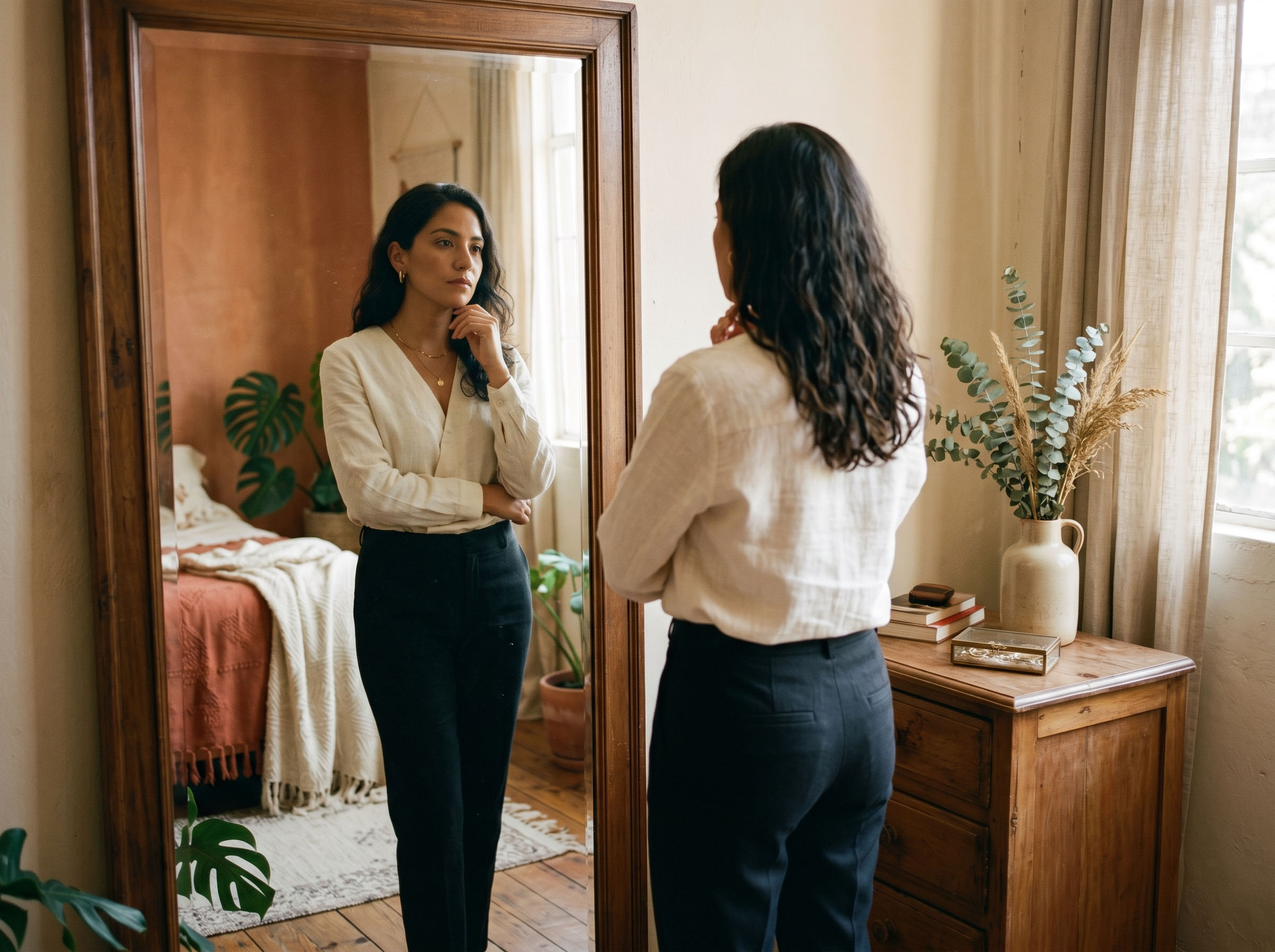
There is a moment, somewhere between childhood and womanhood, when a girl in Bogotá, Mexico City, or Caracas begins to understand that beauty is not just personal — it is cultural currency. It is the way she is looked at across a dinner table by her aunts, the commentary that follows a new haircut, the quiet, knowing glance exchanged between her mother and a neighbor when she walks by.
In Latin America, beauty has always been communal — celebrated, scrutinized, and deeply tied to ideas of status, identity, and belonging.
That relationship is ancient, layered, and endlessly fascinating. And right now, in 2025, it is also shifting faster than at any other point in modern history.
"In Latin America, beauty is rarely a private matter. It belongs to the family, the neighborhood, the culture — and it carries the weight of every generation before you."
— Amara LeclercA Region That Cannot Be Flattened
Before anything else, one truth needs to be stated clearly: Latin America is not one thing. It is a vast region of more than 650 million people, spanning deserts and rainforests, Indigenous mountain communities and cosmopolitan megacities. Mexico City is not Buenos Aires. Santo Domingo is not Lima. The beauty ideals of the Caribbean are not the beauty ideals of the Southern Cone. Any honest examination of beauty expectations in Latin America has to begin by resisting the urge to package the whole region into a single, neat narrative.
That said, there are threads — historical, colonial, and economic — that run through much of the region and shape how women experience beauty. Those threads are worth following.
✦ Cultural Insight
What Is Marianismo?
Marianismo is a cultural ideal rooted in Catholic tradition that positions women as morally pure, self-sacrificing, and devoted — modeled after the Virgin Mary. In practice, this has often meant that a woman's appearance was seen as an extension of family honor. Looking "put together" was not vanity; it was duty. This concept still quietly shapes how beauty and femininity are discussed in many Latin American households today, even as modern women reinterpret what those expectations mean for them personally.
The Colonial Inheritance
The modern beauty landscape in Latin America cannot be separated from the legacy of Spanish and Portuguese colonization. When European powers arrived in the Americas, they brought with them a racial hierarchy that placed European features — lighter skin, straighter hair, smaller noses — at the top. That hierarchy became embedded in social, economic, and eventually aesthetic systems. The term mestizaje — the racial and cultural mixing of Indigenous, African, and European peoples — did not produce equality. It produced a spectrum, and for centuries, where a woman sat on that spectrum shaped how she was treated, what opportunities were available to her, and yes, how beautiful she was considered to be.
This is not ancient history. A Harvard Business School analysis of Latin America's beauty industry — conducted by historian Geoffrey Jones, author of Beauty Imagined — noted that the region's early beauty companies, many of them branches of U.S. and European firms, marketed almost exclusively to white consumers. Beauty contests, which became a powerful cultural institution across the region in the early 20th century, featured pale-skinned women exclusively for decades. As Jones documented in Harvard's ReVista journal, those early messages about who counted as beautiful took root deeply — and proved remarkably durable.
📊 By the Numbers
Latin America & Beauty — Key Statistics
$67B
Latin American beauty market projected value in 2025, led by Brazil and Mexico
2.4M
Cosmetic surgery procedures performed in Brazil in 2024 — highest in the world surgically
~30%
More annually that Latina women spend on beauty products compared to other ethnic groups
8.81
Procedures per 1,000 people in Argentina — 2nd highest per capita rate in the world
What "Beautiful" Looks Like — Country by Country
Even with that shared colonial backdrop, beauty ideals in Latin America vary significantly by country and region. Understanding those differences is one of the more revealing exercises in cross-cultural observation.
Table 1 — Beauty Ideals by Country: A Cross-Cultural Snapshot
What emerges from this comparison is not one standard but a cluster of related ideals — all of them, to varying degrees, inflected by European influence and all of them, increasingly, being pulled in new directions by social media, local activists, and a younger generation of women who are asking harder questions about where these expectations came from.
The Surgery Culture — And What It Really Means
No honest account of beauty expectations in Latin America can skip over the extraordinary role that cosmetic surgery plays in the region. The numbers are stark: according to 2024 data from the International Society of Aesthetic Plastic Surgery (ISAPS), Brazil performed 2.4 million cosmetic surgery procedures in a single year — the highest surgical volume of any country on earth. Argentina ranks second globally in per capita procedures, with 8.81 surgeries per 1,000 residents. Colombia sits at 7.26. These are not fringe behaviors. They are mainstream ones.
For women outside the region, these figures can feel startling. But they make more sense when you understand what cosmetic surgery often means inside it. In many Latin American communities — particularly in Venezuela, Colombia, and Brazil — a surgical procedure is not just about vanity. It is bound up with ideas about professionalism, social mobility, marriageability, and self-respect. Women have spoken openly about feeling that a breast augmentation or rhinoplasty opened doors in the workplace, in dating, in family dynamics. "To be taken seriously in my neighborhood, I needed a boob job," one Venezuelan-born doctor told a reporter — a statement that sounds shocking until you understand the social landscape that produced it.
Did You Know?
Brazil exempts cosmetic surgery procedures from taxation — a policy that has made the country one of the most affordable destinations for aesthetic procedures in the world and contributed directly to making cosmetic surgery a middle-class and even working-class option, not just an elite one. This has been both celebrated as democratizing beauty and criticized for intensifying pressure on women who cannot afford to opt out of the culture.
The Body Ideal — Beautiful, Contradictory, and Constantly Moving
Ask most people outside the region to describe the Latin American ideal of feminine beauty, and they will mention curves. That is not wrong — but it is incomplete. The body ideal that has come to dominate Latin American popular culture, reggaetón videos, and social media is something researchers have described as the "curvaceous ideal": a flat stomach, narrow waist, fuller breasts, and a prominent, rounded buttocks. It is an image that has become globally influential — and that many women in Latin America find both aspirational and exhausting.
What makes this especially complicated is that this ideal was not born in Latin America. It was, in large part, constructed by media and marketing. Telenovelas from the 1950s onward — many of them sponsored by U.S. and European consumer goods companies — broadcast particular visions of femininity into living rooms across the continent. Those visions were almost always light-skinned, polished, and curvaceous in the specific way that advertisers found most appealing. Over decades, those images accumulated into a kind of unofficial beauty standard that most women absorbed without ever consciously signing up for it.
The Family Factor
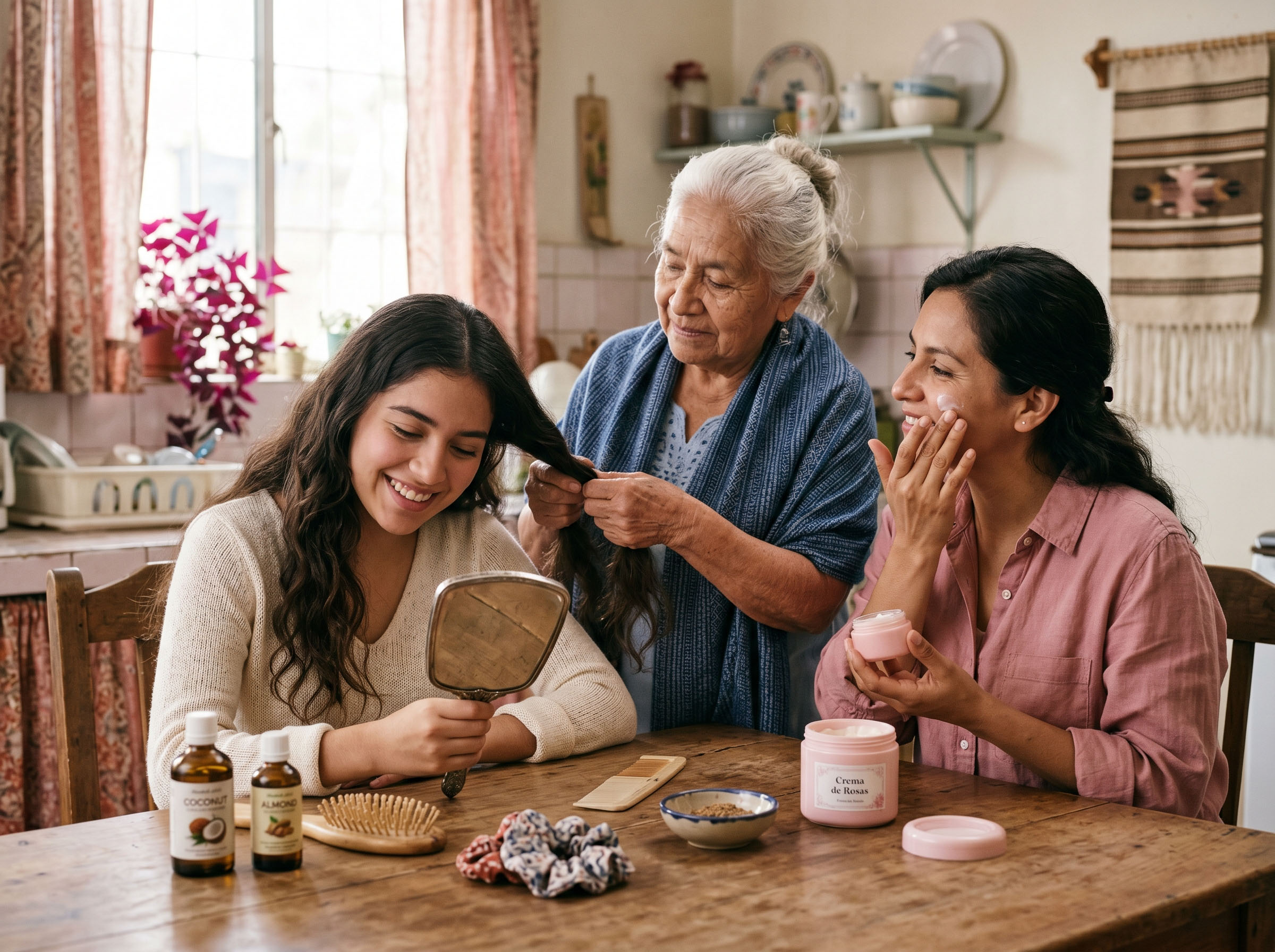
One of the most distinctive — and personally intimate — aspects of beauty culture in Latin America is the role of family. In many cultures, comments about a woman's appearance from her mother, grandmother, aunts, or sisters carry far more weight than anything a magazine might print. Researchers studying body image among Latina women have consistently found that familismo — the deeply held cultural value of family loyalty and interdependence — creates a particular kind of beauty pressure. When a family member comments on your weight, your skin, or your hair, it is not easily dismissed. It comes wrapped in love, tradition, and expectations that run back generations.
For mothers raising daughters in this environment, this creates a complicated balancing act. How do you pass on a sense of pride in feminine appearance — in the pleasure of getting dressed up, of caring for your hair, of presenting yourself with care and intention — while also giving your daughter enough inner grounding that she is not crushed by the weight of everyone else's opinions? It is one of the defining questions of motherhood in many Latin American families, and it has no easy answer.
"When a family member comments on your weight or your skin, it is not easily dismissed. It comes wrapped in love, tradition, and expectations that run back generations."
— Amara LeclercThe Spending Power Behind the Mirror
One number above all others tells you how seriously women in Latin America — and women of Latin heritage globally — take beauty: they spend roughly 30% more annually on beauty products compared to other demographic groups. The Latin American beauty market as a whole is on track to reach $67 billion by the end of 2025, with Brazil and Mexico leading regional demand. Hispanic consumers in the U.S. make up 17% of households buying beauty products but account for more than 20% of total beauty dollar sales — a meaningful spending premium that brands are only beginning to fully understand.
Those figures are not just marketing data. They reflect something real about how beauty is prioritized in Latin culture — not as frivolity, but as a genuine investment. For many women, the beauty counter is also a place of pleasure, creativity, and connection. The multi-generational skincare ritual, the Saturday hair appointment, the careful selection of a fragrance — these are cultural practices with emotional weight, not just commercial transactions.
📈 Infographic
Cosmetic Surgery Procedures Per 1,000 People — Global Ranking
Source: ISAPS Global Survey 2024 / Madison Plastic Surgery analysis. Procedures per 1,000 people. Latin American nations highlighted.
What Is Changing — And Why It Matters
The same social media platforms that have amplified beauty pressure are now also producing something unexpected: counter-pressure. Younger Latin American women — many of them in their 20s and early 30s — are using Instagram, TikTok, and YouTube to document their natural hair, their stretch marks, their Indigenous and Afro-descendant features, and their rejection of surgical ideals. Brands are following. Sol de Janeiro, a Brazilian beauty brand that openly celebrates curves and skin in every shade, saw its perfume mist sales grow by 365% between 2021 and recent years. Nopalera, rooted in Mexican traditions and the nopal cactus, has built a devoted following around cultural pride and natural ingredients.
This shift is not a rejection of femininity. It is, in many ways, a more traditional form of it — one that reaches back past the colonial ideal to indigenous and African beauty knowledge that was suppressed for generations. Women are reclaiming the multi-ingredient hair masks their grandmothers made, the kitchen-table skincare that was passed down in whispers rather than bottles.
✦ The Bigger Picture
Beauty Culture Carries Real Weight
Research published in peer-reviewed journals has consistently found that Latin American women face higher-than-average rates of body image dissatisfaction — not because they are more vain, but because the standards they are held to are more contradictory. They are told to be slim and curvaceous simultaneously. They absorb European beauty ideals from mainstream media and traditional family values from home. They are expected to look polished without looking like they are trying too hard. Understanding where these pressures come from — colonialism, marketing, family, religion — does not dissolve them, but it can change how a woman carries them.
A Word for the Mothers
If you are raising a daughter in a Latin American cultural context — whether you live in Guadalajara, Miami, Montréal, or Madrid — you are navigating something genuinely complex. The pride you feel in passing on feminine rituals, in teaching her to care for her skin and her hair, in raising her to present herself with intention — that is worth holding onto. So is the conversation you might have with her about why certain standards exist, where they came from, and how she gets to decide which ones she keeps.
The most powerful thing a mother can model is not a particular beauty standard but a settled, comfortable relationship with herself. That is more contagious than any tutorial, any product recommendation, any before-and-after photograph. A daughter who watches her mother get dressed with confidence — not anxiety, not self-criticism, not a running inventory of her flaws — is receiving one of the most important pieces of cultural inheritance a woman can pass on.
📋 In Brief
What This Article Covered
- Latin America is a region of distinct beauty cultures, not one monolithic standard
- Colonial history created racial hierarchies that still shape beauty ideals today
- Brazil, Argentina, and Colombia rank among the world's highest in cosmetic surgery per capita
- The "curvaceous ideal" is largely a media construction — and increasingly contested by younger women
- Family and cultural values (familismo, marianismo) are key drivers of beauty pressure in the region
- Latin American women spend significantly more on beauty than other groups — and the market reflects it
- A new generation of women is reaching back to indigenous and Afro-descendant beauty traditions
The Standard Is Not Fixed
Latin America's relationship with beauty is not a problem to be solved. It is a living conversation — between mothers and daughters, between culture and individuality, between tradition and change. The standards that have caused so much pressure are also the same context in which some of the world's most joyful, creative, and grounded feminine beauty culture exists: the kitchen-table hair rituals, the three-hour family lunches where everyone is dressed beautifully not for anyone in particular but because that is simply how Sunday is done, the lipstick chosen with care before a walk to the corner store.
Understanding that context does not require you to have a position on cosmetic surgery, colonial history, or social media algorithms. It only requires curiosity — and the willingness to see women in Latin America as what they have always been: the full, complicated, remarkable subjects of their own stories, not the objects of anyone else's.
❓ Questions & Answers
Common Questions About Latin American Beauty Culture
Disclaimer: This content is for informational and educational purposes only and does not constitute medical advice. It is not intended to be a substitute for professional diagnosis or treatment. Always consult with a qualified healthcare provider regarding any medical condition or treatment plan. Never disregard professional medical advice because of something you have read here.