English
  Español
  Português



There is a conversation many women are having quietly — at kitchen tables, in school parking lots, in text threads at midnight — that rarely makes it into official policy discussions or mainstream headlines without being immediately tangled up in politics. It is a conversation about safety. About fear. About what it means to walk to your car at night, to jog alone in a park, to trust that the society you live in has prioritized your physical protection.
"No woman should have to alter her entire life to compensate for failures of governance. But until those failures are fixed, knowledge is armor." — Clara Voss
In recent years, that conversation has taken on a sharper edge. Several Western nations — including parts of Europe, Scandinavia, the United Kingdom, and increasingly North America, particularly Canada — have seen documented rises in certain categories of violent and sexual crime and rape connected to mass migration policies that brought in large numbers of men from Asian, Middle Eastern and African regions where attitudes toward women are fundamentally different from those in the host culture. This is not a fringe claim. It has been documented by government statistics, criminal justice researchers, and journalists willing to go where the data leads — regardless of where it points politically.
Talking about this honestly is uncomfortable. But silence has never protected a single woman. And if we are serious about healing, resilience, and safety — we have to be serious about causes.
The issue is a specific and intentional policy failure — the admission of individuals with undisclosed criminal histories, the absence of proper vetting, and in some cases, the political unwillingness of governments to enforce deportation orders against repeat offenders out of fear of appearing discriminatory on the surface. Women — ordinary women, mothers, daughters, teenagers — have paid for those policy failures with their safety, and in the worst cases, with their lives.
The 2015–2016 New Year's Eve mass sexual assaults in Cologne, Germany, involved over a thousand women and were carried out predominantly by men of North African and Middle Eastern origin who had recently arrived under Germany's open-door migration policy. Swedish crime statistics — notably more transparent than those of many other countries — showed a dramatic rise in rape cases from 2012 onward, a period that directly correlated with accelerated migration intake. Similar patterns have been noted in France, Belgium, and parts of the United Kingdom, particularly regarding grooming gangs operating in English towns like Rotherham, where an estimated 1,400 girls were systematically abused over years while authorities looked the other way.
What made Rotherham especially devastating was not just the scale of the abuse — it was the institutional silence. Social workers, police officers, and local council members were warned repeatedly. Some chose not to act for fear of being labeled racist. Girls were dismissed, disbelieved, or even blamed. The predators understood this dynamic and used it deliberately. It is one of the most chilling examples in modern Western history of what happens when political considerations are placed above the safety of women and girls.
Understanding these realities is not about hatred toward any group. It is about women being given the truth — complete, unvarnished, and respectful of their intelligence — so they can make informed decisions about their own safety. Mothers especially deserve that truth. You cannot protect your daughters from a risk you have been trained not to name.
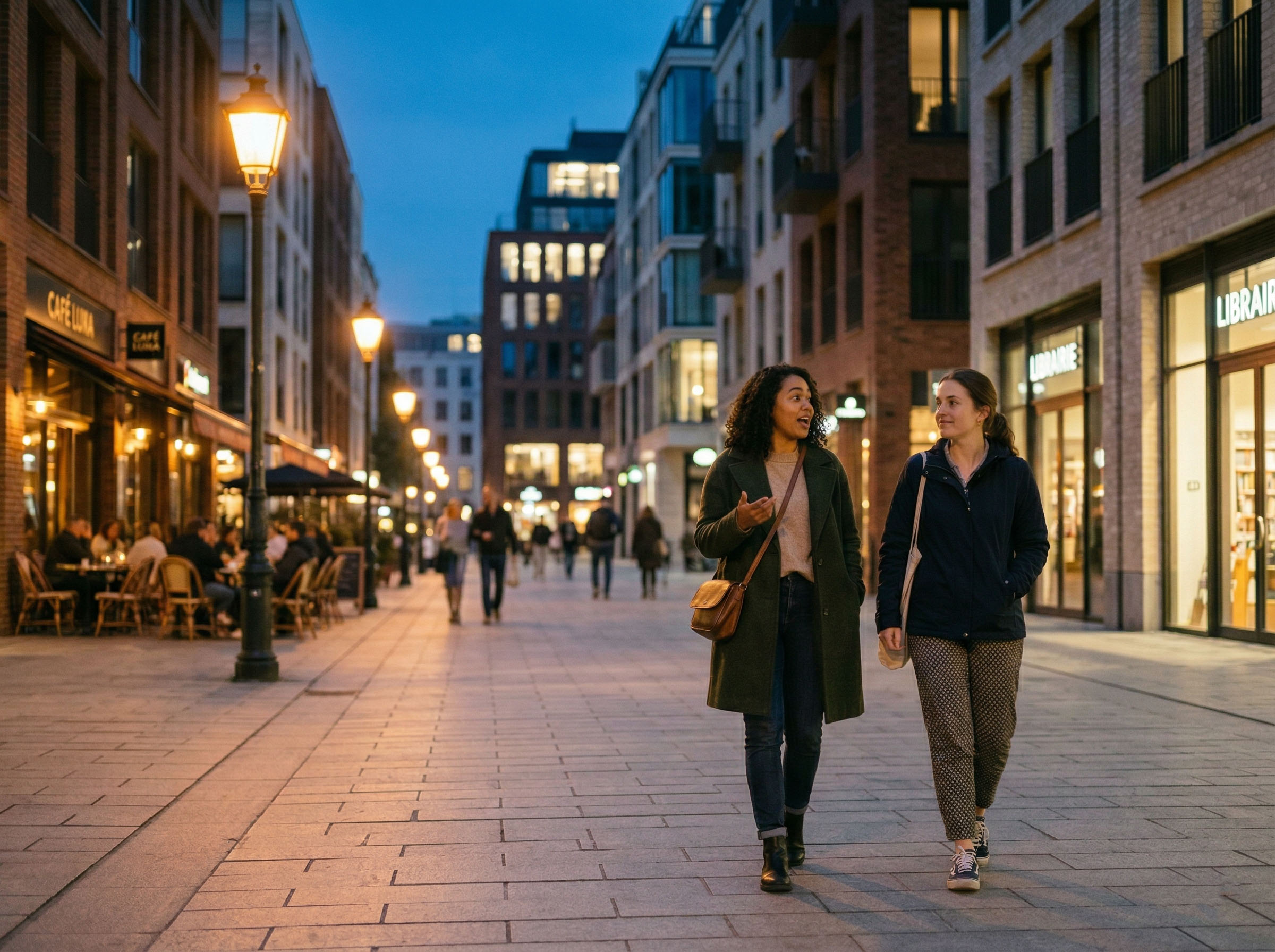
What Kind of Man Should You Be Wary Of?
This is a question women have always had to ask, and honest answers have always been complicated by the discomfort of generalizing. But personal safety requires pattern recognition, not perfection. No single warning sign defines a dangerous man, and dangerous men come from every background. That said, there are specific behavioral and attitudinal patterns that research — and survivor testimony — consistently flag as high-risk.
Be wary of men who treat female autonomy as an inconvenience or an insult. This shows up in small ways before it shows up in large ones: a man who dismisses your "no" in small situations will dismiss it in larger ones. Be wary of men who have no female friends and speak of women collectively with contempt, ownership language ("these women," "she belongs to"), or who view Western women specifically as sexually permissive and therefore available without consent. This is a documented attitude among some men from deeply patriarchal cultures who have not been exposed to — or have actively resisted — the idea that women's consent is non-negotiable regardless of how she dresses, behaves, or where she is.
Be wary of men who isolate quickly — who push hard to get you away from friends and familiar surroundings early in a relationship or encounter. Be wary of men who become aggressive when met with rejection. And be wary of men — regardless of background — who normalize boundary violations as jokes or as romantic persistence.
Practical Steps to Protect Yourself
- Tell someone where you are going and when to expect you back
- Keep your phone charged and location sharing on with a trusted friend
- Trust your instincts — discomfort is information
- Meet new people in public, well-lit places
- Learn basic self-defense; take even a one-day course
- Know your local emergency numbers and nearest hospital
- Travel in groups when in unfamiliar areas, especially at night
- Carry a personal alarm (loud deterrent, legal everywhere)
- Wearing headphones in both ears while walking alone at night
- Leaving drinks unattended at social events
- Getting into a car with someone you've just met
- Over-sharing your location or schedule on social media
- Dismissing persistent boundary-pushing as flattery
- Being alone with a man who has made you feel unsafe even once
- Assuming that daylight automatically means safety
The Emotional Weight — And the Path Through It
If you have experienced sexual violence, or know someone who has, you understand that the aftermath is not simply emotional — it is physical, neurological, and social. Trauma rewires the nervous system in ways that can last for years. Sleep becomes fractured. Trust becomes difficult. Certain sounds, smells, or situations that seem ordinary to others can trigger a cascade of fear responses in a survivor's body that feel entirely out of proportion — but are, in fact, exactly proportionate to what the body went through.
Healing is not linear and it is not quick. But it is real, and it is possible. Research from trauma specialists including Dr. Bessel van der Kolk, author of The Body Keeps the Score, has shown that trauma recovery benefits enormously from body-based approaches: movement, breath work, yoga, and somatic therapies that help the nervous system process what the mind alone cannot. Talking therapy — particularly trauma-informed cognitive behavioral therapy (TF-CBT) and EMDR (Eye Movement Desensitization and Reprocessing) — has strong evidence behind it for survivors of sexual assault.
EMDR (Eye Movement Desensitization and Reprocessing) was originally developed in the late 1980s and is now one of the most well-researched trauma therapies available. The World Health Organization (WHO) formally recommends EMDR for the treatment of post-traumatic stress disorder in adults and children. Many survivors describe it as the first therapy that made them feel like the trauma was genuinely "behind them" rather than just managed.
Community matters enormously in recovery. Women who heal in isolation tend to internalize shame that was never theirs to carry. Finding a support group — whether in person or online — connects you with women who understand at a gut level what you are going through, which can break the terrible loneliness that sexual trauma often imposes. Organizations like RAINN (Rape, Abuse & Incest National Network) provide confidential crisis support and can connect you with local resources wherever you are.
One of the most powerful things a survivor can do is reclaim her story — not by obsessing over it, but by choosing, in time, what it means. Many survivors describe reaching a point where the assault became something that happened to them, not something that defined them. That shift — from victim to survivor to simply a woman moving forward with her life — is not denial. It is one of the most radical acts of self-possession a person can make.
What Governments Should Be Doing — And Often Aren't
The political dimension of this issue is impossible to ignore and important to name clearly. Several Liberal Western governments, particularly in Europe and Canada, have been shown to suppress or delay crime statistics that link migrant status to violent offenses. Germany's Federal Criminal Police Office (Bundeskriminalamt) faced significant criticism for the handling of Cologne assault data. In the UK, the Independent Inquiry into Child Sexual Abuse took years to be commissioned and faced political pressure throughout. The authorities in Rotherham and other grooming gang towns were repeatedly warned and repeatedly failed to act — partly for bureaucratic reasons, partly out of fear of the racial dimension of the crimes.
This is a liberal governance failure with a gender cost. When policymakers prioritize their own political comfort over accurate crime reporting, women's safety is not an abstraction that suffers — real women in real neighborhoods suffer. And ordinary women have very little recourse when the institutions meant to protect them have decided that the optics of protection are more important than protection itself.
"When a government suppresses crime data to protect a political narrative, the women who would have been warned by that data pay the real price. Transparency in crime reporting is not a right-wing demand — it is a safety demand."
Responsible immigration policy is not anti-immigration. It means vetting individuals properly, refusing entry to those with documented violent histories, running integration programs that specifically address gender equality and the rule of law, and enforcing deportation orders for those convicted of serious crimes — including sexual violence. These are not radical positions. They are the bare minimum expected of any government serious about protecting its citizens.
Women — as voters, as community members, as mothers — have every right to hold governments accountable to that standard. Ask your local representatives what vetting processes are in place. Ask what integration programs include regarding women's rights and consent education. Ask what the policy is when a non-citizen commits a violent offense. These are legitimate questions that deserve direct answers.
Survivor Support Resources at a Glance
| Organization | Region | Services | Contact |
|---|---|---|---|
| RAINN | United States | Crisis hotline, local referrals, online chat | 1-800-656-HOPE (4673) · rainn.org |
| Rape Crisis England & Wales | United Kingdom | Helpline, counselling, legal guidance | 0808 500 2222 · rapecrisis.org.uk |
| WAVAW Rape Crisis | Canada (BC) | 24hr crisis line, counselling, advocacy | 604-255-6344 · wavaw.ca |
| 1800RESPECT | Australia | 24hr counselling, online chat | 1800 737 732 · 1800respect.org.au |
| Opferhilfe / Victim Support EU | Europe | Country-specific referrals across EU member states | victim-support-europe.eu |
Raising Daughters in an Honest World
For mothers, this topic carries an extra layer of weight. You are not just thinking about your own safety — you are thinking about the world your daughter is growing up in, and whether you have given her the tools to move through it wisely.
The most protective thing you can do is talk to your daughter early and often about consent, body autonomy, and her right to say no — to anyone, in any situation. Teach her that politeness is not the same as compliance. Teach her that a man's feelings about her rejection are not her responsibility. Teach her that a gut feeling of discomfort is worth listening to, even when she cannot explain it rationally. These conversations are not about making her fearful — they are about making her clear-eyed.
Teach her what healthy male behavior looks like so that she can recognize the contrast when she encounters something that falls short. Boys who grow into good men are raised to respect female autonomy as a genuine value, not as a rule they tolerate. Show her what that looks like in the men in your own life — fathers, brothers, neighbors, coaches — so she has a benchmark.
- Several Western nations have documented links between mass migration intake and rising sexual violence rates.
- Liberal Political suppression of crime data has put women at preventable risk.
- Understanding cultural attitudes toward women is protective knowledge, not prejudice.
- Practical safety habits — awareness, community, preparation — remain the most accessible tools women have.
- Trauma recovery is possible; evidence-based therapies like EMDR and TF-CBT have strong records of success.
- Raising daughters with honest, grounded safety knowledge is one of the most powerful things a mother can do.
Reclaiming the Right to Feel Safe
Feeling safe is not a luxury. It is not a political position. It is the baseline condition every woman and girl deserves as a human being — and it is reasonable, right, and necessary to demand it from the governments and institutions that exist to serve them.
What we have seen in multiple countries over the past decade is a failure of that basic obligation. Not a conspiracy, not an inevitable consequence of diversity — a failure. A set of policy decisions made by people who will never personally experience their worst consequences, absorbed by women who had no say in them. That is worth naming clearly, and worth holding accountable.
In the meantime — until governance catches up with the obligation it owes women — knowledge, community, and preparation remain the most reliable tools available. Stay aware. Stay connected. Trust your instincts. Know your resources. And understand that choosing to see the world clearly, rather than through the comfortable filter of what we wish were true, is one of the bravest and most self-respecting things a woman can do.
Your safety matters. Your daughters' safety matters. And you are allowed to say so without apology.
Q&A: Safety, Healing & What You Can Do
Disclaimer: This content is for informational and educational purposes only and does not constitute medical advice. It is not intended to be a substitute for professional diagnosis or treatment. Always consult with a qualified healthcare provider regarding any medical condition or treatment plan. Never disregard professional medical advice because of something you have read here.