English
  Español



Walk down the feminine care aisle of any drugstore and you'll find shelves lined with promises: "freshness," "odor control," "pH-balanced," "gentle formula," "gynecologist-tested." It's a lot to take in. And honestly? A lot of it is noise. Some of these products are genuinely useful. Others are unnecessary at best, disruptive at worst. Knowing how to tell the difference could save you a good deal of discomfort — and a fair amount of money.
This guide is here to make that simpler. Not to preach, not to overwhelm — just to walk through what products are actually worth your attention, what to avoid, and how to build a simple, effective routine that works with your body rather than against it.
"The vagina is one of the most self-regulating systems in the human body. Understanding that fact doesn't mean doing less — it means doing the right things.
— Lexi Pierce
First, a Little Context About pH
The vagina maintains a naturally acidic environment, typically in the range of 3.8 to 4.5 on the pH scale. This acidity exists for a reason: it keeps harmful bacteria in check while allowing beneficial lactobacillus bacteria to thrive. When that balance is disrupted — whether by harsh soaps, scented products, certain medications, or even stress — it can lead to odor, irritation, or infection.
This is why so many products now market themselves as "pH-balanced." The concept is real and worth understanding, but the label alone doesn't guarantee a product is safe or appropriate for your body. It's a starting point, not an endorsement.
The Vulva vs. the Vagina: Getting the Terminology Right
This distinction matters more than it might seem. The vagina is the internal canal. The vulva is everything on the outside — the labia, clitoris, and the area surrounding the vaginal opening. Almost all external care products are meant for the vulva only. Nothing — no wash, no spray, no douche — should go inside the vagina unless specifically directed by a doctor.
Douching is a good example of a practice that sounds logical but causes real harm. Flushing the vaginal canal with water or cleaning solutions washes away the protective bacteria that keep infections at bay. Major medical organizations uniformly advise against it, and yet it remains a common habit for many women who feel it's the "clean" thing to do. It isn't.

What Does Good Vaginal Hygiene Actually Look Like?
For most women, a genuinely effective routine is simpler than the product aisle suggests. Warm water and a clean hand or soft washcloth are enough to clean the vulva during a daily shower. If you prefer a wash, the key is choosing one that is fragrance-free, soap-free or low-lather, and formulated for sensitive skin. Even better if it's specifically designed for the vulva with a mild, slightly acidic formula.
That's it. There's no need to scrub, no need to eliminate discharge, and no need for a product inside the vaginal canal. A simple, consistent routine with gentle products is far more effective than an elaborate regimen built around marketing claims.
Choosing the Right Wash — What the Labels Actually Mean
If you prefer a dedicated vulvar wash over plain water, reading the label carefully will serve you well. A few things to look for:
Fragrance-free, not "unscented." These terms sound the same but they aren't. "Unscented" can mean masking chemicals were used to neutralize a product's natural smell. "Fragrance-free" means no fragrance was added at all. For sensitive skin, fragrance-free is the cleaner choice.
No sulfates. Sulfates (like sodium lauryl sulfate) are what make products foam aggressively. They're effective cleansers but can be drying and irritating on delicate vulvar tissue. A low-lather or soap-free formula is gentler and more appropriate for daily use in this area.
pH around 3.5 to 4.5. Some brands do publish their formulation's pH. When available, look for a slightly acidic product that mirrors the body's own environment rather than a neutral or alkaline one.
Short ingredient list. As a general rule, fewer ingredients mean fewer potential irritants. If a product has a paragraph of chemical names, it may be worth reaching for something simpler.
Product Guide
Feminine Care Products: What They Do (and Don't Do)
The Odor Question — What's Normal and What Isn't
Let's be direct about something: the vaginal area has a natural scent. This is normal, healthy, and not something that needs to be corrected. What the products on drugstore shelves are selling, more often than not, is the idea that the natural body requires improvement. That framing has sold a lot of deodorant sprays that dermatologists consistently advise against.
Natural scent fluctuates throughout the menstrual cycle, after exercise, after sex, and during pregnancy. These variations are part of normal physiology. What is worth paying attention to are significant changes — a strong, fishy odor, a sharp smell accompanied by unusual discharge, or persistent discomfort. These can be signs of bacterial vaginosis or a yeast infection, and both are worth addressing with a healthcare provider, not with a spray or a scented wipe.
When to See a Doctor
A persistent or strong unusual odor, discharge that is gray, green, or chunky white, itching, burning, or redness that doesn't resolve on its own — these are signs to speak with your gynecologist or healthcare provider. No amount of specialty wash or intimate spray will address an underlying infection. Catching it early and getting the right treatment will.
Underwear, Laundry, and the Things We Don't Think About
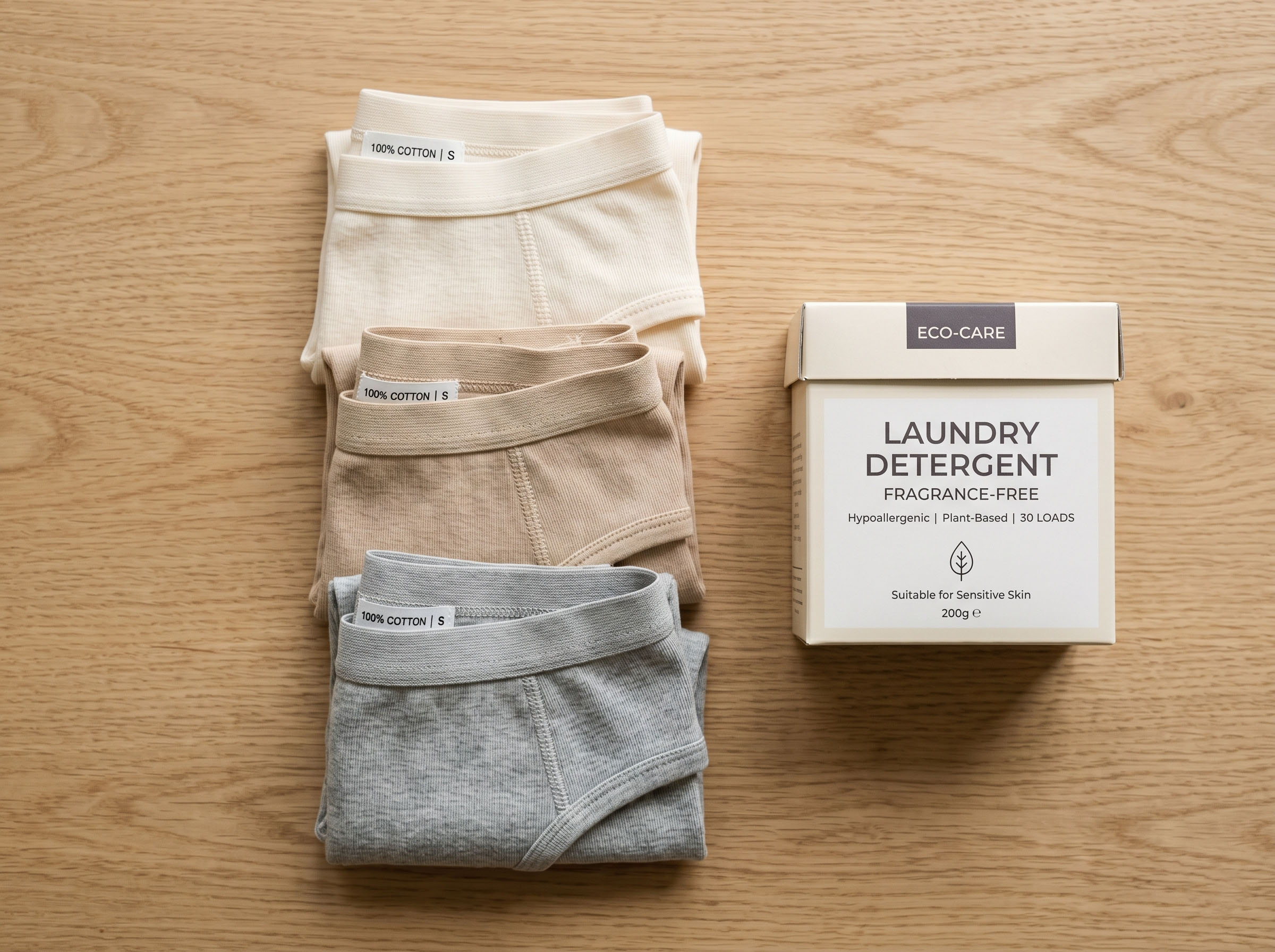
Products sold specifically for feminine care aren't the only variables in vaginal health. The fabric touching your body all day matters considerably. Synthetic materials like polyester and nylon trap moisture and heat, which can create an environment where bacteria or yeast thrive. Cotton underwear allows for airflow and absorbs moisture more effectively, making it the practical choice for daily wear.
The same logic applies to laundry detergent. Heavily scented detergents and fabric softeners leave residue on clothing and underwear that sits against sensitive skin for hours. Switching to a dye-free, fragrance-free detergent can make a noticeable difference if you're prone to irritation — and it's one of the more overlooked triggers.
Sleeping without underwear, or in loose cotton shorts, gives the body a nightly break from trapped heat and moisture. It's a simple habit that many women find makes a real difference in how they feel day to day.
Probiotics and Vaginal Health
Oral probiotic supplements have attracted a growing body of research in relation to vaginal health, particularly around maintaining lactobacillus populations — the beneficial bacteria that help keep pH in balance. Some studies suggest that strains like Lactobacillus rhamnosus and Lactobacillus reuteri may help support this balance, particularly for women prone to recurring bacterial vaginosis or yeast infections.
This is an area where the science is genuinely promising but still developing. Probiotics are not a treatment for active infections — they're more useful as a supportive habit for women looking to maintain healthy bacterial levels over time. If you're considering adding one to your routine, it's worth a conversation with your doctor, particularly to discuss which strains have the most evidence behind them for vaginal health specifically.
For more on this, the American College of Obstetricians and Gynecologists' patient resource on vaginal health provides clear, reliable guidance on what affects the vaginal environment and when to seek care.
Navigating the Wellness Product Wave
The "clean beauty" and wellness movements have brought a wave of newer products — vaginal steaming kits, jade eggs, herbal suppositories, probiotic vaginal gels — many of which are marketed through social media and lifestyle brands with impressive aesthetic packaging. Some of these are harmless, some have limited evidence, and a few carry real risk.
Vaginal steaming, for example — the practice of sitting over steam infused with herbs — has no clinical evidence supporting its claimed benefits and carries a real risk of burns and disruption to vaginal flora. The NHS guidance on keeping the vagina clean and healthy is refreshingly direct on this point, emphasizing that less intervention, not more, is generally the better approach.
When evaluating any new product — particularly one making claims about "detoxing," "balancing," or "restoring" vaginal health — it's reasonable to ask: does this have clinical research behind it? Is there a reason to use it beyond marketing? And does my gynecologist know about it? These three questions will filter out a lot of the noise.
What the Ingredient List Tells You
Reading ingredient labels is a skill worth developing. A few ingredients that commonly appear in feminine care products and are worth understanding:
Lactic acid: Often used in pH-balanced washes to maintain acidity. Generally considered safe and effective for this purpose.
Glycerin: A humectant that adds moisture. In high concentrations or in products used internally, it may feed yeast in women who are prone to infections — worth noting if you're susceptible.
Parabens: Preservatives used to extend shelf life. Some women prefer to avoid them due to ongoing research interest, though regulatory bodies in most countries still consider them safe at typical cosmetic concentrations.
Aloe vera: A soothing ingredient often used in gentle washes. Generally well-tolerated and appropriate for sensitive skin.
Essential oils (tea tree, lavender, etc.): Often touted as "natural" alternatives, but these are potent compounds that can cause significant irritation and allergic reactions in sensitive tissue. Natural doesn't automatically mean gentle.
Common Questions About Feminine Care Products
Building a Routine That Works for You
There is no one-size-fits-all answer here, because bodies vary. Some women find that water alone is all they need. Others prefer a gentle vulvar wash. Some are prone to yeast infections and benefit from probiotic support; others never have that issue. What matters is paying attention to how your body responds to what you use, and adjusting accordingly.
What you can generally rely on: simpler is better, fragrance-free is nearly always the safer choice, and the internal vaginal canal needs no products beyond what your body already provides. A good routine doesn't require a shelf full of specialty bottles — it requires understanding what your body is doing and working with it.
If there's one habit worth building, it's reading ingredient labels with the same attention you'd give to food labels. The products in your bathroom cabinet touch some of your most sensitive skin every day. They deserve a second look.
In Brief
- The vagina is self-cleaning; the vulva (external) is what needs gentle washing.
- Warm water and fragrance-free wash are all most women need for daily care.
- Douching disrupts the natural bacterial environment and should be avoided.
- Natural scent is normal; significant changes in odor or discharge warrant a doctor's visit.
- Synthetic underwear, scented detergents, and scented period products can contribute to irritation.
- Probiotics may support vaginal health but are not a treatment for infections.
- Fewer ingredients, fragrance-free formulas, and pH-aware products are almost always the better choice.
- When in doubt about a new product, ask your gynecologist before using it near or inside the vaginal area.
Disclaimer: All content on this website—including articles, educational materials, and interactive calculators—is for informational, educational, and entertainment purposes only. The calculations, percentiles, and outputs generated by tools on this site are based on general statistical data and mathematical models; they do not constitute medical data, a clinical assessment, or a diagnosis.
Nothing contained on this website is a substitute for professional medical advice, diagnosis, or treatment. Always seek the guidance of a qualified healthcare professional or urologist with any questions you have regarding physical development, anatomy, or health conditions. Reliance on any information or tools provided by this website is solely at your own risk.