


 Deutsch
  English
  Español
  Français
The start of a new year is often framed as a time to “make up” for indulgence—through detoxes, extreme workouts, or rigid food rules. But the human body does not need punishment to regain balance. It needs support.
After the holidays, many people experience fatigue, bloating, disrupted digestion, poor sleep, or inflammation—not because the body has failed, but because it has been doing its job under increased demand. Rather than restricting or forcing change, January can be a time to reset gently, using movement and nourishment to help the body recalibrate naturally.
In Brief
- The body already has natural detox systems.
- Gentle movement supports circulation and lymph flow.
- Healing foods reduce inflammation and support digestion.
- Restriction can increase stress and slow recovery.
The Body Is Already Designed to Reset
The liver, kidneys, digestive system, lymphatic system, and microbiome are constantly working to process, eliminate, and restore balance. These systems do not turn off during the holidays—but they may become temporarily overburdened by changes in routine, alcohol intake, sugar consumption, stress, and sleep disruption.
Supporting these systems does not require elimination diets or intense cleanses. Instead, it involves:
-
Improving circulation and lymph flow
-
Reducing systemic inflammation
-
Restoring digestive rhythm
-
Supporting nervous system regulation
Gentle movement and healing foods are two of the most effective tools for doing exactly that.
Why Gentle Movement Matters More Than Intensity
After a period of inactivity or stress, intense exercise can sometimes increase inflammation and cortisol rather than relieve it. Gentle, consistent movement helps the body reset without adding additional stress.
Benefits of gentle movement include:
-
Stimulating lymphatic drainage (which relies on movement, not a pump)
-
Improving digestion through increased gut motility
-
Reducing stiffness and joint inflammation
-
Supporting hormonal regulation
-
Calming the nervous system
Examples of supportive movement:
-
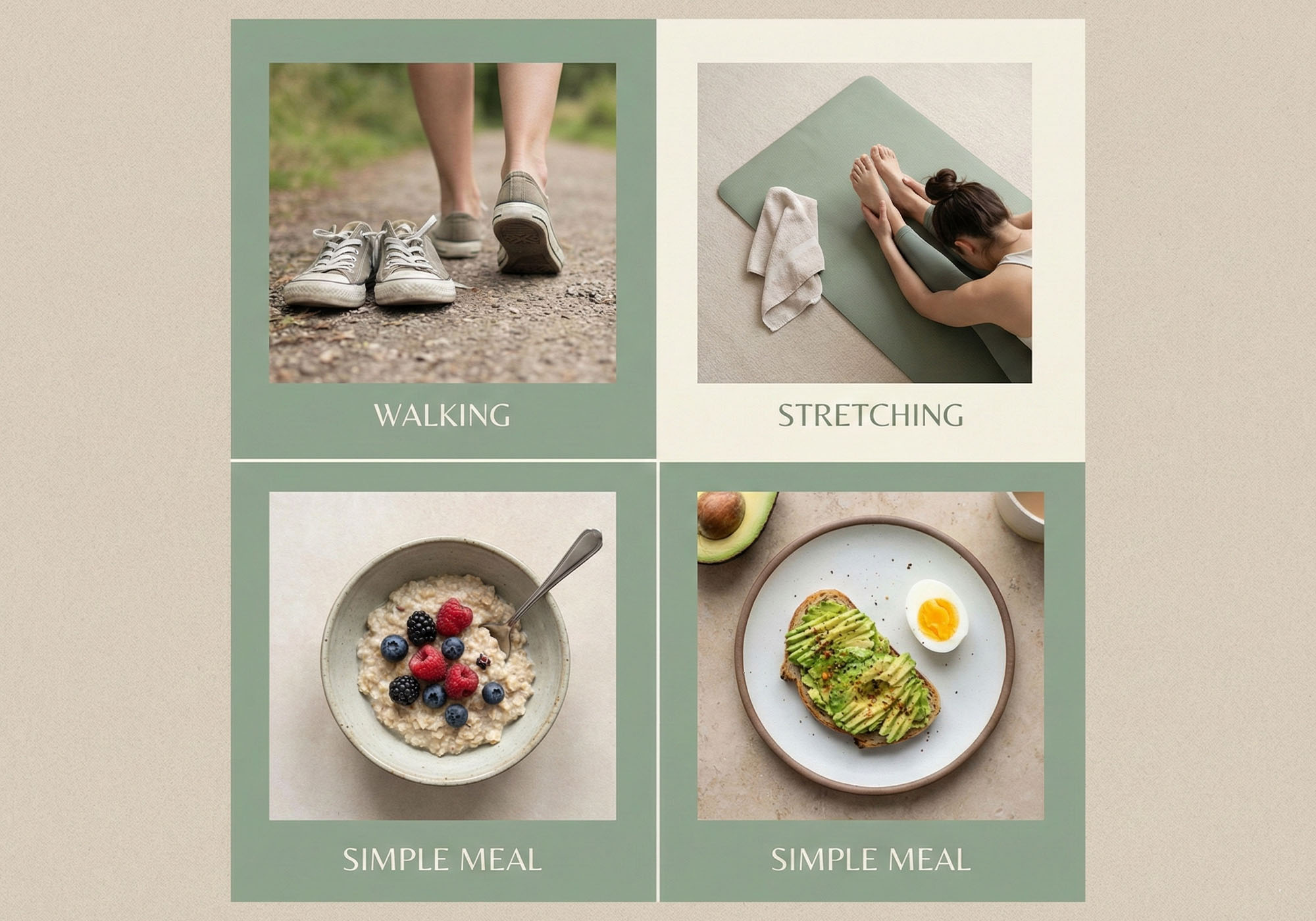
Walking outdoors
-
Slow stretching or mobility work
-
Yoga or Pilates focused on breath and alignment
-
Pelvic and hip mobility exercises
-
Light strength work using bodyweight
The goal is not calorie burn or performance—it is circulation, connection, and consistency.
Gentle Support vs Restrictive Reset Approaches
| Gentle Reset | Restrictive Reset |
|---|---|
| Walking, stretching, mobility | High-intensity workouts |
| Regular, nourishing meals | Skipping meals or fasting |
| Supports nervous system balance | Increases stress hormones |
Healing Foods That Support Recovery, Not Restriction
Post-holiday nutrition is often framed around “cutting out” foods. A more effective approach is adding in foods that support digestion, liver function, blood sugar balance, and inflammation reduction.
“The body doesn’t need punishment to reset—it needs support.”
Key food categories to focus on:
1. Hydrating foods
-
Soups and broths
-
Cooked vegetables
-
Herbal teas
-
Water-rich fruits
Hydration supports kidney function, digestion, and lymphatic movement.
2. Fiber-rich foods
-
Vegetables
-
Legumes
-
Whole grains
-
Seeds
Fiber helps regulate blood sugar, supports gut bacteria, and improves elimination.
3. Anti-inflammatory fats
-
Olive oil
-
Avocado
-
Fatty fish
-
Nuts and seeds
These fats support hormone production and reduce systemic inflammation.
4. Mineral-rich foods
-
Leafy greens
-
Root vegetables
-
Sea vegetables
-
Fermented foods
Minerals like magnesium, potassium, and sodium play a role in muscle function, digestion, and nervous system balance.
The Role of the Nervous System in “Resetting”
Many post-holiday symptoms—fatigue, cravings, digestive discomfort—are signs of a nervous system that has been overstimulated. Both gentle movement and nourishing foods help signal safety to the body.
Slow movement, regular meals, warm foods, and consistent routines support the parasympathetic nervous system—the state in which healing, digestion, and hormonal balance occur.
A body that feels safe does not need to be controlled.
The lymphatic system has no pump of its own—it relies entirely on muscle movement and breathing to circulate fluid and remove waste.
Shifting the New Year Mindset
A reset is not about erasing what came before. It is about supporting what is already working.
Instead of asking:
-
“How do I undo the holidays?”
Try asking:
-
“What does my body need now?”
Often, the answer is simpler than expected:
-
Regular meals
-
Daily movement
-
Adequate hydration
-
Enough sleep
-
Less pressure
Quick Start: A Gentle January Reset
Focus on:- Daily walking or light stretching
- Warm, cooked meals
- Hydration with water or herbal tea
- Eat regularly
- Move consistently
- Skip meals
- Punish the body for holiday habits
Common Questions About Post-Holiday Reset
A Gentle Start That Lasts
Restrictive resolutions rarely last beyond January. Supportive habits, on the other hand, build resilience over time.
By focusing on gentle movement and healing foods, the body is given the tools it needs to regain balance—without extremes, guilt, or force. A reset grounded in physiology rather than trends creates a foundation that can carry you through the entire year.
Because the goal isn’t to start over.
It’s to move forward—supported.
Disclaimer: The articles and information provided by the Vagina Institute are for informational and educational purposes only. This content is not intended to be a substitute for professional medical advice, diagnosis, or treatment. Always seek the advice of your physician or another qualified health provider with any questions you may have regarding a medical condition.